
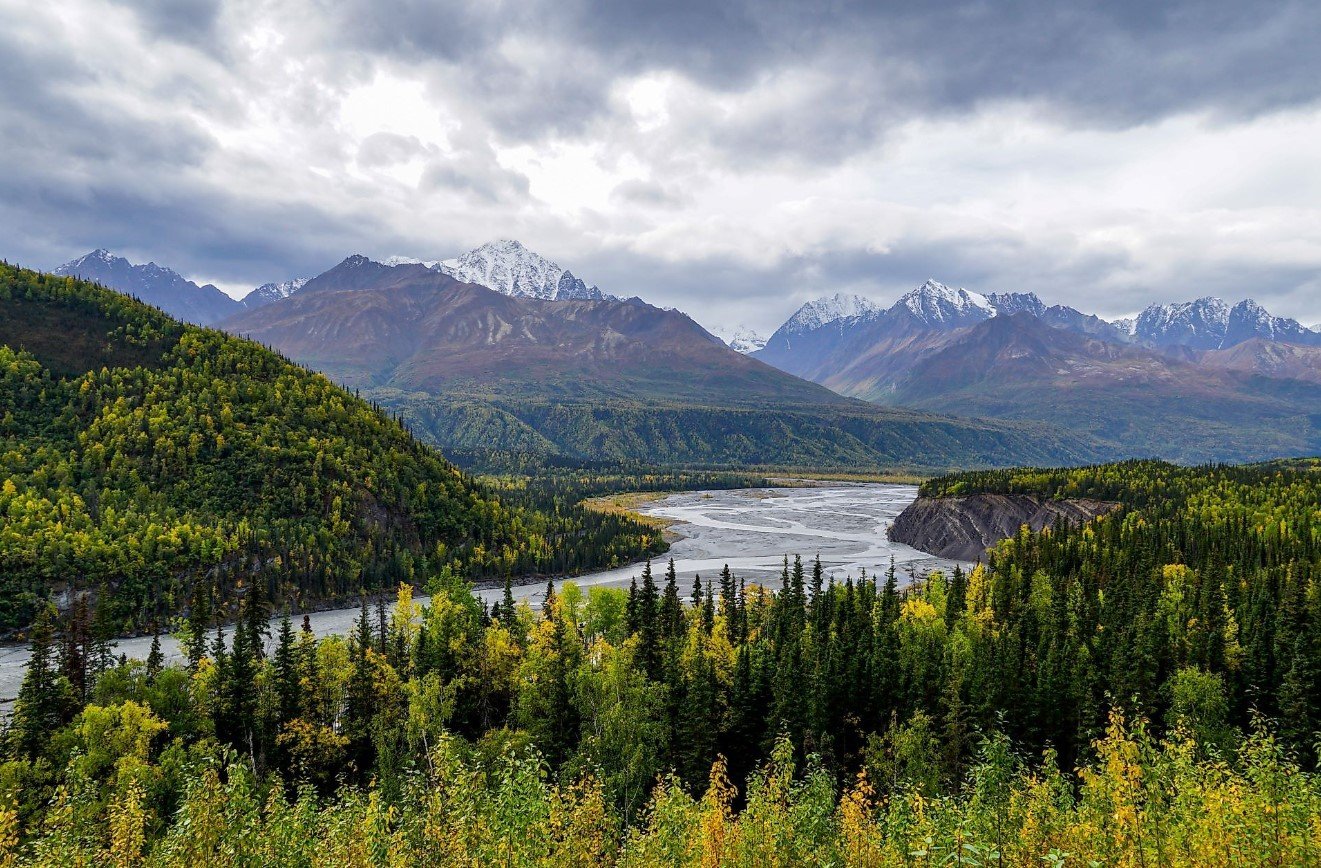
Matanuska Valley is a broad and fertile valley in south-central Alaska, known for its dramatic mountain scenery, productive farmland, and easy access to some of the state’s most impressive natural landscapes. Centered around the Matanuska River, the valley offers a distinctive combination of agriculture and wilderness.
The area is also an important gateway to the Matanuska Glacier and the surrounding Chugach Mountains. With long summer days, cold winters, and a strong local farming tradition, Matanuska Valley has a character that differs significantly from Alaska’s better-known coastal destinations.
| Fact | Details |
|---|---|
| Location | South-central Alaska |
| Country | United States |
| Region | Matanuska-Susitna Borough |
| Main River | Matanuska River |
| Famous For | Agriculture, mountain scenery and Matanuska Glacier |
| Climate | Subarctic with relatively dry conditions |
| Best Months | June to August |
| Nearby City/Town | Palmer and Wasilla |
| Nearest Major City | Anchorage |
Where Is Matanuska Valley?
Matanuska Valley is located in south-central Alaska, northeast of Anchorage. It extends around the communities of Palmer and Wasilla within the Matanuska-Susitna Borough.
The valley lies between major mountain systems, with the Chugach Mountains to the south and east and the Talkeetna Mountains farther north. Palmer is widely regarded as one of the valley’s main communities and provides services for visitors exploring the region.
The area is accessible by road from Anchorage, making it one of the more convenient Alaska destinations for travelers who want to experience both farmland and mountain landscapes.
Geography and Landscape
The Matanuska River is the defining waterway of the valley. It flows westward from the Matanuska Glacier toward Knik Arm, carrying large amounts of glacial sediment that contribute to its characteristic silty appearance.
The valley contains broad lowland areas that support agriculture, surrounded by rugged mountain landscapes. Glacial activity played a major role in shaping the region, leaving behind extensive deposits of sediment and creating the wide terrain visible today.
The nearby Matanuska Glacier is one of the most prominent natural features associated with the valley. This large valley glacier descends from the Chugach Mountains and is visible from sections of the Glenn Highway.
History of Matanuska Valley
The Matanuska Valley has long been home to Indigenous peoples, including the Dena’ina and Ahtna Athabascan communities, whose traditional territories and travel routes extended across parts of south-central Alaska.
Russian and later American activity brought increased exploration and settlement to the wider region. During the early twentieth century, the area became known for agriculture because its fertile soils and long summer daylight hours supported the cultivation of large vegetables and other crops.
One of the most significant events in the valley’s modern history was the Matanuska Colony project of 1935. During the Great Depression, the U.S. government relocated hundreds of farming families from the Midwest to the Palmer area as part of a New Deal agricultural resettlement program. The colony helped shape the agricultural and community development of the valley.
Today, farming remains an important part of the region’s identity, while tourism, outdoor recreation, and the growth of nearby communities have expanded the valley’s economy.
How Was Matanuska Valley Formed?
Matanuska Valley was shaped primarily by glacial and river processes. During past ice ages, large glaciers moved through south-central Alaska, eroding the landscape and helping create broad valleys.
As glaciers retreated, they left deposits of gravel, sand, and other sediments across the region. The Matanuska River continues to reshape the valley by transporting glacial sediment downstream and altering parts of its floodplain.
The surrounding mountains were also influenced by tectonic activity associated with the complex geological history of southern Alaska.
Matanuska Valley Weather Throughout the Year
Matanuska Valley has a subarctic climate, although local conditions vary with elevation and distance from the mountains. Winters are cold, while summers are relatively mild and benefit from Alaska’s long daylight hours.
January to March
Winter is cold, with temperatures frequently below freezing. January and February are typically the coldest months, while March brings gradually increasing daylight and the first signs of seasonal warming.
Snow is common, and road conditions can vary during winter weather. This period is suitable for visitors interested in winter scenery and snow-based recreation.
April to June
Spring arrives gradually, with April often remaining cool. May brings longer, warmer days, while June marks the beginning of the main summer travel period.
Daytime temperatures become more comfortable, and the extended daylight supports farming and outdoor activities. Snow generally retreats from lower elevations, although higher mountain areas remain snowy.
July to September
July and August are usually the warmest months and offer the most comfortable conditions for hiking, sightseeing, and exploring the surrounding landscape. Summer temperatures in the valley are generally mild compared with much of the continental United States.
September brings cooler temperatures and the beginning of autumn colors. Weather can become increasingly variable later in the month, particularly in higher elevations.
October to December
Autumn quickly transitions into winter. Temperatures fall, daylight hours shorten significantly, and snowfall becomes more common.
By November and December, winter conditions are well established. Visitors should be prepared for cold temperatures and potentially icy roads.
Best Weather for Visiting Matanuska Valley
For most visitors, June through August offers the best weather for exploring Matanuska Valley. These months provide long daylight hours and generally mild conditions for sightseeing, hiking, farming events, and glacier excursions. September can also be attractive for travelers who prefer cooler temperatures and early autumn scenery.
Things to Do in Matanuska Valley
Visit Matanuska Glacier
Guided glacier experiences allow visitors to explore one of the region’s most recognizable natural features. Conditions on the ice can be hazardous, so appropriate access and safety guidance are important.
Explore Local Farms
The valley is known for Alaska agriculture. Visitors can explore farm stands, seasonal markets, and agricultural attractions around Palmer and the surrounding communities.
Drive the Glenn Highway
The Glenn Highway offers scenic views of mountains, rivers, glaciers, and broad valley landscapes. It is one of the main routes for exploring the region.
Go Hiking
Trails in the wider Matanuska-Susitna region range from relatively easy walks to more challenging mountain routes. Summer provides the broadest access to hiking areas.
Enjoy River Recreation
The Matanuska River and nearby waterways support activities such as guided rafting. River conditions can be powerful and cold because of glacial water, making guided trips a popular option.
Photograph the Landscape
The combination of farmland, mountain ranges, glaciers, and long summer light creates excellent opportunities for landscape photography.
Famous Attractions in and Around Matanuska Valley
Matanuska Glacier
Matanuska Glacier is the region’s most famous natural attraction. Its massive ice formations and location near the Glenn Highway make it one of Alaska’s more accessible glaciers.
Palmer
Palmer is a major community in the valley and is closely connected to the region’s agricultural history. It provides restaurants, services, museums, and access to nearby attractions.
Knik River Valley
Located southwest of the main Matanuska Valley area, the Knik River region offers access to dramatic mountain and glacier scenery.
Independence Mine State Historical Park
This historic mining area in Hatcher Pass preserves buildings and remains connected to Alaska’s gold-mining history. It also provides access to mountain scenery and hiking opportunities.
Hatcher Pass
Hatcher Pass is a scenic mountain area known for alpine landscapes, hiking, and winter recreation. Seasonal road conditions can affect access.
Musk Ox Farm
Located near Palmer, this agricultural and educational attraction focuses on musk oxen and qiviut, the animals’ exceptionally fine underwool.
Reindeer Farm
The Palmer area is home to agricultural attractions where visitors can learn about and interact with animals associated with Alaska’s northern environment.
Wildlife and Nature
Matanuska Valley lies within a region of varied ecosystems that include river corridors, wetlands, forests, farmland, and alpine environments. The surrounding wilderness supports mammals such as moose, black bears, brown bears, wolves, and smaller species, although wildlife sightings vary by location and season.
Birdlife is also diverse, particularly around wetlands and waterways. Vegetation ranges from agricultural fields in the lower valley to spruce and birch forests and higher alpine habitats.
Visitors should remember that much of Alaska’s wildlife is genuinely wild. Viewing animals from a safe distance and following local safety guidance is essential.
How to Reach Matanuska Valley
The nearest major airport is Ted Stevens Anchorage International Airport in Anchorage. From Anchorage, visitors can drive northeast toward Palmer and Wasilla using the Glenn Highway and other connecting roads.
Palmer is roughly an hour’s drive from Anchorage under normal conditions, making the valley practical for day trips as well as longer stays. Travel times can increase because of weather, construction, or winter road conditions.
The Glenn Highway is the principal route for reaching Palmer and continuing toward the Matanuska Glacier area. Public transportation options are more limited than in major cities, so having a vehicle is often the most convenient way to explore the region.
Where to Stay Near Matanuska Valley
Palmer is one of the best bases for visitors because it provides hotels, lodges, vacation rentals, restaurants, and other services. Wasilla offers additional accommodation choices and is convenient for travelers arriving from Anchorage.
Visitors seeking a quieter experience can also find cabins, guesthouses, and camping options in the wider Matanuska-Susitna Borough. Accommodation near the glacier and more remote attractions may be limited, so advance planning is useful during the busy summer season.
Why Is Matanuska Valley Famous?
Matanuska Valley is famous for its rare combination of productive Alaskan farmland and dramatic glacial mountain scenery. The Matanuska Glacier, long summer daylight, agricultural heritage, and historic New Deal colony make the region distinctive within south-central Alaska.
Matanuska Valley FAQs
Where is Matanuska Valley located?
Matanuska Valley is in south-central Alaska, northeast of Anchorage, mainly around the communities of Palmer and Wasilla.
What is Matanuska Valley famous for?
The valley is known for agriculture, mountain scenery, the Matanuska River, Matanuska Glacier, and its history as a New Deal agricultural colony.
What is the weather like in Matanuska Valley?
The valley has cold winters and relatively mild summers. Conditions vary with elevation, and surrounding mountain areas can experience very different weather.
What are the best months to visit Matanuska Valley?
June through August generally offers the most comfortable weather and longest daylight hours for sightseeing and outdoor activities.
What can you do in Matanuska Valley?
Visitors can explore Matanuska Glacier, visit farms, drive scenic highways, hike, photograph the landscape, and enjoy guided river activities.
How do you reach Matanuska Valley?
Most visitors travel by road from Anchorage. The Glenn Highway provides the main route toward Palmer and the eastern parts of the valley.
Does Matanuska Valley get snow?
Yes. Snow is common during the long Alaskan winter, while higher surrounding mountains can retain snow well beyond the winter season.
Final Thoughts
Matanuska Valley offers a different perspective on Alaska by bringing together fertile farmland, glacial rivers, mountain landscapes, and accessible outdoor adventure. It is an appealing destination for travelers interested in nature, local history, scenic driving, and the unique relationship between agriculture and wilderness in south-central Alaska.
For More Visit Stay And Update
