
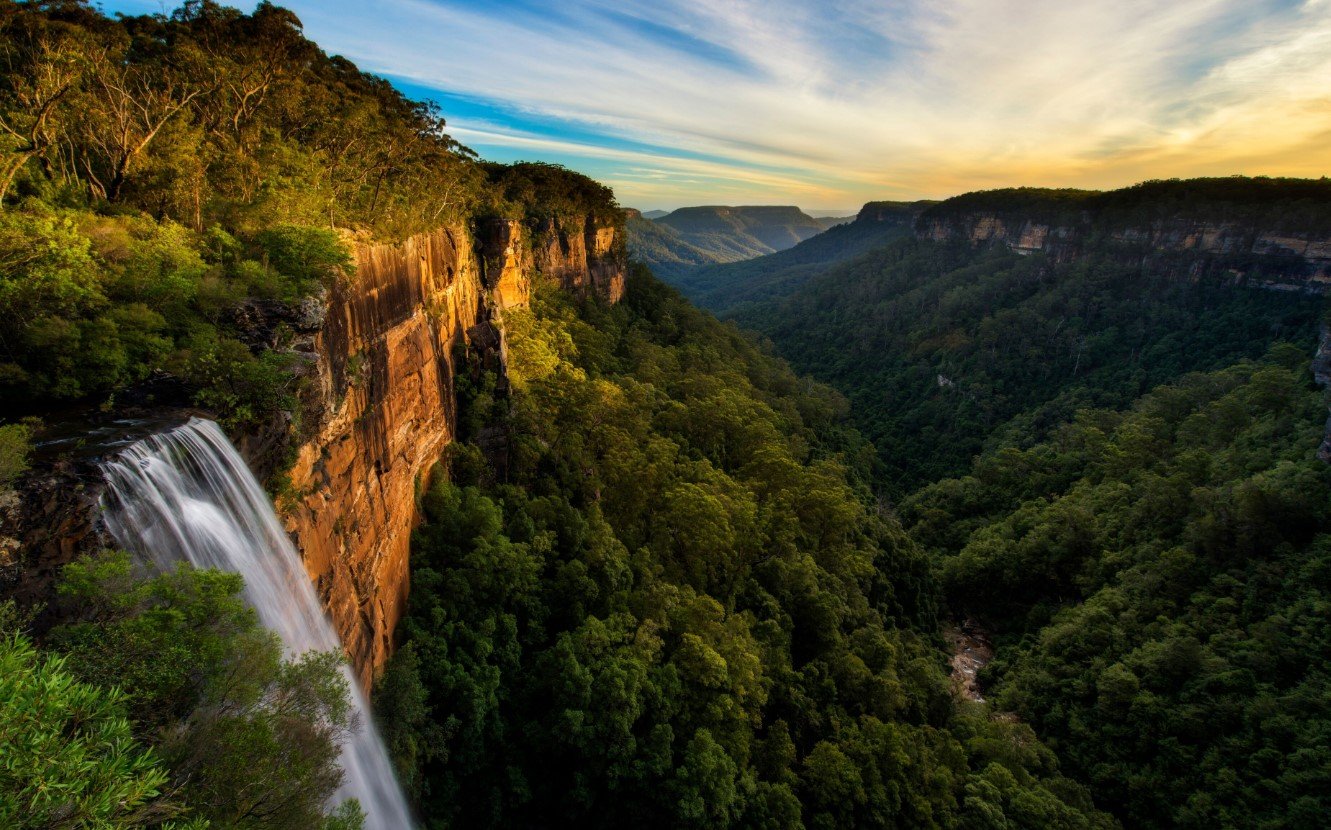
Kangaroo Valley is a scenic rural valley in New South Wales, Australia, known for its green hills, sandstone escarpments, native forests, farmland, and the Kangaroo River that winds through the valley floor. Its combination of natural scenery and quiet countryside makes it a distinctive destination in the Southern Highlands and South Coast region.
The valley is surrounded by protected landscapes and small rural communities, with historic buildings, walking trails, lookouts, waterways, and wildlife adding to its appeal. Its proximity to Sydney and Canberra also makes Kangaroo Valley accessible for short breaks as well as longer stays focused on nature and outdoor activities.
Kangaroo Valley Quick Facts
| Fact | Details |
|---|---|
| Location | New South Wales, southeastern Australia |
| Country | Australia |
| Region | Southern Highlands / South Coast |
| Elevation | Approximately 100–200 m across much of the valley floor |
| Famous For | Green countryside, sandstone cliffs, Kangaroo River and wildlife |
| Climate | Temperate, with warm summers and cool winters |
| Main River | Kangaroo River |
| Best Months | Generally March to May and September to November |
| Nearby Towns | Kangaroo Valley Village, Berry, Nowra and Moss Vale |
Where Is Kangaroo Valley?
Kangaroo Valley is in southeastern New South Wales, approximately 150 kilometres southwest of Sydney and around 60 kilometres from the coastal city of Nowra. The valley lies between the Southern Highlands and the South Coast and is surrounded by forested hills and sandstone country.
The main settlement is Kangaroo Valley Village, a small rural community that provides basic visitor services. Other nearby towns include Berry, Robertson, Moss Vale, and Nowra, giving visitors several options for approaching and exploring the region.
Geography and Landscape
Kangaroo Valley is characterized by a broad, fertile valley floor surrounded by steep forested slopes and sandstone escarpments. The Kangaroo River is the valley’s central waterway, flowing through the landscape before eventually reaching the Shoalhaven River.
The surrounding terrain contains eucalyptus forests, grasslands, farmland, creeks, rocky outcrops, and sandstone cliffs. Parts of the valley are protected within national parks and reserves, helping preserve its natural vegetation and wildlife.
One of the area’s most recognizable landscape features is the Hampden Bridge, a historic sandstone arch bridge crossing the Kangaroo River near the village. The surrounding escarpments create elevated viewpoints over the valley and contribute to its distinctive appearance.
History of Kangaroo Valley
The Kangaroo Valley region has a long Aboriginal history, with the area traditionally associated with the Wodi Wodi people of the Dharawal language group and other Aboriginal communities of the South Coast and Illawarra region. Aboriginal people used the valley’s forests, waterways, and surrounding landscapes for food, shelter, travel, and cultural activities.
European settlement expanded during the nineteenth century as agriculture became established in the fertile valley. Dairy farming became particularly important, supported by the area’s grasslands and reliable water resources.
The village and surrounding farming communities developed gradually, while roads and bridges improved access to the valley. Hampden Bridge, completed in 1898, remains an important reminder of the region’s transport and settlement history. Tourism later became an increasingly important part of the local economy as visitors were attracted by the valley’s scenery and peaceful rural character.
How Was Kangaroo Valley Formed?
The valley’s landscape developed through long-term erosion and geological processes affecting the sandstone and other rocks of the surrounding region. The Kangaroo River and its tributaries gradually cut through the landscape, while weathering and erosion shaped the surrounding escarpments and valley floor.
The surrounding sandstone plateau and elevated country are part of the broader geological landscape of southeastern New South Wales. Over long periods, rivers and weathering processes helped create the deeply incised valley and steep slopes visible today.
Kangaroo Valley Weather Throughout the Year
Kangaroo Valley has a temperate climate with warm summers, mild to cool winters, and rainfall distributed across much of the year. Conditions can vary between the valley floor and surrounding higher ground.
January to March
Summer is generally warm, with daytime temperatures often reaching the mid-to-high 20s°C. Rainfall and occasional thunderstorms can occur, while mornings and evenings are usually more comfortable than the middle of the day.
April to June
Autumn brings cooler days and generally pleasant conditions for walking and sightseeing. By June, temperatures become noticeably cooler, particularly overnight, and rainfall remains possible.
July to September
Winter is the coolest period, with mild daytime temperatures and chilly nights. Frost can occur in colder conditions, particularly in low-lying areas, while rainfall remains possible.
October to December
Spring brings gradually warmer weather and longer daylight hours. Temperatures commonly rise through October and November, while December marks the beginning of the warmer summer period.
Best Weather for Visiting Kangaroo Valley
Autumn and spring are often particularly comfortable for exploring the valley because temperatures are generally moderate and conditions are suitable for hiking, sightseeing, and outdoor activities. Summer can also be enjoyable around the river and shaded forests, while winter offers a quieter experience with cooler temperatures.
Things to Do in Kangaroo Valley
Hiking and Bushwalking
The surrounding forests and protected areas provide walking opportunities ranging from short trails to longer bushwalks. Routes around the valley offer views of native vegetation, sandstone landscapes, and waterways.
Canoeing and Kayaking
The Kangaroo River is one of the area’s main recreational features. Suitable sections can be explored by canoe or kayak, providing a different perspective of the valley’s forests and cliffs.
Wildlife Watching
Native wildlife can be encountered throughout the valley, particularly around forests, waterways, and quieter rural areas. Early morning and late afternoon are often productive periods for observing animals.
Scenic Drives
Driving through Kangaroo Valley is an attraction in itself, with winding roads passing farmland, forest, escarpments, and viewpoints.
Photography
The combination of green farmland, sandstone cliffs, river scenery, historic structures, and forests provides abundant opportunities for landscape and nature photography.
Camping
Several camping areas and nearby reserves provide opportunities to spend more time in the surrounding natural environment. Conditions and facilities vary by location.
Famous Attractions in and Around Kangaroo Valley
Hampden Bridge
Hampden Bridge is one of Kangaroo Valley’s best-known landmarks. Built from local sandstone and completed in 1898, the historic bridge crosses the Kangaroo River near the village.
Kangaroo Valley Village
The small village is the cultural and commercial center of the valley, with historic buildings, local businesses, cafés, and services for visitors.
Morton National Park
Morton National Park surrounds parts of Kangaroo Valley and protects extensive areas of forest, escarpment, rainforest, and wildlife habitat. It provides access to numerous scenic landscapes and walking areas.
Fitzroy Falls
Located north of Kangaroo Valley near the Southern Highlands, Fitzroy Falls is a major regional attraction where the waters of Yarrunga Creek plunge over a sandstone escarpment.
Cambewarra Mountain Lookout
Cambewarra Mountain Lookout offers broad views across the surrounding countryside toward Kangaroo Valley and the coastal region on clear days.
Tallowa Dam
Tallowa Dam lies at the junction of the Kangaroo and Shoalhaven rivers and creates a large reservoir surrounded by rugged natural scenery. The area provides opportunities for sightseeing, fishing, and water-based recreation where permitted.
Drawing Room Rocks
Drawing Room Rocks near Berry is a distinctive sandstone formation offering elevated views across surrounding farmland and toward the coast. The walk to the viewpoint passes through forest before reaching the exposed rock formations.
Wildlife and Nature
Kangaroo Valley supports a diverse mixture of forest, freshwater, grassland, and wetland habitats. Commonly encountered wildlife includes eastern grey kangaroos, wallabies, wombats, possums, echidnas, and a variety of native birds. The surrounding forests also provide habitat for reptiles, frogs, and many smaller native species.
The Kangaroo River and its tributaries contribute to the valley’s freshwater ecosystems, while protected areas such as Morton National Park preserve substantial native vegetation. Eucalyptus forests dominate much of the surrounding landscape, with rainforest communities occurring in wetter and more sheltered areas.
How to Reach Kangaroo Valley
Kangaroo Valley is primarily reached by road. From Sydney, the journey generally follows the Hume Highway and routes through the Southern Highlands before descending toward the valley. Visitors approaching from the South Coast can travel inland from Nowra and surrounding coastal communities.
The nearest major airports are Sydney Airport and Canberra Airport, although both require a substantial road journey. There is no direct rail service into Kangaroo Valley, so visitors generally need a private vehicle or road-based transport for the final part of the journey.
Road conditions can vary, particularly after heavy rainfall. Some surrounding routes are winding and pass through forested or mountainous terrain, so drivers should allow extra travel time.
Where to Stay Near Kangaroo Valley
Accommodation is available within the valley and in nearby communities. Options include cottages, farm stays, guesthouses, cabins, holiday homes, and camping areas.
Kangaroo Valley Village is convenient for visitors who want to remain close to local services, while rural properties around the valley offer a more secluded experience. Berry, Nowra, and Southern Highlands communities provide additional hotels, motels, and holiday accommodation for travelers who prefer to stay outside the valley itself.
Why Is Kangaroo Valley Famous?
Kangaroo Valley is famous for its peaceful rural setting, dramatic sandstone escarpments, winding river, native forests, historic Hampden Bridge, and abundant wildlife. Its location between the Southern Highlands and South Coast also makes it an accessible destination for experiencing the landscapes of southeastern New South Wales.
Kangaroo Valley FAQs
Where is Kangaroo Valley located?
Kangaroo Valley is in southeastern New South Wales, Australia, between the Southern Highlands and the South Coast. The valley is about 150 kilometres southwest of Sydney.
What is Kangaroo Valley famous for?
It is known for its green countryside, Kangaroo River, sandstone cliffs, forests, wildlife, historic Hampden Bridge, and outdoor recreation.
What is the weather like in Kangaroo Valley?
The valley has a temperate climate with warm summers, cool winters, and rainfall throughout the year. Weather can be cooler in the surrounding elevated areas.
What are the best months to visit Kangaroo Valley?
Autumn and spring generally provide comfortable conditions for hiking, sightseeing, and exploring the countryside, although each season has its own appeal.
What can you do in Kangaroo Valley?
Visitors can hike, kayak, canoe, photograph the landscape, observe wildlife, explore historic sites, camp, and take scenic drives.
How do you reach Kangaroo Valley?
Most visitors travel by car from Sydney, the Southern Highlands, or the South Coast. The nearest major airports are Sydney and Canberra.
Does Kangaroo Valley get snow?
Snow is uncommon in the valley itself because of its relatively low elevation, although colder conditions can occur in the surrounding higher country.
What attractions are near Kangaroo Valley?
Major nearby attractions include Hampden Bridge, Morton National Park, Fitzroy Falls, Cambewarra Mountain Lookout, Tallowa Dam, and Drawing Room Rocks.
Final Thoughts
Kangaroo Valley combines a peaceful rural landscape with forests, waterways, sandstone formations, wildlife, and a rich local history. Its combination of outdoor activities and scenic countryside makes it an appealing destination for travelers looking to experience a quieter side of New South Wales.
