
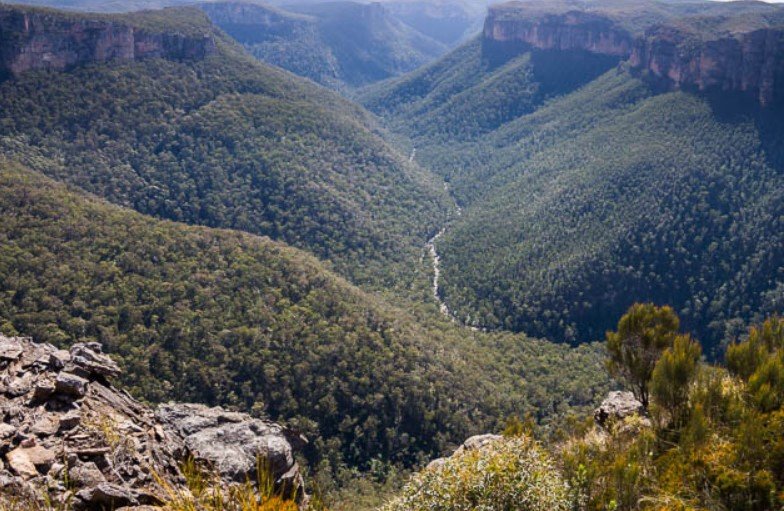
Grose Valley is a spectacular mountain valley in New South Wales, Australia, forming one of the most distinctive landscapes within the Blue Mountains. Surrounded by sandstone cliffs, eucalyptus forests, deep gorges, and rugged ridges, the valley is known for its largely undeveloped character and extensive wilderness.
The valley is centered on the Grose River and is protected within the Blue Mountains National Park. Rather than being a conventional destination with roads and buildings throughout its floor, Grose Valley is best experienced from surrounding lookouts, walking tracks, and wilderness areas. Its dramatic scenery, Aboriginal heritage, diverse vegetation, and challenging bushwalking routes make it an important natural area of the Blue Mountains.
Grose Valley Quick Facts
| Fact | Details |
|---|---|
| Location | Blue Mountains, New South Wales |
| Country | Australia |
| Region | Blue Mountains |
| Main River | Grose River |
| Elevation | Varies considerably from surrounding escarpments to the valley floor |
| Famous For | Sandstone cliffs, eucalyptus forests, wilderness and scenic lookouts |
| Climate | Temperate mountain climate |
| Best Months | Generally spring and autumn |
| Nearby Towns | Blackheath, Mount Victoria and Katoomba |
Where Is Grose Valley?
Grose Valley is located in the Blue Mountains of New South Wales, west of Sydney. It occupies a large wilderness area between the Blue Mountains escarpments and surrounding sandstone plateaus.
The town of Blackheath is one of the main gateways to viewpoints overlooking the valley, while Mount Victoria and Katoomba provide additional accommodation and visitor services nearby. Sydney is the nearest major city and lies roughly 100 kilometers east of the central Blue Mountains.
The valley itself has no continuous road network across its floor. Most visitors experience it from the surrounding plateau or enter on foot using bushwalking tracks.
Geography and Landscape
The Grose Valley is characterized by steep sandstone walls, narrow ridges, forested slopes, waterfalls, gullies, and deep river valleys. The Grose River runs through the wilderness area before eventually joining the Hawkesbury-Nepean river system.
The surrounding Blue Mountains plateau is dominated by Hawkesbury Sandstone, which has been deeply dissected by rivers and erosion. This process created the dramatic escarpments and narrow valleys visible today. Govetts Gorge, one of the valley’s best-known landscapes, cuts deeply into the plateau near Blackheath.
Vegetation is dominated by eucalyptus woodland and forest, with wetter vegetation occurring in sheltered gullies and near waterways. The contrast between the relatively level plateau and the steeply eroded valley creates much of Grose Valley’s distinctive appearance.
History of Grose Valley
The Grose Valley has a long Aboriginal history that predates European exploration. The wider Blue Mountains region is associated particularly with the Darug and Gundungurra peoples, whose traditional lands include areas around the mountains and their valleys. Aboriginal people developed detailed knowledge of the area’s plants, animals, waterways, and seasonal conditions.
European exploration of the Blue Mountains increased during the early nineteenth century. European crossings of the mountain range eventually opened the region to pastoral expansion and settlement beyond the mountains. The Grose Valley itself, however, remained difficult to access because of its steep terrain.
During the nineteenth and twentieth centuries, the Blue Mountains increasingly became known for scenery and tourism. Lookouts and walking tracks were developed around the escarpments, allowing visitors to experience landscapes such as Govetts Gorge without extensive development inside the wilderness.
Conservation later became central to the area’s identity. Grose Valley is now protected within Blue Mountains National Park, helping preserve its forests, waterways, cliffs, wildlife, and relatively undeveloped character.
How Was Grose Valley Formed?
Grose Valley was created primarily through long-term erosion of the Blue Mountains sandstone plateau. Rivers and streams gradually cut into the elevated landscape, while weathering and erosion widened existing cracks and channels in the rock.
The result is a deeply dissected mountain landscape containing cliffs, gorges, ridges, and valleys. The ongoing action of water, gravity, and weathering continues to reshape the sandstone formations.
Grose Valley Weather Throughout the Year
Grose Valley’s weather is cooler and more variable than coastal Sydney because of its elevation in the Blue Mountains. Conditions can change quickly, particularly around exposed cliff edges and during bushwalking trips.
January to March
Summer is generally mild to warm during the day, with temperatures around the Blue Mountains often reaching the low to mid-20s Celsius. Afternoon thunderstorms and periods of heavy rain are possible, and humidity can vary considerably.
April to June
Autumn brings cooler temperatures and generally comfortable conditions for walking. Daytime temperatures commonly fall through the teens to low 20s Celsius, while nights become noticeably colder. Rain remains possible throughout the season.
July to September
Winter is the coldest period. Daytime temperatures are often in the low to mid-teens Celsius, while overnight temperatures can approach freezing in elevated areas. Frost occurs in the Blue Mountains, and occasional snow can fall on higher ground.
October to December
Spring brings gradually warmer temperatures and longer daylight hours. Weather can be changeable, with sunny periods interrupted by rain or storms. Late spring generally becomes increasingly comfortable for outdoor exploration.
Best Weather for Visiting Grose Valley
Spring and autumn are generally among the most comfortable periods for exploring the Grose Valley, offering moderate temperatures for hiking and sightseeing. Winter can provide crisp conditions and clear mountain views, while summer requires greater attention to heat, storms, and changing trail conditions.
Things to Do in Grose Valley
Bushwalking
Walking is the main way to experience the valley beyond its viewpoints. Tracks range from short lookout walks to demanding routes descending into the gorge and wilderness.
Scenic Lookout Visits
The surrounding escarpments provide dramatic views across the valley. Lookouts around Blackheath are particularly popular for seeing the immense scale of the landscape.
Photography
Sandstone cliffs, eucalyptus forests, waterfalls, mist, and changing light make the valley especially appealing to landscape photographers.
Hiking to Govetts Leap
The Govetts Leap area provides access to several walking routes and one of the most famous viewpoints in the Blue Mountains.
Birdwatching
The extensive native forest provides opportunities to observe Australian woodland and forest birds, particularly during quieter periods.
Camping and Wilderness Walking
Camping is available at designated locations in and around the broader Blue Mountains National Park, while longer walks provide a more remote experience for prepared hikers.
Famous Attractions in and Around Grose Valley
Govetts Leap
Govetts Leap is one of the Blue Mountains’ most famous lookouts, offering a sweeping view across the Grose Valley and Govetts Gorge.
Govetts Gorge
This dramatic gorge forms part of the deeply eroded landscape surrounding the valley and can be viewed from the Blackheath escarpment.
Pulpit Rock
Pulpit Rock is a prominent lookout near Blackheath with several viewing platforms extending over the escarpment. It provides different perspectives across the Grose wilderness.
Blue Mountains National Park
The national park protects the broader landscape surrounding Grose Valley, including forests, cliffs, rivers, waterfalls, and extensive wilderness.
Evans Lookout
Evans Lookout near Blackheath offers expansive views into Govetts Gorge and across the surrounding sandstone country.
Grand Canyon Track
Located near Blackheath, the Grand Canyon Track passes through a deeply enclosed sandstone canyon with rainforest vegetation and creek crossings, providing a contrasting landscape to the exposed valley viewpoints.
Wildlife and Nature
Grose Valley supports a diverse Blue Mountains ecosystem dominated by eucalyptus forests and native vegetation. Sheltered gullies provide cooler and wetter habitats than the exposed sandstone ridges, creating different environments within a relatively small area.
Wildlife in the broader region includes eastern grey kangaroos, wallabies, wombats, echidnas, possums, gliders, and numerous native bird species. The protected wilderness is important for maintaining habitat and ecological connections across the Blue Mountains.
How to Reach Grose Valley
The easiest access points are around Blackheath, which is approximately two hours by road or train from central Sydney depending on conditions and services. Blackheath can be reached by the Great Western Highway and the Blue Mountains railway line.
Govetts Leap, Evans Lookout, and other nearby viewpoints are accessible by local roads from Blackheath. Reaching the deeper parts of the valley requires walking on designated bush tracks rather than driving.
Weather can affect tracks, creek crossings, and cliff conditions, so hikers should check current park alerts before setting out.
Where to Stay Near Grose Valley
Blackheath is the most convenient base for exploring the Grose Valley’s northern viewpoints and walking tracks. It offers hotels, guesthouses, cottages, and other accommodation options.
Katoomba provides the largest selection of accommodation and services in the central Blue Mountains and is suitable for travelers combining Grose Valley with other attractions. Mount Victoria and nearby Blue Mountains communities also offer accommodation, while camping is available at designated sites in the wider national park.
Why Is Grose Valley Famous?
Grose Valley is famous for its immense sandstone landscape, deep gorges, eucalyptus wilderness, dramatic escarpment views, and relatively undeveloped character. Its combination of natural scenery and accessibility from the Blue Mountains makes it one of New South Wales’ notable wilderness landscapes.
Grose Valley FAQs
Where is Grose Valley located?
Grose Valley is in the Blue Mountains of New South Wales, Australia, west of Sydney. Blackheath is one of the main access points for viewing the valley.
What is Grose Valley famous for?
It is known for its sandstone cliffs, deep gorges, eucalyptus forests, Grose River, wilderness, and spectacular viewpoints such as Govetts Leap.
What is the weather like in Grose Valley?
The valley has a cooler mountain climate than Sydney, with mild summers, cold winters, and weather that can change quickly.
What are the best months to visit Grose Valley?
Spring and autumn are generally comfortable for walking and sightseeing, although each season offers different conditions and scenery.
What can you do in Grose Valley?
Popular activities include bushwalking, photography, sightseeing, birdwatching, and exploring the surrounding national park.
How do you reach Grose Valley?
Most visitors travel by road or train to Blackheath and then continue to nearby lookouts and walking tracks by car or on foot.
Does Grose Valley get snow?
Snow is possible in the higher Blue Mountains during winter, although it is not a regular feature of the valley floor.
What attractions are near Grose Valley?
Govetts Leap, Govetts Gorge, Pulpit Rock, Evans Lookout, and the Grand Canyon are among the notable attractions around the valley.
Final Thoughts
Grose Valley offers a distinctive combination of sandstone geology, native forests, Aboriginal heritage, and protected wilderness within the Blue Mountains. Its viewpoints and walking tracks make it accessible to visitors while much of the valley itself remains rugged and undeveloped, making it particularly appealing to people interested in nature, scenery, and outdoor exploration.
For More Visit Stay And Update
