
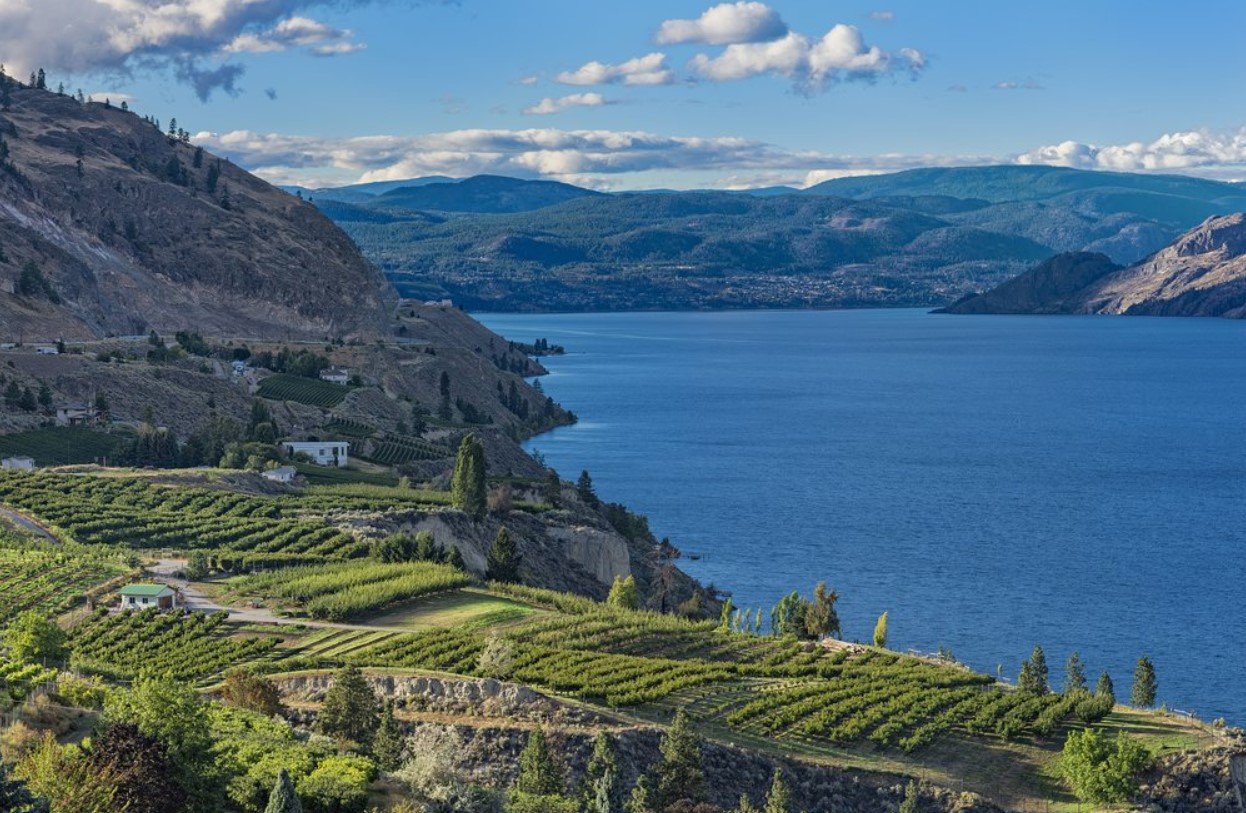
Okanagan Valley is a scenic and agriculturally rich region in British Columbia, Canada, stretching along Okanagan Lake and a chain of smaller lakes toward the United States border. Known for its dry climate, orchards, vineyards, beaches, and surrounding mountains, the valley has become one of British Columbia’s best-known destinations for outdoor recreation, food, wine, and lakeside communities.
The valley combines a distinctive interior landscape with a long agricultural tradition. From Kelowna and Lake Country in the north to Penticton, Oliver, and Osoyoos farther south, different parts of the Okanagan offer their own landscapes and visitor experiences. Its warm summers and relatively mild winters also distinguish it from many other parts of British Columbia.
Okanagan Valley Quick Facts
| Fact | Details |
|---|---|
| Location | Southern British Columbia, Canada |
| Country | Canada |
| Region | Southern Interior British Columbia |
| Elevation | Varies considerably across the valley |
| Main Waterway | Okanagan Lake and connected lake system |
| Famous For | Vineyards, orchards, lakes, beaches and dry climate |
| Climate | Semi-arid to dry continental |
| Best Months | Generally June to September |
| Major City | Kelowna |
| Southern Gateway | Osoyoos |
Where Is Okanagan Valley?
Okanagan Valley is located in southern British Columbia in Canada’s Southern Interior. It follows the Okanagan Lake basin southward through communities including Kelowna, West Kelowna, Peachland, Summerland, Penticton, Oliver, and Osoyoos.
The valley extends toward the United States border, where Osoyoos sits beside Osoyoos Lake. Kelowna is the largest urban center in the region and an important transportation and service hub. The valley’s position between the Cascade Mountains and Columbia Mountains contributes to its distinctive interior climate.
Geography and Landscape
The Okanagan is shaped by a chain of lakes, rolling hills, plateaus, valleys, and surrounding mountain ranges. Okanagan Lake is the largest lake in the region, stretching for more than 100 kilometers and forming a major geographic feature between Vernon and Penticton.
The landscape becomes noticeably drier toward the south. Around Osoyoos, the environment includes dry grasslands, sagebrush, rocky hills, and sandy areas that resemble a desert landscape. The region is also home to some of Canada’s most important agricultural land, with vineyards and fruit orchards occupying slopes and valley floors.
Glacial activity during the last ice age helped shape the valley’s modern terrain. The movement and retreat of glaciers influenced the lakes, terraces, valleys, and deposits that characterize the Southern Interior.
History of Okanagan Valley
The Okanagan Valley has a long Indigenous history. The Syilx people, also known as the Okanagan Nation, have lived throughout the Okanagan and surrounding areas for thousands of years. Their traditional territory extends across what is now southern British Columbia and parts of Washington State. The region’s lakes, rivers, grasslands, and forests supported fishing, hunting, gathering, and trade.
European settlement increased during the nineteenth century. Missionaries, traders, ranchers, and agricultural settlers became increasingly involved in the region, while communities developed around transportation routes and farming.
Agriculture became a defining part of the valley’s modern economy. Orchards expanded during the late nineteenth and twentieth centuries, while vineyards and wineries became increasingly important later in the twentieth century. Tourism also grew alongside the region’s reputation for lakes, beaches, warm summers, food, and wine.
How Was Okanagan Valley Formed?
The Okanagan Valley’s present landscape was strongly influenced by glaciation. During the last ice age, large glaciers moved through the Southern Interior, eroding and reshaping existing terrain. As the ice retreated, it left behind deep basins, sediments, terraces, and the lake system that remains central to the valley today.
The region’s underlying geology, combined with glacial processes and subsequent erosion, created the varied slopes and valley-floor environments now used for agriculture and settlement.
Okanagan Valley Weather Throughout the Year
Okanagan Valley has one of Canada’s warmer and drier interior climates. Summers are typically hot and relatively dry, while winters are cooler and wetter. Conditions vary from north to south, with the southern Okanagan generally being warmer and drier.
January to March
Winter is cool, with temperatures commonly near or below freezing, particularly overnight. Snow can occur, although conditions vary between communities. By March, temperatures begin to rise as spring approaches.
April to June
Spring brings rapidly warming conditions. April is generally mild, while May and June become increasingly warm and dry. Orchards and vineyards become active, and outdoor conditions improve considerably toward the end of spring.
July to September
Summer is the warmest and driest period. Daytime temperatures frequently reach the upper 20s Celsius and can exceed 30°C during hotter spells. July and August are particularly popular for swimming, boating, hiking, cycling, and vineyard visits.
October to December
Autumn begins with mild temperatures before becoming cooler and wetter. October is known for changing foliage and the end of much of the agricultural harvest season. By November and December, winter conditions become more common, with colder temperatures and occasional snowfall.
Best Weather for Visiting Okanagan Valley
June through September generally offers the most favorable weather for outdoor recreation, lake activities, vineyards, and sightseeing. July and August are particularly warm, while June and September can provide a more moderate balance between comfortable temperatures and outdoor activity.
Things to Do in Okanagan Valley
- Wine tasting: Visit vineyards and wineries throughout the valley to explore British Columbia’s wine-growing industry.
- Lake activities: Swimming, boating, paddleboarding, and kayaking are popular on Okanagan Lake and other regional lakes.
- Hiking: Trails range from easy lakeside walks to more demanding routes in the surrounding hills and mountains.
- Cycling: Rural roads and dedicated cycling routes provide opportunities to explore vineyards, orchards, and communities.
- Golfing: The region has numerous golf courses, particularly around Kelowna, Penticton, and the southern Okanagan.
- Fruit picking: Seasonal orchards provide opportunities to buy or pick locally grown cherries, peaches, apples, and other fruit.
- Winter recreation: Higher areas around the valley provide access to skiing and snow-based activities during winter.
Famous Attractions in and Around Okanagan Valley
Okanagan Lake
The region’s largest lake is a central geographic feature and a major destination for beaches, boating, swimming, and lakeside recreation.
Myra Canyon
Located southeast of Kelowna, Myra Canyon contains a section of the historic Kettle Valley Railway route, including trestles and tunnels surrounded by forested mountain scenery.
Okanagan Mountain Provincial Park
This protected area south of Kelowna features rugged terrain, hiking routes, forests, and views across Okanagan Lake.
Osoyoos Lake
Situated near the Canada–United States border, Osoyoos Lake is known for its warm water and dry surrounding landscape.
Nk’Mip Desert Cultural Centre
Near Osoyoos, this cultural and ecological attraction highlights the landscape, history, and traditions of the Osoyoos Indian Band and the broader Syilx people.
Skaha Lake
Located beside Penticton, Skaha Lake is a popular destination for beaches, swimming, boating, and other warm-weather activities.
Kalamalka Lake
Near Vernon, Kalamalka Lake is known for its striking color changes, which are influenced by mineral deposits and seasonal conditions.
Okanagan Falls
This community south of Penticton is surrounded by vineyards, lakes, and agricultural landscapes and provides access to the southern Okanagan wine region.
Wildlife and Nature
The Okanagan’s dry grasslands, wetlands, forests, lakes, and orchards create habitats for a diverse range of wildlife. Birds are particularly important, with numerous species using the valley’s lakes, wetlands, and grasslands.
Mule deer, black bears, coyotes, beavers, and other mammals occur in the wider region, while the valley’s lakes support fish and aquatic ecosystems. The dry southern Okanagan also contains grassland habitats that are comparatively uncommon in Canada and support species adapted to warm, arid conditions.
Conservation organizations and provincial protected areas work to preserve wetlands, grasslands, forests, wildlife habitat, and sensitive ecosystems as agricultural and urban development continue across parts of the valley.
How to Reach Okanagan Valley
Kelowna International Airport is the principal commercial airport serving the northern and central Okanagan and provides connections to major Canadian cities. Penticton Regional Airport provides another option for travelers heading toward the southern and central parts of the valley.
The major road through much of the region is Highway 97, which connects communities including Vernon, Kelowna, Penticton, Oliver, and Osoyoos. Highways 33, 97C, and other regional roads provide additional connections.
Travel by car is particularly convenient for exploring different communities, vineyards, lakes, and rural areas. Regional bus services also connect some major communities, although schedules and coverage vary.
Where to Stay Near Okanagan Valley
Accommodation is spread throughout the valley rather than concentrated in one location. Kelowna offers the widest range of hotels, resorts, vacation rentals, and other lodging, making it a convenient base for exploring the northern and central Okanagan.
Penticton is useful for travelers interested in the southern end of Okanagan Lake and nearby vineyards, while Summerland and Peachland provide smaller lakeside settings. Oliver and Osoyoos are practical bases for exploring the southern Okanagan wine country and warmer desert-like landscapes.
Campgrounds, cabins, bed-and-breakfasts, and lakeside resorts are also available in various communities and protected areas.
Why Is Okanagan Valley Famous?
Okanagan Valley is famous for its combination of warm, dry summers, large lakes, vineyards, fruit orchards, beaches, and distinctive interior landscapes. Its agricultural heritage, Syilx cultural history, wine industry, and extensive opportunities for outdoor recreation give the region a character that is different from much of coastal British Columbia.
Okanagan Valley FAQs
Where is Okanagan Valley located?
Okanagan Valley is in southern British Columbia, Canada, extending from the Vernon area south through Kelowna and Penticton toward Osoyoos near the United States border.
What is Okanagan Valley famous for?
The valley is best known for its vineyards, orchards, lakes, warm summers, beaches, and dry interior landscape.
What is the weather like in Okanagan Valley?
Summers are generally hot and dry, while winters are cooler and wetter. Southern communities such as Osoyoos typically experience warmer, drier conditions than northern parts of the valley.
What are the best months to visit Okanagan Valley?
June through September are generally the most popular months for warm-weather activities, lake recreation, sightseeing, and visiting vineyards.
What can you do in Okanagan Valley?
Visitors can hike, cycle, swim, boat, visit wineries, explore orchards, play golf, enjoy beaches, and experience local cultural attractions.
How do you reach Okanagan Valley?
Kelowna International Airport is the main air gateway, while Highway 97 provides the primary north-south road connection through much of the valley.
Does Okanagan Valley get snow?
Yes. Winter snowfall occurs throughout the region, although amounts vary by elevation and location. Higher surrounding areas generally receive more snow.
Final Thoughts
Okanagan Valley offers a distinctive combination of lakes, dry landscapes, productive agricultural land, vineyards, Indigenous heritage, and outdoor recreation. Its varied communities and changing scenery make it a region worth exploring from north to south, particularly during the warmer months.
For More Visit Stay And Update
