
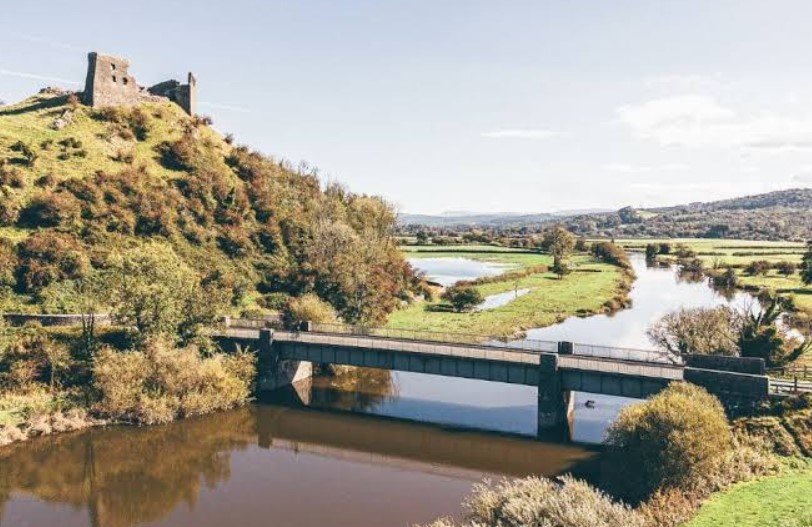
Towy Valley, also known as the Tywi Valley or Dyffryn Tywi, is a distinctive river valley in southwest Wales shaped by the River Tywi and the surrounding countryside of Carmarthenshire. Stretching from the uplands near the river’s source toward Carmarthen and its estuary, the valley combines fertile farmland, wooded hills, historic settlements, castles, gardens, and important natural habitats.
The valley has long been an important route through the Welsh landscape and remains closely connected to the towns of Llandovery, Llandeilo, and Carmarthen. Today, visitors come for its riverside scenery, historic estates, walking and cycling routes, gardens, wildlife, and the concentration of Welsh heritage found throughout the valley.
Towy Valley Quick Facts
| Fact | Details |
|---|---|
| Location | Southwest Wales |
| Country | Wales, United Kingdom |
| Region | Carmarthenshire and surrounding uplands |
| Main River | River Tywi (Towy) |
| Valley Length | Approximately 90 km for the registered historic landscape |
| Landscape | River floodplain, farmland, wooded hills and uplands |
| Famous For | River scenery, castles, gardens and historic landscapes |
| Climate | Temperate maritime |
| Best Months | May to September |
| Nearby Towns | Carmarthen, Llandeilo and Llandovery |
Where Is Towy Valley?
Towy Valley is in southwest Wales, following the course of the River Tywi from the Cambrian Mountains through Carmarthenshire toward Carmarthen Bay. The registered historic landscape extends from the Llyn Brianne area near the headwaters to the river’s estuary, while the term “Vale of Towy” is commonly used for the central section around Llandovery, Llandeilo, and Carmarthen.
The valley’s main settlements include Llandovery in the upper valley, Llandeilo in the middle section, and Carmarthen toward the lower reaches. Its location makes it a useful base for exploring wider areas of southwest and west Wales.
Geography and Landscape
The River Tywi is the defining physical feature of the valley. It rises in the Cambrian Mountains and flows generally southwest through a landscape of rolling hills, wooded slopes, agricultural land, floodplain meadows, and tributary valleys before reaching Carmarthen Bay. It is one of the longest rivers flowing entirely within Wales.
The valley varies considerably along its length. Near Llandovery, the surrounding landscape is more upland and rugged, while around Llandeilo and Carmarthen the valley becomes broader and more agricultural. The river has developed meanders, floodplain deposits, terraces, and oxbow features as it has shifted across the valley floor over thousands of years.
History of Towy Valley
The Towy Valley has been an important travel corridor for centuries. Its fertile floodplain supported farming, while the river provided a natural route through the surrounding hills. Archaeological evidence and historic landscapes show that settlement and land use developed around the river and its tributaries over long periods.
The valley became particularly important during the medieval period. Castles such as Dinefwr and Dryslwyn reflect the area’s strategic importance and its role in the history of the Welsh kingdoms. Dinefwr Castle, near Llandeilo, was associated with Lord Rhys, the powerful ruler of the medieval kingdom of Deheubarth.
Later centuries brought large country estates, landscaped parks, agricultural development, and improved transport routes. The Towy Valley also became associated with the Picturesque movement, with its combination of wooded hills, river scenery, parks, and historic buildings inspiring artists and writers. Cadw recognizes the Tywi Valley as an outstanding registered historic landscape.
How Was Towy Valley Formed?
The valley’s modern landscape reflects both geological structure and river processes. Geological structures and ancient rock formations influenced the alignment of the Tywi Valley, while erosion by the river helped create and modify its valley floor.
Glacial activity also affected the wider landscape during the last Ice Age. After the glaciers retreated, the Tywi and its tributaries continued to erode, transport, and deposit sediment. River movement created the floodplains and terraces visible in parts of the valley today.
Towy Valley Weather Throughout the Year
Towy Valley has a mild, maritime Welsh climate, with relatively cool summers, mild winters, and rainfall possible throughout the year. Conditions vary between the lower valley and the higher country around its headwaters.
January to March
Winter and early spring are generally cool and wet, with short daylight hours and frequent Atlantic weather systems. Higher areas around the upper valley can be colder and more exposed.
April to June
Spring brings gradually warmer conditions and longer days. April can remain unsettled, while May and June usually provide increasingly pleasant conditions for walking, gardens, and countryside sightseeing.
July to September
Summer is generally the warmest period, although rain remains possible. Longer daylight hours make July and August particularly suitable for exploring the valley’s walking routes, historic sites, and outdoor attractions.
October to December
Autumn brings cooler temperatures, more frequent rain, and changing woodland colours. By November and December, shorter days and wetter conditions become more typical, although the valley remains accessible year-round.
Best Weather for Visiting Towy Valley
May through September generally offers the most comfortable conditions for exploring the valley outdoors. Late spring and summer combine longer days with milder temperatures, while September can provide pleasant walking conditions and early autumn scenery.
Things to Do in Towy Valley
- Walk the Tywi Valley Path: The 13-mile traffic-free route between Abergwili and Ffairfach near Llandeilo is designed for walking, cycling, and wheeling.
- Cycle through the countryside: The level former railway route provides an accessible way to explore the central valley without sharing the entire journey with road traffic.
- Explore historic sites: Castles, estates, churches, and other heritage locations provide opportunities to discover the valley’s long history.
- Visit gardens: The surrounding countryside contains several renowned gardens and landscaped estates.
- Enjoy landscape photography: River meadows, wooded hills, castles, and changing seasonal scenery provide varied photographic subjects.
- Watch wildlife: Riverside habitats, farmland, woodland, and wetlands support a variety of birds and mammals.
- Explore local towns: Llandeilo and Carmarthen offer independent shops, cafés, cultural attractions, and local services.
Famous Attractions in and Around Towy Valley
Dinefwr
Near Llandeilo, Dinefwr combines a medieval castle, historic Newton House, parkland, and a National Nature Reserve. Its estate provides an important example of the valley’s connection between history and landscape.
Dryslwyn Castle
The ruins of Dryslwyn Castle occupy a prominent position above the Tywi Valley and provide views across the surrounding countryside.
Paxton’s Tower
This distinctive nineteenth-century tower stands above the valley near Llanarthne and forms one of the area’s most recognizable hilltop landmarks.
National Botanic Garden of Wales
Located near the eastern side of the lower Tywi Valley area, the garden combines extensive plant collections with landscaped grounds and conservation work.
Aberglasney Gardens
These historic gardens near Llandeilo are known for their restored garden spaces, woodland, and architectural features.
Carmarthenshire Museum
Located at Abergwili near Carmarthen, the museum explores the history and culture of Carmarthenshire and sits close to the western end of the Tywi Valley Path.
Llandeilo
This historic market town sits beside the Tywi and provides access to walking routes, nearby estates, and several valley attractions.
Wildlife and Nature
The valley supports a mixture of river, wetland, farmland, woodland, and hedgerow habitats. These environments provide important space for birds, insects, mammals, and plant life. The river corridor also creates ecological connections through the agricultural landscape.
Dinefwr is particularly valuable for wildlife, with ancient trees, woodland, parkland, wetland habitats, and a historic deer park. Species recorded around the estate include several native woodpeckers, wetland birds, tree sparrows, and deer.
How to Reach Towy Valley
The valley is accessible by road from several directions, with Carmarthen, Llandeilo, and Llandovery providing useful transport points. The A40 follows much of the central valley corridor, while local roads connect the surrounding villages and attractions.
Rail travel is particularly useful around Llandeilo, which is served by the Heart of Wales Line. The railway connects the town with communities along the scenic route toward Shrewsbury and Swansea.
The Tywi Valley Path also provides a new traffic-free connection between Abergwili and Ffairfach, making walking and cycling practical alternatives for exploring the central section.
Where to Stay Near Towy Valley
Accommodation is available across the valley and surrounding towns. Llandeilo and Carmarthen provide the broadest selection of hotels, guesthouses, and self-catering accommodation, while smaller villages offer rural cottages, farm stays, and bed-and-breakfast options.
Visitors interested in walking or cycling can also choose accommodation close to the Tywi Valley Path. Campsites and countryside lodgings are available in the wider Carmarthenshire area for travelers seeking a more rural stay.
Why Is Towy Valley Famous?
Towy Valley is famous for its River Tywi, fertile countryside, medieval castles, historic estates, landscaped gardens, and strong Welsh cultural heritage. Its combination of natural scenery and historic landscapes has made it one of the distinctive cultural landscapes of southwest Wales.
Towy Valley FAQs
Where is Towy Valley located?
Towy Valley is in southwest Wales, extending from the Cambrian Mountains through Carmarthenshire toward Carmarthen Bay.
What is Towy Valley famous for?
It is known for the River Tywi, historic castles, country estates, gardens, farmland, wildlife, and scenic countryside.
What is the weather like in Towy Valley?
The valley has a mild maritime climate with relatively cool summers, mild winters, and rainfall possible throughout the year.
What are the best months to visit Towy Valley?
May through September generally offers the most favorable conditions for walking, cycling, sightseeing, and visiting gardens.
What can you do in Towy Valley?
Visitors can walk or cycle the Tywi Valley Path, explore castles and gardens, visit museums, photograph the countryside, and observe wildlife.
How do you reach Towy Valley?
The valley can be reached by road, while Llandeilo and other locations are accessible by rail. The Heart of Wales Line provides a particularly scenic railway connection.
Is Towy Valley good for walking?
Yes. The newly completed Tywi Valley Path provides a 13-mile traffic-free route between Abergwili and Ffairfach near Llandeilo.
What river runs through Towy Valley?
The River Tywi, also known as the River Towy, runs through the valley and is its defining waterway.
Final Thoughts
Towy Valley offers a distinctive combination of river scenery, fertile countryside, historic landmarks, gardens, wildlife, and Welsh heritage. Its varied landscape and growing network of walking and cycling routes make it an appealing destination for visitors who want to experience the countryside alongside some of southwest Wales’ most important historic places.
For More Visit Stay And Update
