
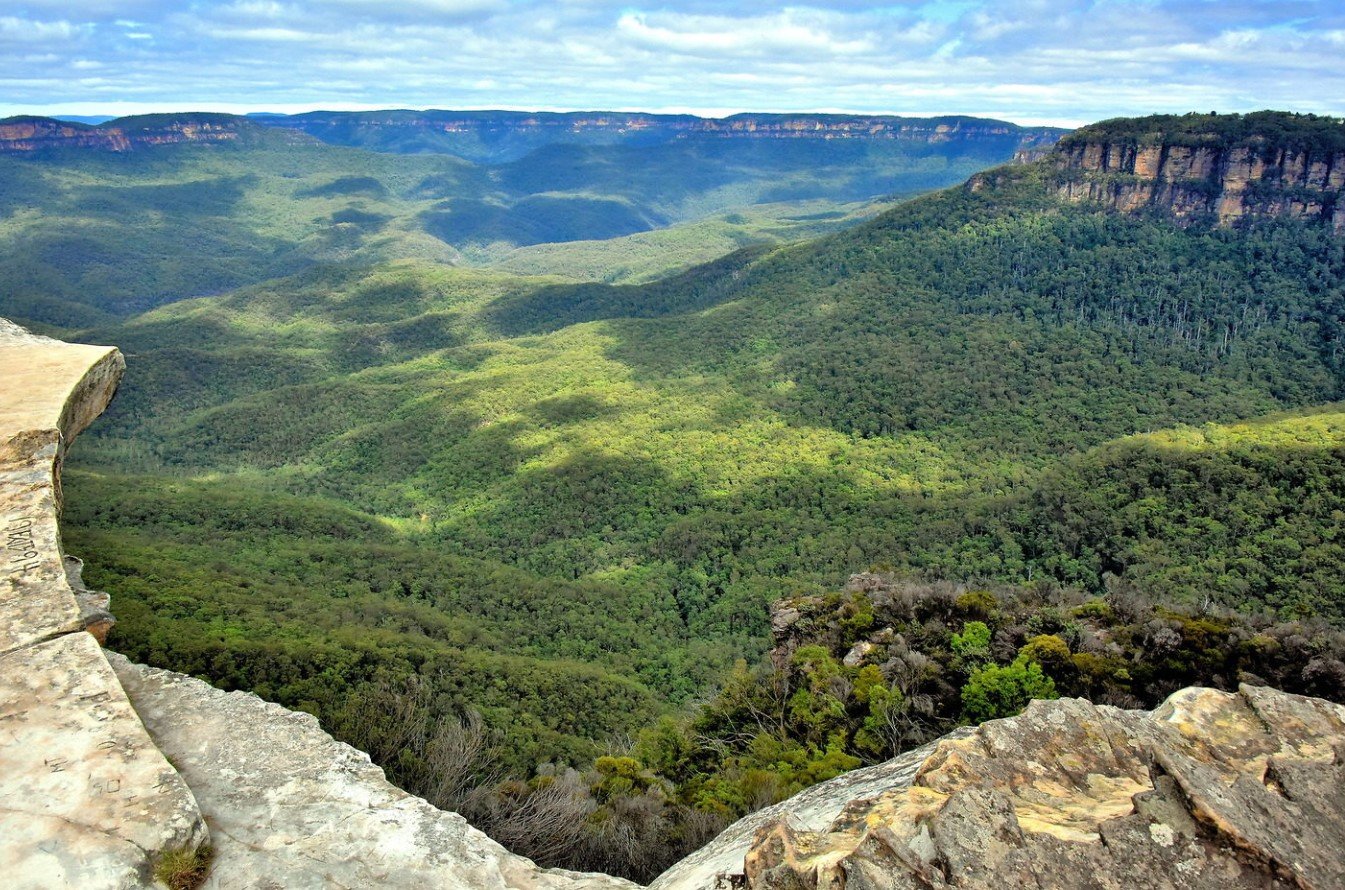
Jamison Valley is a dramatic mountain valley in the Blue Mountains of New South Wales, Australia. Located west of Sydney, it is known for its steep sandstone cliffs, heavily forested slopes, deep ravines, and expansive views across the Blue Mountains. The valley forms an important part of the landscape around Katoomba and is closely associated with several of the region’s most recognizable natural landmarks.
The valley is particularly notable for the sharp contrast between its elevated escarpments and deeply dissected terrain. Lookouts around Katoomba provide broad views across Jamison Valley, while walking tracks descend into the surrounding bushland. Its combination of geological scenery, eucalyptus forests, waterfalls, Aboriginal heritage, and outdoor recreation makes it an important part of the Blue Mountains landscape.
Jamison Valley Quick Facts
| Fact | Details |
|---|---|
| Location | Blue Mountains, New South Wales |
| Country | Australia |
| Region | Blue Mountains |
| Elevation | Varies considerably from the escarpment to the valley floor |
| Famous For | Sandstone cliffs, forests, waterfalls and Three Sisters views |
| Climate | Temperate mountain climate |
| Main Waterways | Jamison Creek and surrounding tributaries |
| Best Months | Generally March to May and September to November |
| Nearby City/Town | Katoomba |
Where Is Jamison Valley?
Jamison Valley is located in the Blue Mountains of New South Wales, approximately 100 kilometers west of Sydney. It lies immediately south of Katoomba and forms part of the Greater Blue Mountains landscape.
Katoomba is the principal town associated with the valley and serves as a major visitor base for exploring the surrounding mountains. Other nearby communities include Leura and Wentworth Falls. The valley is within the broader Blue Mountains National Park area and can be viewed from numerous points along the Katoomba and Leura escarpments.
Geography and Landscape
Jamison Valley is characterized by a high sandstone plateau that has been deeply cut by erosion. The surrounding escarpments drop dramatically into a broad, forested valley containing ridges, gullies, cliffs, creeks, and waterfalls.
The valley’s sandstone formations developed from ancient sedimentary deposits that accumulated over a very long geological period. Erosion by water gradually carved the plateau into the deeply dissected landscape visible today.
Dense eucalyptus woodland covers much of the valley. The steep cliffs and narrow ravines create strong changes in elevation over relatively short distances, producing a landscape of viewpoints, walking tracks, waterfalls, and sheltered valleys.
The Three Sisters, a distinctive group of sandstone rock formations near Katoomba, stand on the northern edge of the valley and provide one of the most recognizable views across Jamison Valley.
History of Jamison Valley
Jamison Valley lies within the traditional lands of the Gundungurra and Darug peoples, who have long-standing cultural connections with the Blue Mountains. Aboriginal communities used the region’s forests, waterways, plants, and animals and developed detailed knowledge of the mountain environment.
European exploration of the Blue Mountains increased after the crossing of the mountain range in 1813 by Gregory Blaxland, William Lawson, and William Charles Wentworth. Subsequent exploration, surveying, road building, and settlement gradually increased European access to the area.
Katoomba later developed as a tourism and resort destination, particularly after improved transport links made the Blue Mountains easier to reach from Sydney. The spectacular scenery surrounding Jamison Valley became a major attraction, helping establish the region as one of Australia’s best-known mountain destinations.
Conservation became increasingly important as tourism and development expanded. Today, the valley forms part of a protected landscape within the Blue Mountains and the wider Greater Blue Mountains World Heritage Area.
How Was Jamison Valley Formed?
Jamison Valley was shaped primarily by long-term erosion of the Blue Mountains sandstone plateau. Ancient layers of sediment hardened into sandstone, and water gradually exploited cracks and weaker sections of the rock.
Over millions of years, erosion deepened valleys and enlarged cliffs while streams cut channels through the plateau. This continuing process produced the steep escarpments, narrow gullies, isolated rock formations, and deeply incised valleys that define the Blue Mountains.
Jamison Valley Weather Throughout the Year
Jamison Valley has a cooler mountain climate than nearby Sydney, with temperatures influenced by elevation. Weather can change quickly, particularly around the exposed escarpments.
January to March
Summer is generally mild to warm during the day, although temperatures are usually more comfortable than in lower-elevation parts of New South Wales. Afternoon showers and thunderstorms can occur, particularly during unstable weather.
April to June
Autumn brings cooler temperatures and generally pleasant conditions for walking. Nights become noticeably colder, while rainfall remains possible throughout the season.
July to September
Winter is cool, particularly during the morning and evening. Frost can occur, and higher parts of the Blue Mountains can occasionally experience snow or sleet during cold weather events. Rain and low cloud may also reduce visibility around the escarpments.
October to December
Spring gradually becomes warmer, with comfortable daytime conditions for hiking and sightseeing. Rainfall can be variable, and changing weather is common around the mountain ridges.
Best Weather for Visiting Jamison Valley
Autumn and spring are generally among the most comfortable periods for exploring Jamison Valley because temperatures are moderate and conditions are well suited to hiking and sightseeing. Summer can also be enjoyable, while winter offers a colder mountain experience and the possibility of misty or frosty scenery.
Things to Do in Jamison Valley
Hiking and Bushwalking
Numerous walking tracks descend from the Blue Mountains escarpment into the valley and surrounding forest. Routes vary from relatively short walks to demanding trails involving steep climbs.
Scenic Lookouts
The escarpment around Katoomba and Leura contains several viewpoints overlooking Jamison Valley. These locations are particularly popular for seeing the cliffs, forested slopes, and distant mountain ridges.
Photography
The combination of sandstone cliffs, eucalyptus forest, waterfalls, changing light, and distant ridges makes the valley a strong destination for landscape photography.
Waterfall Walks
Several walking routes in the surrounding Blue Mountains lead to waterfalls and creek environments. Water flow can vary substantially depending on recent rainfall.
Nature Observation
Birdwatching and wildlife observation are popular activities in the surrounding bushland. Early morning and quieter walking tracks can provide the best opportunities to see native species.
Aboriginal Cultural Experiences
Visitors can learn about the Aboriginal history and cultural significance of the Blue Mountains through interpretive sites, cultural programs, and information provided across the region.
Famous Attractions in and Around Jamison Valley
Three Sisters
The Three Sisters are three prominent sandstone formations overlooking Jamison Valley from Echo Point in Katoomba. They are among the most recognizable natural landmarks in the Blue Mountains.
Echo Point
Echo Point is a major lookout area offering panoramic views across Jamison Valley and toward the Three Sisters and surrounding escarpments.
Scenic World
Located in Katoomba, Scenic World provides several ways to experience the Blue Mountains landscape, including the Scenic Railway, Scenic Cableway, and Scenic Skyway. Its attractions provide elevated and valley-level perspectives of the surrounding terrain.
Wentworth Falls
Located near the town of Wentworth Falls, this major waterfall and surrounding walking area are among the Blue Mountains’ best-known natural attractions.
Leura Cascades
Leura Cascades is a waterfall and creek system near Leura with walking tracks leading through rainforest-like vegetation and along the escarpment.
Katoomba Falls
Katoomba Falls drops from the escarpment near Katoomba and can be viewed from several walking tracks and lookout points.
Gordon Falls
Located near Leura, Gordon Falls is another scenic waterfall reached through the surrounding bushland and walking tracks.
Wildlife and Nature
Jamison Valley supports vegetation typical of the Blue Mountains, including extensive eucalyptus forests, shrubs, grasses, and species adapted to the region’s sandstone soils. Moist gullies support denser vegetation than the exposed plateau and cliff environments.
Wildlife in the broader Blue Mountains includes eastern grey kangaroos, swamp wallabies, echidnas, wombats, gliders, possums, and a wide variety of native birds. The region is also known for its biodiversity and is part of the Greater Blue Mountains World Heritage Area, which protects a large area of native Australian vegetation and habitat.
How to Reach Jamison Valley
The main access point for Jamison Valley is Katoomba, which can be reached from Sydney by road or train. The Great Western Highway is the principal road route across the Blue Mountains, while the Blue Mountains Line provides regular rail connections from Sydney to Katoomba.
From Katoomba, many major viewpoints and attractions around the valley can be reached by local roads, walking routes, buses, or tour services. Visitors planning longer bushwalks should check track conditions and weather before setting out, as steep terrain and changing mountain weather can affect access.
Where to Stay Near Jamison Valley
Katoomba is the most convenient base for exploring Jamison Valley and offers a wide range of accommodation, including hotels, guesthouses, cottages, apartments, and budget options.
Leura provides another popular accommodation area with hotels, guesthouses, and holiday properties. Visitors seeking a quieter setting can also find cabins, retreats, and camping options elsewhere in the Blue Mountains.
Staying near Katoomba or Leura is particularly practical for travelers who want easy access to the major lookouts, walking trails, and attractions surrounding the valley.
Why Is Jamison Valley Famous?
Jamison Valley is famous for its dramatic Blue Mountains scenery, deep sandstone landscape, eucalyptus forests, waterfalls, and panoramic escarpment views. Its close relationship with Katoomba and landmarks such as the Three Sisters has also made it one of the most recognizable valley landscapes in New South Wales.
Jamison Valley FAQs
Where is Jamison Valley located?
Jamison Valley is in the Blue Mountains of New South Wales, Australia, immediately south of Katoomba and west of Sydney.
What is Jamison Valley famous for?
It is known for its sandstone cliffs, eucalyptus forests, waterfalls, scenic lookouts, and views of the Three Sisters.
What is the weather like in Jamison Valley?
The valley has a cooler mountain climate than Sydney, with mild to warm summers and cold winters. Rain, mist, and rapidly changing conditions can occur throughout the year.
What are the best months to visit Jamison Valley?
Autumn and spring generally provide comfortable conditions for hiking and sightseeing, although each season offers a different experience.
What can you do in Jamison Valley?
Popular activities include bushwalking, photography, sightseeing, waterfall walks, wildlife observation, and exploring nearby Blue Mountains attractions.
How do you reach Jamison Valley?
Katoomba is the main gateway. It can be reached by road via the Great Western Highway or by train on the Blue Mountains Line from Sydney.
Does Jamison Valley get snow?
Snow is uncommon in the valley itself but can occur in the higher parts of the Blue Mountains during suitable winter weather.
What attractions are near Jamison Valley?
Major nearby attractions include the Three Sisters, Echo Point, Scenic World, Katoomba Falls, Leura Cascades, Gordon Falls, and Wentworth Falls.
Final Thoughts
Jamison Valley offers a distinctive combination of sandstone landscapes, native forests, waterfalls, Aboriginal heritage, and mountain scenery. With Katoomba providing easy access to its lookouts and walking trails, the valley is an important destination for anyone interested in exploring the natural and cultural character of Australia’s Blue Mountains.
For More Visit Stay And Update
