
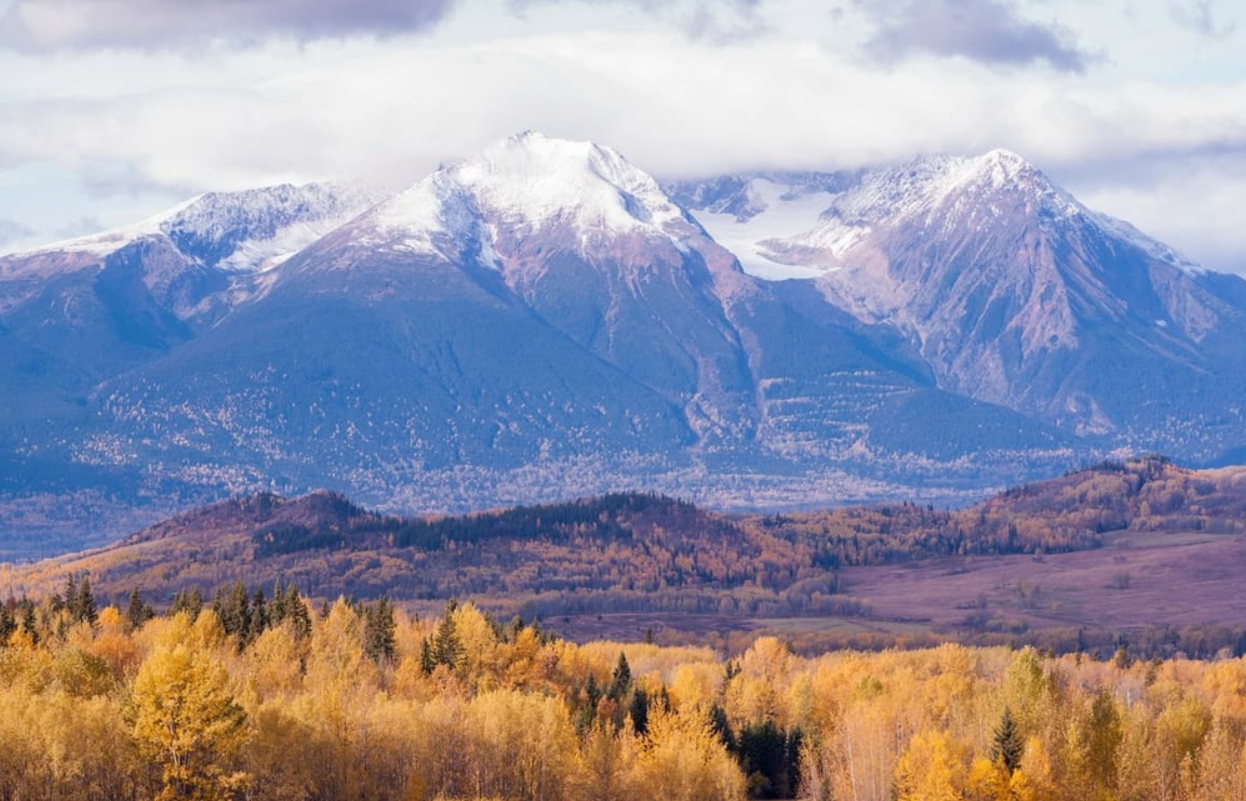
Bulkley Valley is a scenic mountain valley in northwestern British Columbia, Canada, known for its rivers, forests, agricultural landscapes, and close connection to the surrounding Coast and Skeena Mountains. The valley stretches along the Bulkley River and includes several communities that serve as important centers for the region.
The area combines a relatively broad valley floor with rugged mountain scenery, creating a landscape where farming, outdoor recreation, Indigenous culture, and small-town life exist alongside one another. Its location also makes it an important corridor for travelers exploring northern British Columbia and the wider Skeena region.
Bulkley Valley Quick Facts
| Fact | Details |
|---|---|
| Location | Northwestern British Columbia, Canada |
| Country | Canada |
| Region | Bulkley-Nechako / Skeena region |
| Main River | Bulkley River |
| Famous For | Mountain scenery, agriculture, fishing and outdoor recreation |
| Climate | Cool continental with snowy winters |
| Major Communities | Smithers, Telkwa, Houston |
| Nearby Regional Centre | Smithers |
| Best Months | June to September |
Where Is Bulkley Valley?
Bulkley Valley is located in northwestern British Columbia, roughly between the communities of Houston and Smithers, with the valley extending north toward Telkwa and the surrounding Skeena region. The Bulkley River is the valley’s principal waterway and forms an important geographic corridor through the area.
Smithers is the largest community in the valley and serves as a regional service and transportation center. Telkwa lies near the northern part of the valley, while Houston is located farther south. The region is surrounded by mountain ranges and connected to other parts of northern British Columbia by major highways and rail routes.
Geography and Landscape
The valley is characterized by a broad river corridor surrounded by forested hills and higher mountain terrain. The Bulkley River flows north through the valley before joining the Skeena River near Hazelton. Numerous smaller streams and tributaries contribute to the area’s extensive freshwater network.
Agricultural land occupies portions of the valley floor, particularly around Smithers, Telkwa, and Houston. The surrounding landscape is dominated by coniferous forests, alpine terrain, lakes, wetlands, and mountain slopes. Nearby mountain systems include the Babine Mountains to the east and the Telkwa Range to the west.
The combination of open farmland and heavily forested mountains gives the valley a distinctive northern British Columbia landscape. Elevations increase substantially away from the valley floor, producing different vegetation zones and recreational environments.
History of Bulkley Valley
Bulkley Valley has a long Indigenous history, particularly associated with the Wet’suwet’en people, whose traditional territory includes much of the region. The Bulkley River and surrounding lands have long supported hunting, fishing, gathering, travel, and cultural activities.
European exploration and settlement increased during the nineteenth century, followed by the development of transportation routes through northern British Columbia. The arrival of the railway in the early twentieth century played an important role in connecting communities in the valley with wider markets and encouraging permanent settlement.
Agriculture became an important part of the local economy, with farms and ranches developing on suitable portions of the valley floor. Forestry, transportation, resource industries, and regional services later became significant contributors to the area’s economy. Today, communities throughout the valley continue to reflect a mixture of Indigenous heritage, agricultural traditions, resource industries, and outdoor-oriented tourism.
How Was Bulkley Valley Formed?
The valley’s landscape was shaped by long-term geological processes and glaciation. During successive ice ages, large glaciers moved through northwestern British Columbia, eroding existing valleys and modifying the surrounding terrain.
Glacial activity helped widen and deepen the valley, while rivers and streams continued to transport sediment and reshape the valley floor. The mountains surrounding the valley are part of the complex geological landscape of northern British Columbia, where uplift, erosion, faulting, and glacial processes have all contributed to today’s terrain.
Bulkley Valley Weather Throughout the Year
Bulkley Valley has a cool continental climate with pronounced seasonal differences. Winters are generally cold and snowy, while summers are considerably warmer and often relatively dry.
January to March
Winter dominates the first part of the year, with frequent snow, freezing temperatures, and short daylight hours. January and February are typically the coldest months. By March, temperatures begin to rise, although snow and icy conditions can remain common.
April to June
Spring brings gradual warming and the beginning of snowmelt. April can still feel wintry, while May and June become increasingly mild. Rivers and streams are often influenced by spring runoff, and vegetation becomes greener as the season progresses.
July to September
Summer is generally the warmest period, with pleasant daytime temperatures and cooler nights. July and August are particularly suitable for hiking, fishing, camping, sightseeing, and other outdoor activities. September usually brings cooler evenings and the beginning of autumn colors.
October to December
Autumn arrives with falling temperatures, changing foliage, and increasingly frequent precipitation. By November and December, winter conditions return, with snow becoming a regular feature and daylight hours becoming shorter.
Best Weather for Visiting Bulkley Valley
June through September generally offers the most comfortable conditions for exploring the valley. Summer provides the best combination of mild temperatures, longer daylight hours, accessible outdoor recreation, and generally favorable road conditions.
Things to Do in Bulkley Valley
- Hiking and trekking: Trails around the valley and nearby mountains range from accessible walks to challenging mountain routes.
- Fishing: The Bulkley River and surrounding waterways are known for freshwater fishing, particularly salmon and trout opportunities.
- Camping: Campgrounds and backcountry areas provide ways to experience the valley’s forests, rivers, and mountains.
- Wildlife watching: Forests, wetlands, rivers, and mountain environments provide opportunities to observe northern British Columbia wildlife.
- Mountain recreation: The nearby Babine Mountains and surrounding ranges offer hiking, snowshoeing, skiing, and other seasonal activities.
- Photography: Mountain scenery, rivers, farmland, forests, and changing seasons create varied photography opportunities.
- Canoeing and kayaking: Nearby lakes and suitable waterways provide opportunities for paddling, depending on local conditions and access.
Famous Attractions in and Around Bulkley Valley
Smithers
Smithers is the valley’s main community and a useful base for exploring the surrounding mountains, trails, rivers, and cultural sites. Its distinctive alpine-inspired character reflects the area’s strong connection to outdoor recreation.
Babine Mountains Provincial Park
Located east of Smithers, this protected mountain area contains alpine landscapes, forests, lakes, and extensive hiking terrain. It is one of the region’s most important destinations for mountain recreation.
Hudson Bay Mountain
Hudson Bay Mountain rises west of Smithers and is a major destination for skiing and other outdoor activities. Its elevated terrain provides expansive views across the surrounding region.
Telkwa
The historic community of Telkwa sits near the northern end of the valley and provides access to local trails, waterways, and cultural attractions.
Bulkley River
The river is a defining geographical feature of the valley and is particularly significant for fishing, wildlife habitat, and the region’s broader ecosystem.
Tyhee Lake Provincial Park
Located near Telkwa, Tyhee Lake Provincial Park offers a freshwater lake setting with opportunities for swimming, boating, picnicking, and camping during the warmer months.
Smithers Art Gallery
The gallery provides a cultural attraction within the valley, showcasing exhibitions and artistic work connected with Smithers and the surrounding region.
Wildlife and Nature
Bulkley Valley supports a diverse northern ecosystem shaped by forests, rivers, wetlands, agricultural land, and mountains. Common wildlife in the broader region includes black bears, moose, deer, coyotes, beavers, and a variety of smaller mammals.
The valley and surrounding waterways are also important for birds and fish. Salmon and trout are among the best-known fish associated with the area’s rivers, while forests provide habitat for eagles, hawks, owls, songbirds, and other species. Protected areas and provincial parks help conserve important habitats as development and resource use continue across the wider region.
How to Reach Bulkley Valley
The valley is accessible by road, rail, and air. Highway 16, part of the Yellowhead Highway, is the principal road route through the region and connects communities including Houston, Telkwa, and Smithers with other parts of British Columbia.
Smithers Regional Airport provides scheduled air service and is the main airport serving the valley. Via Rail’s Skeena service also operates through the broader region, connecting communities along the rail corridor between Jasper and Prince Rupert, although schedules can be seasonal or subject to change.
Driving is generally the most flexible option for exploring attractions outside the main communities.
Where to Stay Near Bulkley Valley
Smithers offers the widest selection of accommodation in the valley, including hotels, motels, inns, guesthouses, cabins, and vacation rentals. It is a convenient base for visitors who want access to restaurants, shops, transportation, and nearby outdoor attractions.
Additional accommodation can be found in Telkwa and Houston, while campgrounds and recreational sites provide options for travelers who prefer to stay closer to lakes, rivers, or forested areas. Rural cabins and lodges are also available in parts of the surrounding region.
Why Is Bulkley Valley Famous?
Bulkley Valley is best known for its combination of mountain scenery, the Bulkley River, agricultural land, Indigenous heritage, fishing opportunities, and access to outdoor recreation. Its position along the Yellowhead transportation corridor also gives it an important role in connecting communities across northern British Columbia.
Bulkley Valley FAQs
Where is Bulkley Valley located?
Bulkley Valley is in northwestern British Columbia, Canada, along the Bulkley River. Smithers, Telkwa, and Houston are among the principal communities associated with the valley.
What is Bulkley Valley famous for?
The valley is known for its rivers, mountain scenery, agriculture, fishing, outdoor recreation, and Wet’suwet’en cultural heritage.
What is the weather like in Bulkley Valley?
The valley has cold, snowy winters and milder summers. Spring and autumn are transitional seasons with rapidly changing temperatures.
What are the best months to visit Bulkley Valley?
June through September generally offers the most favorable conditions for hiking, fishing, sightseeing, camping, and other outdoor activities.
What can you do in Bulkley Valley?
Popular activities include hiking, fishing, camping, wildlife viewing, photography, mountain recreation, and paddling on suitable lakes and waterways.
How do you reach Bulkley Valley?
Highway 16 is the main road corridor, while Smithers Regional Airport provides air access. Rail service also connects the region with other communities in northern British Columbia.
Does Bulkley Valley get snow?
Yes. Snow is a major part of the valley’s winter climate, with the surrounding mountains receiving substantial snowfall during the colder months.
What are the main attractions near Bulkley Valley?
Notable destinations include Smithers, Babine Mountains Provincial Park, Hudson Bay Mountain, Telkwa, Bulkley River, and Tyhee Lake Provincial Park.
Final Thoughts
Bulkley Valley offers a distinctive combination of northern British Columbia landscapes, river systems, mountain environments, Indigenous heritage, agriculture, and outdoor recreation. Its varied scenery and four-season climate make it a worthwhile destination for travelers interested in experiencing the natural and cultural character of the region.
For More Visit Stay And Update
