
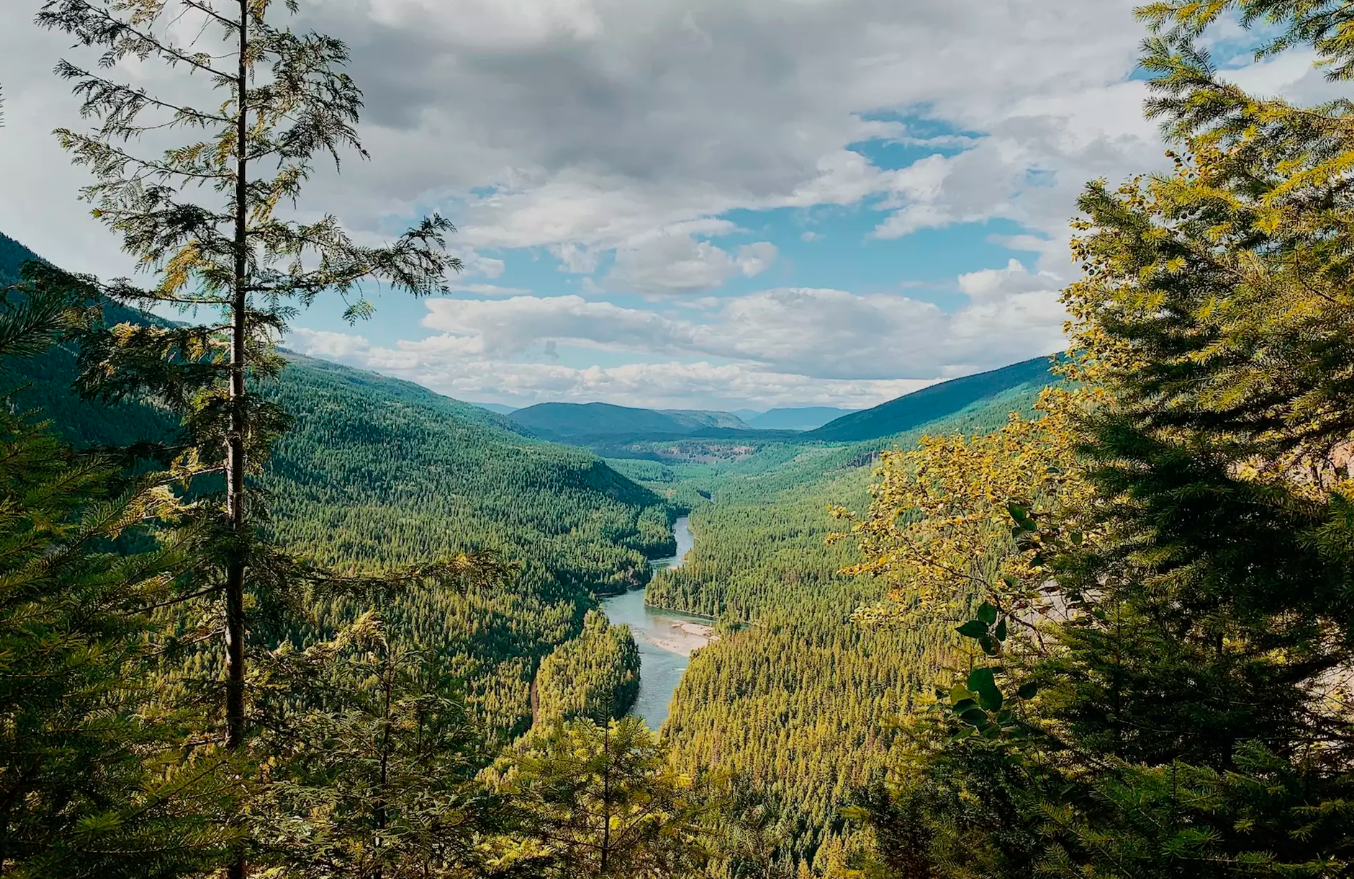
Thompson Valley is a broad geographic region in the southern interior of British Columbia, Canada, shaped by the North and South Thompson Rivers and the surrounding mountains, plateaus, grasslands, and forests. Rather than being a single narrow valley, it encompasses a network of landscapes and communities connected by the Thompson River system, with Kamloops serving as its principal urban centre.
The region is known for its dry interior climate, golden grasslands, rugged hills, ranching heritage, Indigenous culture, rivers, lakes, and year-round outdoor recreation. Its landscape changes considerably from the warmer, drier areas around Kamloops to the greener and more forested North Thompson Valley farther north.
Thompson Valley Quick Facts
| Fact | Details |
|---|---|
| Location | Southern Interior of British Columbia |
| Country | Canada |
| Region | Thompson-Okanagan |
| Main Centre | Kamloops |
| Main Rivers | North Thompson and South Thompson |
| Famous For | Grasslands, rivers, ranches, outdoor recreation and Indigenous heritage |
| Climate | Dry interior climate with strong seasonal variation |
| Best Months | May to September for general outdoor activities |
| Nearby Communities | Kamloops, Clearwater, Barriere, Chase, Merritt |
Where Is Thompson Valley?
Thompson Valley is located in the southern interior of British Columbia, roughly between the Coast Mountains to the west and the higher interior mountain and plateau landscapes to the east and north. The region follows the Thompson River system, with the North and South Thompson Rivers meeting at Kamloops.
Kamloops is the main city and an important transportation centre, while communities such as Clearwater, Barriere, Chase, Savona, and Merritt are associated with different parts of the broader Thompson region. The area connects several major routes through the British Columbia Interior, making it an important link between Vancouver, the Cariboo, the Okanagan, and the Rocky Mountain region.
Geography and Landscape
The Thompson Valley has a varied landscape rather than a single uniform valley floor. Around Kamloops, the terrain is characterized by dry grasslands, sagebrush, ponderosa pine, rolling hills, hoodoos, and river valleys. Farther north, the North Thompson becomes increasingly forested and mountainous.
The Thompson River is the defining physical feature. The North and South Thompson Rivers converge at Kamloops and continue westward toward the Fraser River. Lakes, tributary valleys, plateaus, and mountain ranges add considerable variety to the region.
Glacial activity, volcanic processes, erosion, and river systems have all influenced the landscape. Ancient glaciers helped shape many of the broad valleys and lakes, while erosion has exposed distinctive rock formations and created the layered hills and hoodoos visible around parts of the southern Thompson region.
History of Thompson Valley
The Thompson Valley has a long Indigenous history. Much of the region is part of the traditional territory of the Secwépemc people, whose communities have maintained cultural and economic connections with the rivers, grasslands, forests, and mountains for thousands of years. The name Kamloops comes from the Secwépemc name Tk’emlúps, associated with the meeting of the rivers.
European fur traders arrived in the early nineteenth century, and Fort Kamloops was established in 1812 as a trading post. The area’s position at the confluence of the rivers made it a natural centre for trade and transportation.
The Fraser Canyon and Cariboo gold rushes later brought prospectors and travelers through the region. Ranching, farming, transportation, forestry, and railway development became increasingly important during the nineteenth and twentieth centuries. The arrival of major railway lines helped connect Thompson communities with other parts of British Columbia and strengthened Kamloops as a regional centre.
Today, Indigenous heritage, ranching traditions, transportation, resource industries, agriculture, and tourism all contribute to the region’s identity.
How Was Thompson Valley Formed?
The landscapes of Thompson Valley developed through a combination of geological uplift, faulting, erosion, river action, and repeated glaciation. During the Ice Ages, glaciers moved through the Interior of British Columbia, reshaping existing valleys and depositing sediments across lower areas.
The Thompson River and its tributaries continued to modify the terrain after the glaciers retreated. Erosion exposed different rock layers, while changing water levels and sediment deposits helped form terraces, riverbanks, and distinctive geological features throughout the region.
Thompson Valley Weather Throughout the Year
Thompson Valley weather varies considerably across its large geographic area. The southern portion around Kamloops is notably dry, while northern sections are cooler, wetter, and more heavily forested.
January to March
Winter is generally cold, with snow common across the region. Around Kamloops, daytime temperatures often remain near or below freezing during the coldest periods, while higher elevations experience more persistent snow. March begins the transition toward milder conditions.
April to June
Spring brings rapidly warming temperatures and longer days. April can still be cool, but May and June are increasingly warm and suitable for hiking, fishing, camping, and sightseeing. Rainfall remains relatively limited around Kamloops compared with wetter parts of British Columbia.
July to September
Summer is typically warm and dry in the southern Thompson Valley. Kamloops can experience temperatures above 30°C, while northern and higher-elevation areas are generally cooler. Long daylight hours make this the busiest period for camping, boating, hiking, cycling, and other outdoor activities.
October to December
Autumn begins with mild days and cooler nights before temperatures decline toward winter. October often brings colorful foliage in forested areas, while November and December become colder and increasingly snowy, particularly at higher elevations.
Best Weather for Visiting Thompson Valley
May through September generally provides the most comfortable conditions for exploring the region’s outdoor attractions. July and August are especially suitable for warm-weather activities, while May, June, and September can offer milder temperatures and fewer peak-season crowds.
Things to Do in Thompson Valley
- Hiking: Trails range from easy riverside walks to challenging mountain and backcountry routes.
- Fishing: The Thompson River system and surrounding lakes provide opportunities for anglers.
- Camping: Numerous campgrounds provide access to rivers, forests, lakes, and mountain landscapes.
- Boating: Lakes and calmer waterways offer opportunities for kayaking, canoeing, and recreational boating.
- Wildlife Watching: Forests, grasslands, wetlands, and rivers support diverse wildlife.
- Cycling: Roads and trails around Kamloops and surrounding communities are popular with cyclists.
- Winter Recreation: Skiing, snowboarding, snowshoeing, and other winter activities are available at higher-elevation destinations such as Sun Peaks.
Famous Attractions in and Around Thompson Valley
Kamloops
The region’s principal city sits where the North and South Thompson Rivers meet and offers museums, cultural attractions, restaurants, trails, and access to surrounding landscapes.
Kamloops Lake
This long, narrow lake west of Kamloops is surrounded by dry hills and rugged terrain and provides opportunities for boating, fishing, and scenic sightseeing.
Sun Peaks Resort
Located east of Kamloops, Sun Peaks is a major four-season mountain resort known for skiing and snowboarding in winter and hiking, mountain biking, and other recreation in summer.
Wells Gray Provincial Park
Farther north near Clearwater, Wells Gray protects a large wilderness landscape famous for waterfalls, forests, volcanic features, lakes, and wildlife.
Secwepemc Museum and Heritage Park
Located near Kamloops, this cultural site provides insight into Secwépemc history, traditions, archaeology, and connections to the surrounding land.
Kenna Cartwright Park
Near Kamloops, this large municipal park contains an extensive network of hiking and mountain-biking trails with views over the city and surrounding valley.
Chase
Situated near the southern part of the Thompson region, Chase provides access to Shuswap Lake and surrounding outdoor recreation.
Wildlife and Nature
The region’s ecological diversity reflects its changing elevation and climate. Dry grasslands around Kamloops support species adapted to semi-arid conditions, while forests farther north contain Douglas fir, lodgepole pine, spruce, cedar, and other vegetation.
Wildlife includes mule deer, black bears, coyotes, beavers, mountain goats, and numerous bird species. Rivers and lakes provide important habitat for fish and waterfowl, while grasslands and forest edges support a wide variety of smaller mammals and birds.
Conservation areas and provincial parks protect important habitats throughout the Thompson region. The transition between dry grasslands, forests, wetlands, and mountainous environments makes the area particularly valuable for biodiversity.
How to Reach Thompson Valley
Kamloops is the main transportation gateway. Kamloops Airport provides scheduled air connections, while major highways connect the city with Vancouver, the Okanagan, Alberta, and northern British Columbia.
Highway 1 follows the Trans-Canada route through the region, while Highway 5 provides a major north-south connection through the North Thompson. Rail services also pass through Kamloops, and intercity bus services connect several communities.
Winter travelers should be prepared for snow and changing road conditions, particularly on mountain routes and in northern sections of the valley.
Where to Stay Near Thompson Valley
Kamloops offers the widest range of accommodation, including hotels, motels, guesthouses, vacation rentals, and campgrounds. Smaller communities such as Clearwater, Barriere, Chase, and Merritt provide additional hotels, lodges, cabins, and camping options.
For travelers focused on mountain recreation, Sun Peaks provides resort accommodation, while provincial parks and rural areas offer camping and more secluded lodging options.
Why Is Thompson Valley Famous?
Thompson Valley is known for its combination of dry interior grasslands, major rivers, mountain scenery, Indigenous heritage, ranching history, and extensive outdoor recreation. Its dramatic change from the arid landscapes around Kamloops to the forested North Thompson makes the region particularly diverse.
Thompson Valley FAQs
Where is Thompson Valley located?
Thompson Valley is in the southern interior of British Columbia, centered around the Thompson River system and the city of Kamloops.
What is Thompson Valley famous for?
It is known for the North and South Thompson Rivers, dry grasslands, mountain scenery, Indigenous heritage, ranching, outdoor recreation, and Kamloops.
What is the weather like in Thompson Valley?
The southern area has a relatively dry climate with hot summers and cold winters. Northern and higher-elevation sections are generally cooler and wetter.
What are the best months to visit Thompson Valley?
May through September is generally the most convenient period for hiking, camping, boating, sightseeing, and other outdoor activities.
What can you do in Thompson Valley?
Visitors can hike, fish, camp, cycle, boat, observe wildlife, explore cultural attractions, and enjoy winter sports at higher elevations.
How do you reach Thompson Valley?
Kamloops is the main gateway and can be reached by air, highway, rail, and bus. Highways 1 and 5 are especially important regional routes.
Does Thompson Valley get snow?
Yes. Snow is common during winter, with heavier and more persistent snowfall in northern and higher-elevation areas.
What attractions are near Thompson Valley?
Major attractions include Kamloops, Kamloops Lake, Sun Peaks Resort, Wells Gray Provincial Park, Kenna Cartwright Park, and Secwepemc cultural sites.
Final Thoughts
Thompson Valley offers a distinctive combination of rivers, dry grasslands, forests, mountains, Indigenous heritage, and outdoor recreation. Its varied landscapes and four-season climate make it a useful destination for travelers interested in both natural environments and the cultural history of British Columbia’s Interior.
For More Visit Stay And Update
