
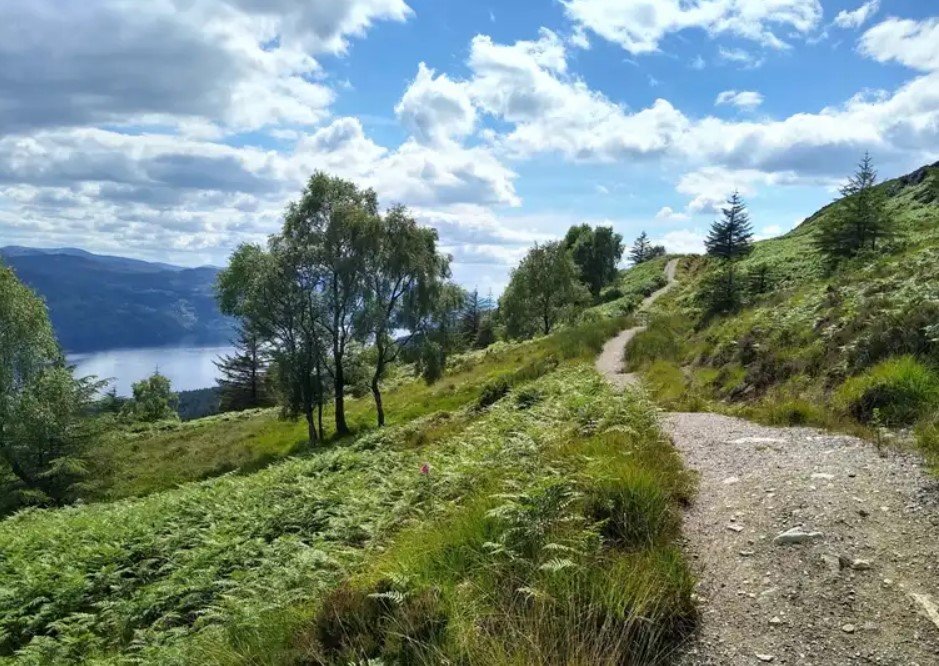
Great Glen is one of Scotland’s most important natural corridors, stretching diagonally across the Scottish Highlands from Fort William in the southwest to Inverness in the northeast. Known in Scottish Gaelic as Gleann Mòr, it is a dramatic landscape of long freshwater lochs, steep Highland slopes, forests, and historic settlements.
The glen is especially notable because it follows the Great Glen Fault, a major geological feature that helped shape this remarkable route through the Highlands. Today, Great Glen is popular for walking, cycling, boating, sightseeing, and exploring famous places such as Loch Ness.
Great Glen Quick Facts
| Fact | Details |
|---|---|
| Location | Scottish Highlands, Scotland |
| Country | United Kingdom |
| Region | Highland |
| Length | Approximately 62 miles (100 km) |
| Famous For | Loch Ness, Caledonian Canal and Highland scenery |
| Main Water Features | Loch Lochy, Loch Oich and Loch Ness |
| Climate | Temperate oceanic |
| Best Months | May to September |
| Nearby Cities/Towns | Fort William, Fort Augustus and Inverness |
| Major Route | Great Glen Way |
Where Is Great Glen?
Great Glen is located in the Scottish Highlands and runs from Fort William, near the west coast, to Inverness in the northeast. It forms a natural route across northern Scotland, linking the Atlantic-facing coast with the Moray Firth.
The glen passes through several Highland communities, including Fort Augustus, Invergarry, Drumnadrochit, and Inverness. Its central position and established road and transport connections make it one of the more accessible large landscapes in the Highlands.
Geography and Landscape
The Great Glen is a long geological valley bordered by rugged Highland terrain. Three major lochs—Loch Lochy, Loch Oich, and Loch Ness—occupy much of its length and are connected by sections of the Caledonian Canal.
The surrounding landscape includes steep hills, wooded slopes, open moorland, rivers, and smaller glens. Ben Nevis, the highest mountain in the United Kingdom, stands near the southwestern end of the Great Glen close to Fort William.
The valley provides a striking contrast between broad stretches of water and narrow passages enclosed by elevated terrain. This geography has also made the route important for transportation through the Highlands.
History of Great Glen
The Great Glen has long served as a natural route through the Scottish Highlands. Its lochs and surrounding land were important to local communities, while the valley’s position gave it strategic value during different periods of Scottish history.
The region has strong connections with the Gaelic-speaking Highlands and with the clan history of northern and western Scotland. Historic settlements and castles around the glen reflect the area’s political and cultural development over many centuries.
One of the most important changes came with the construction of the Caledonian Canal in the early nineteenth century. Designed by engineer Thomas Telford, the canal connected existing lochs and created a navigable route across Scotland. Completed in 1822, it remains an important engineering landmark and a popular route for recreational boating.
In modern times, tourism and outdoor recreation have become central to the Great Glen’s identity. The Great Glen Way, established as a long-distance route, has further increased the area’s appeal to walkers and cyclists.
How Was Great Glen Formed?
Great Glen was shaped primarily by geological faulting and later modified by glacial erosion. The valley follows the Great Glen Fault, a major fracture zone that crosses Scotland from southwest to northeast.
During the Ice Ages, glaciers moved through the existing lowland corridor, deepening and widening parts of the landscape. Glacial erosion helped shape the basins now occupied by the major lochs, creating the long, interconnected water landscapes seen across the glen today.
Great Glen Weather Throughout the Year
Great Glen has a temperate oceanic climate, typical of much of the Scottish Highlands. Weather can change quickly, and rainfall is possible in every season. Conditions also vary between lowland settlements, loch shores, and higher surrounding terrain.
January to March
Winter is generally cold, wet, and often windy. Daytime temperatures in lower areas commonly remain in the single digits Celsius, while higher ground can experience snow and icy conditions. March gradually brings longer daylight and slightly milder weather.
April to June
Spring brings improving temperatures and longer days. April can still be cool and unsettled, but May and June are often among the more pleasant periods for walking and sightseeing. The surrounding landscape becomes greener, and daylight hours are particularly long in early summer.
July to September
Summer is the warmest period, although conditions remain moderate compared with hotter parts of Europe. Daytime temperatures are often comfortable for hiking and cycling, but rain and strong winds can still occur. July and August are generally busy months for visitors.
October to December
Autumn brings cooler temperatures, changing vegetation, and shorter days. October can still offer good walking conditions, while November and December become increasingly cold and wet. Snow becomes more likely on higher ground.
Best Weather for Visiting Great Glen
For most visitors, May through September offers the most comfortable conditions for exploring Great Glen. Late spring provides long daylight hours and fresh landscapes, while summer is ideal for walking, cycling, and boating. September can also be a rewarding choice for visitors seeking cooler temperatures and fewer crowds.
Things to Do in Great Glen
Walk the Great Glen Way
The Great Glen Way is one of Scotland’s best-known long-distance walking routes. It follows the corridor between Fort William and Inverness, passing lochs, forests, canal paths, and Highland viewpoints.
Cycle Through the Highlands
Cyclists can follow sections of the Great Glen Way and other connected routes. The journey offers a mix of dedicated paths, forest tracks, and quieter roads.
Explore by Boat
The Caledonian Canal and connected lochs make boating a major activity in the area. Cruises and private boat journeys provide a different perspective on the Highland landscape.
Go Hiking
The surrounding hills offer walking opportunities ranging from short routes near villages to more demanding mountain hikes.
Photograph the Lochs and Landscapes
The combination of water, mountains, forests, historic structures, and changing Highland weather makes Great Glen particularly attractive for landscape photography.
Discover Highland Heritage
Visitors can explore local museums, historic sites, castles, and settlements to learn more about the cultural history of the Highlands.
Famous Attractions in and Around Great Glen
Loch Ness
Loch Ness is the largest and most famous loch along the Great Glen. It is internationally known for the legend of the Loch Ness Monster and offers cruises, viewpoints, and waterside villages.
Caledonian Canal
The Caledonian Canal links the major lochs of Great Glen and provides a navigable route across Scotland. Its locks, bridges, and waterways remain important landmarks.
Urquhart Castle
Located on the western shore of Loch Ness, Urquhart Castle is one of the Highlands’ most visited historic sites. Its ruins overlook the loch and reflect centuries of Scottish history.
Fort Augustus
Fort Augustus sits at the southern end of Loch Ness, where the Caledonian Canal meets the loch. The village is known for its canal locks and attractive Highland setting.
Loch Lochy
Loch Lochy is a long freshwater loch near the southwestern section of Great Glen. Its quieter surroundings make it a scenic stop for walking and outdoor exploration.
Loch Oich
Loch Oich is the smallest of the three major lochs along the Great Glen route. It is closely connected with the Caledonian Canal and surrounding woodland.
Neptune’s Staircase
Located near Fort William, Neptune’s Staircase is a famous series of canal locks on the Caledonian Canal and an impressive example of nineteenth-century engineering.
Wildlife and Nature
Great Glen supports a variety of Highland habitats, including freshwater lochs, rivers, native and managed woodlands, moorland, and mountain environments. These ecosystems provide habitat for mammals, birds, fish, and a wide range of plant life.
Wildlife found in the wider Highland region includes red deer, red squirrels, otters, pine martens, and numerous bird species. Lochs and rivers support freshwater ecosystems, while surrounding forests provide important habitat for native wildlife. Protected landscapes and conservation efforts across the Highlands help preserve these environments.
How to Reach Great Glen
Great Glen is relatively easy to reach by road from different parts of Scotland. The A82 is the main road following much of the route between Glasgow, Fort William, Loch Ness, and Inverness.
Inverness Airport is the nearest major airport for visitors approaching the northeastern end of the glen. Glasgow and Edinburgh provide additional international and domestic connections.
Rail services reach both Fort William and Inverness, making it possible to explore either end of the Great Glen without driving. Bus services also connect major Highland towns and villages, although public transport can be less frequent in smaller communities.
Winter weather can occasionally affect travel, particularly on higher roads and during periods of snow or ice.
Where to Stay Near Great Glen
Fort William and Inverness offer the widest range of accommodation, including hotels, guesthouses, hostels, and holiday rentals. Both are useful bases for exploring different sections of the glen.
Fort Augustus and Drumnadrochit are popular choices for visitors who want to stay closer to Loch Ness and the central part of Great Glen. Smaller villages also offer bed-and-breakfast accommodation, cottages, and rural stays.
Camping and caravan facilities are available in parts of the Highlands, while walkers following the Great Glen Way can find accommodation along or near the route. Booking ahead is advisable during the main summer season.
Why Is Great Glen Famous?
Great Glen is famous for creating a dramatic natural passage through the Scottish Highlands. Its combination of major freshwater lochs, the Caledonian Canal, the Great Glen Way, and internationally known Loch Ness gives it exceptional geographical and cultural importance.
Great Glen FAQs
Where is Great Glen located?
Great Glen is located in the Scottish Highlands, running between Fort William and Inverness in northern Scotland.
What is Great Glen famous for?
It is best known for Loch Ness, the Caledonian Canal, dramatic Highland scenery, and the Great Glen Way.
What is the weather like in Great Glen?
The climate is generally mild but wet and changeable. Summers are moderate, while winters can be cold, particularly at higher elevations.
What are the best months to visit Great Glen?
May through September generally offers the most comfortable conditions for walking, cycling, sightseeing, and boating.
Can you walk the Great Glen?
Yes. The Great Glen Way is a long-distance route that allows walkers to travel between Fort William and Inverness.
How do you reach Great Glen?
The main road is the A82, while rail connections are available at Fort William and Inverness. Inverness Airport is a useful gateway for air travelers.
Does Great Glen get snow?
Snow is possible during winter, particularly on the higher surrounding hills and mountains. Lower areas may experience rain, frost, or occasional snowfall.
What attractions are near Great Glen?
Major attractions include Loch Ness, Urquhart Castle, Fort Augustus, the Caledonian Canal, Loch Lochy, and Neptune’s Staircase.
Final Thoughts
Great Glen is more than a scenic Highland valley. Its long geological corridor connects some of Scotland’s most important landscapes, waterways, communities, and historic routes. Whether you are interested in walking, history, nature, or the famous waters of Loch Ness, it offers a distinctive way to experience the Scottish Highlands.
For More Visit Stay And Update
