
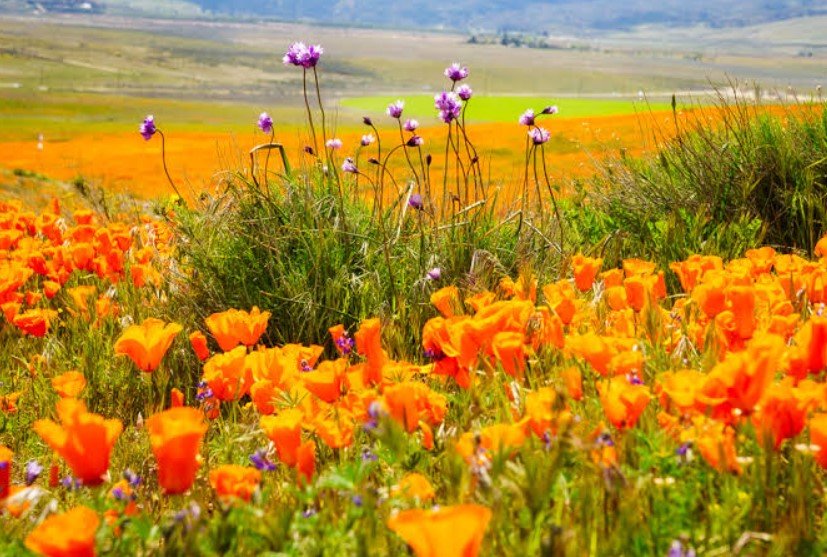
Antelope Valley is a high desert valley in northern Los Angeles County and southeastern Kern County, California. Known for its wide-open landscapes, spring wildflower displays, aerospace history, and communities such as Lancaster and Palmdale, it forms an important part of the western Mojave Desert.
Unlike California’s coastal valleys, this region has a dry desert environment, cold winter nights, hot summers, and a landscape shaped by mountains, ancient lakebeds, and alluvial plains. Antelope Valley is also well known for the annual display of California poppies at Antelope Valley California Poppy Reserve during favorable spring seasons.
| Fact | Details |
|---|---|
| Location | Northern Los Angeles County and southeastern Kern County, California |
| Country | United States |
| Region | Western Mojave Desert |
| Elevation | Generally around 2,000–3,000 feet above sea level |
| Famous For | California poppies, aerospace history and high desert landscapes |
| Climate | Cold desert / semi-arid high desert climate |
| Best Months | March to May and October to November |
| Major Cities | Lancaster and Palmdale |
| Notable Protected Area | Antelope Valley California Poppy Reserve |
| Nearby Mountains | San Gabriel Mountains and Tehachapi Mountains |
Where Is Antelope Valley?
Antelope Valley is located in southern California at the western edge of the Mojave Desert. Most of the valley lies in northern Los Angeles County, with its northern reaches extending toward southeastern Kern County.
Lancaster and Palmdale are the valley’s two largest cities and serve as its main commercial and transportation centers. The region is bordered by the San Gabriel Mountains to the south and the Tehachapi Mountains to the north and northwest.
The valley is within driving distance of the Los Angeles metropolitan area, although its high desert setting gives it a noticeably different climate and landscape from coastal Southern California.
Geography and Landscape
Antelope Valley is a broad, elevated desert basin within the western Mojave Desert. Its landscape consists largely of open plains, dry washes, alluvial fans, low hills, and areas of desert vegetation. The surrounding mountain ranges create a natural boundary between the valley and other parts of Southern California.
The valley floor generally sits at an elevation of roughly 2,000 to 3,000 feet. Historically, water collected in parts of the basin, creating seasonal lakes and wetlands. Today, dry lakebeds and playas remain important features of the wider desert landscape.
The San Andreas Fault passes through the broader region, and the valley’s landscape reflects the long geological history of fault movement, erosion, and sediment deposition. Seasonal wildflowers can transform parts of the open desert after sufficient winter rainfall.
History of Antelope Valley
Antelope Valley has a long Indigenous history. The region was used by Native peoples, including groups associated with the Kitanemuk, Serrano, Tataviam, and other communities connected with the wider Southern California and Mojave Desert region.
During the nineteenth century, the valley became increasingly connected to expanding settlement, ranching, transportation, and agricultural activity. The arrival of rail transportation helped support the growth of Lancaster and other communities.
Agriculture became important in parts of the valley, particularly where groundwater and irrigation made cultivation possible. Alfalfa and other crops were grown in the region, while ranching also played a role in the local economy.
During the twentieth century, Antelope Valley became internationally significant for aerospace research and flight testing. Edwards Air Force Base and nearby aerospace facilities helped establish the region as an important center for aviation and space-related development. The growth of Lancaster and Palmdale was strongly influenced by this industry.
How Was Antelope Valley Formed?
Antelope Valley developed through long-term tectonic activity, erosion, and sediment deposition. The region lies within the broader Basin and Range and Mojave Desert geological environment, where fault movement has influenced the shape of mountains and basins.
As surrounding highlands eroded, streams and floods carried sediment onto the valley floor, gradually building broad alluvial plains. Changes in climate also influenced the area’s ancient lakes and drainage patterns. The result is the wide, relatively flat high desert basin visible today.
Antelope Valley Weather Throughout the Year
Antelope Valley has a high desert climate with hot, dry summers and cool winters. Temperatures can vary significantly between day and night because of the region’s elevation and dry air.
January to March
Winter is generally cool, with cold nights and occasional frost. Daytime temperatures are often mild, although storms can bring rain and colder conditions. March marks the beginning of the period when spring wildflowers may begin appearing after adequate winter rainfall.
April to June
Spring brings warmer days and generally dry conditions. April and May are often among the most comfortable months for outdoor activities. Wildflower displays, including California poppies, can be especially notable in spring, although their timing and intensity depend heavily on rainfall and other environmental conditions.
By June, daytime heat becomes more pronounced as the region moves toward summer.
July to September
Summer is hot and dry, with daytime temperatures frequently reaching the 90s°F and sometimes exceeding 100°F. The dry climate and open terrain can make afternoons uncomfortable for extended outdoor activities.
Cooler early mornings and evenings are generally better for outdoor exploration. Occasional summer thunderstorms can affect parts of the wider Mojave Desert region.
October to December
Autumn brings a gradual return to cooler daytime temperatures and colder nights. October can still be warm, while November and December are noticeably cooler. Winter storms begin to play a greater role toward the end of the year.
Best Weather for Visiting Antelope Valley
For generally comfortable conditions, spring and autumn are the most practical periods to visit. March through May is particularly popular for outdoor exploration and potential wildflower viewing, while October and November usually offer cooler temperatures than summer.
Things to Do in Antelope Valley
Explore Wildflower Landscapes
Spring visitors can explore designated natural areas when seasonal blooms occur. Wildflower conditions vary considerably from year to year.
Visit the Poppy Reserve
Walking trails at the Antelope Valley California Poppy Reserve provide opportunities to experience the region’s native grasslands and spring wildflowers.
Discover Aerospace History
The wider Antelope Valley region has a major connection with aviation and flight testing. Museums and aviation-related attractions in Lancaster and nearby communities offer insight into this history.
Hike and Walk in Desert Landscapes
Local trails and natural areas provide opportunities for hiking and short walks across high desert terrain. Visitors should carry sufficient water and plan around seasonal temperatures.
Enjoy Scenic Drives
Road trips through the valley provide views of open desert, mountain ranges, wind turbines, and agricultural areas.
Visit Local Museums and Cultural Sites
Lancaster and Palmdale offer museums, public art, and local cultural attractions that help explain the region’s development.
Photograph the High Desert
Wide horizons, seasonal wildflowers, dramatic skies, and mountain backdrops make the valley suitable for landscape photography.
Famous Attractions in and Around Antelope Valley
Antelope Valley California Poppy Reserve
This protected area is the valley’s best-known natural attraction. During favorable spring seasons, large displays of California poppies and other native wildflowers can cover parts of the landscape.
The BLVD, Lancaster
The BLVD is a revitalized downtown area featuring restaurants, shops, public spaces, and community events.
Joe Davies Heritage Airpark
Located in Palmdale, this aviation attraction displays historic aircraft and reflects the region’s strong aerospace connection.
Antelope Valley Indian Museum
Situated in the wider region near the Mojave Desert, this museum focuses on Native American cultures and the history of the American West.
Prime Desert Woodland Preserve
This protected area in Lancaster preserves native Joshua trees and other high desert vegetation, with trails for visitors.
Apollo Park
Located near Lancaster, Apollo Park provides open space and recreational opportunities around several man-made lakes.
Devil’s Punchbowl Natural Area
Located south of the valley in the San Gabriel Mountains, this geological area is known for dramatic rock formations and hiking opportunities.
Wildlife and Nature
Antelope Valley supports wildlife adapted to high desert conditions. Coyotes, black-tailed jackrabbits, desert cottontails, ground squirrels, reptiles, and numerous bird species occur across the region. Protected and open spaces provide important habitat for native plants and animals.
The valley’s vegetation includes California poppies, other seasonal wildflowers, Joshua trees in suitable areas, creosote bush, grasses, and drought-adapted shrubs. Rainfall patterns strongly influence plant growth, making each spring season different from the next.
How to Reach Antelope Valley
Antelope Valley is primarily reached by road from Southern California. State Route 14, commonly known as the Antelope Valley Freeway, connects the region with the Los Angeles area and provides access to Lancaster and Palmdale.
Palmdale is served by regional rail through Metrolink, offering connections toward the Los Angeles metropolitan area. The Antelope Valley Transit Authority provides local and regional bus services.
For air travelers, Hollywood Burbank Airport and Los Angeles International Airport are among the major airports used to access the region, followed by a road or rail journey north.
Winter storms can occasionally affect mountain routes, while summer heat requires additional preparation for drivers traveling through remote desert areas.
Where to Stay Near Antelope Valley
Lancaster and Palmdale provide the widest range of accommodation options, including hotels and extended-stay properties. These cities are convenient bases for exploring the poppy reserve, museums, and other regional attractions.
Visitors seeking outdoor accommodation can also find camping opportunities in selected parks and natural areas around the wider region. Availability and seasonal conditions vary, so reservations are advisable during busy periods.
Smaller communities around the valley may offer additional lodging, but Lancaster and Palmdale remain the most practical choices for visitors wanting easy access to services, restaurants, and transportation.
Why Is Antelope Valley Famous?
Antelope Valley is famous for its spring displays of California poppies, its wide high desert scenery, and its important role in American aerospace and flight-testing history. The combination of natural landscapes and technological heritage gives the region a character that differs from many other California valleys.
Antelope Valley FAQs
Where is Antelope Valley located?
Antelope Valley is located in northern Los Angeles County and southeastern Kern County in Southern California, at the western edge of the Mojave Desert.
What is Antelope Valley famous for?
It is best known for California poppies, seasonal wildflower displays, high desert landscapes, and its strong connection to aerospace and aviation.
What is the weather like in Antelope Valley?
The valley has a dry high desert climate with hot summers, cool winters, and significant differences between daytime and nighttime temperatures.
What are the best months to visit Antelope Valley?
Spring, particularly March through May, is popular for comfortable weather and possible wildflower displays. October and November can also offer pleasant conditions.
What can you do in Antelope Valley?
Visitors can explore natural areas, view seasonal wildflowers, visit aviation attractions, hike, enjoy scenic drives, and explore Lancaster and Palmdale.
How do you reach Antelope Valley?
The region is easily accessible by road via State Route 14. Rail and bus services also connect Palmdale and surrounding communities with parts of the Los Angeles area.
Does Antelope Valley get snow?
Snow is uncommon on the valley floor, although surrounding mountains can receive snow during winter storms.
Final Thoughts
Antelope Valley offers a distinctive view of Southern California beyond its famous coastline and major cities. Its seasonal wildflowers, high desert environment, aviation heritage, and open landscapes make it an interesting destination for nature lovers, photographers, and travelers exploring the Mojave Desert region.
For More Visit Stay And Update
