
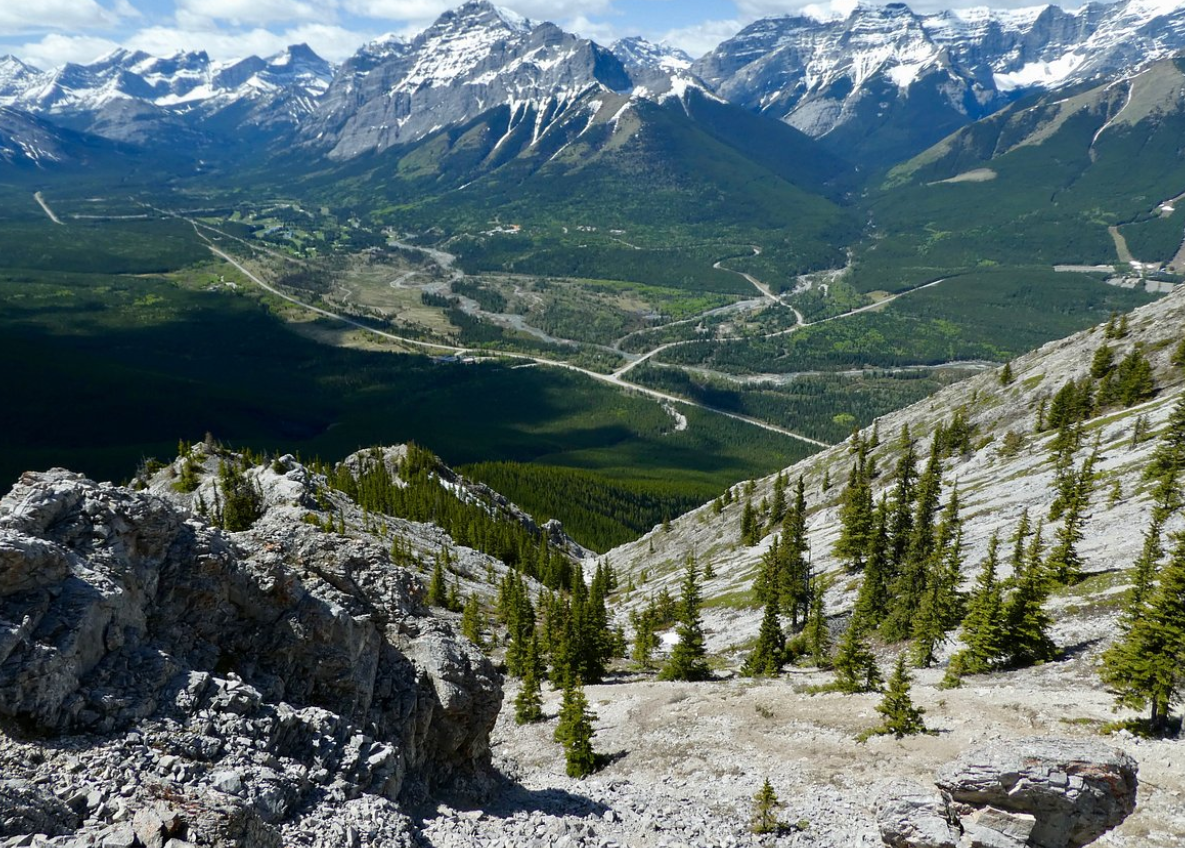
Kananaskis Valley is a scenic mountain valley in Alberta, Canada, surrounded by the rugged peaks and forests of the Canadian Rockies. Known for its dramatic mountain scenery, clear rivers, alpine landscapes, and extensive outdoor recreation, the valley forms part of the larger Kananaskis Country region west of Calgary.
Unlike a single developed resort destination, Kananaskis Valley is a broad natural landscape with forests, waterways, mountain passes, hiking areas, and protected wilderness. Its combination of accessible mountain scenery and extensive recreational opportunities makes it an important destination for hiking, camping, wildlife viewing, cycling, and winter activities.
Kananaskis Valley
| Fact | Details |
|---|---|
| Location | Southwestern Alberta, Canada |
| Country | Canada |
| Region | Canadian Rockies / Kananaskis Country |
| Elevation | Varies considerably across the valley and surrounding mountains |
| Famous For | Rocky Mountain scenery, hiking, wildlife and outdoor recreation |
| Climate | Mountain climate with cold winters and mild summers |
| Main River | Kananaskis River |
| Best Months | June to September for most summer activities |
| Nearby City/Town | Calgary and Canmore |
Where Is Kananaskis Valley?
Kananaskis Valley is located in southwestern Alberta within Kananaskis Country, approximately west of Calgary and southeast of Canmore. The valley sits in the eastern Canadian Rockies and is surrounded by numerous mountain ranges and protected landscapes.
The area is connected to other parts of Kananaskis Country through a network of highways and secondary roads. Its position between Calgary and the higher Rocky Mountain terrain makes it one of Alberta’s more accessible mountain destinations.
Geography and Landscape
Kananaskis Valley follows the Kananaskis River through a landscape dominated by steep Rocky Mountain peaks, forested slopes, open meadows, and alpine terrain. The river eventually joins the Bow River near the eastern edge of the Rocky Mountain foothills.
Much of the lower valley is covered by lodgepole pine and spruce forests, while higher elevations transition into subalpine and alpine environments. Glacial activity, erosion, and tectonic forces have shaped the surrounding mountains, leaving behind steep valleys, ridges, exposed rock faces, and broad mountain basins.
Kananaskis Lakes are among the important water features of the wider region. The Upper and Lower Kananaskis Lakes are surrounded by mountains and provide a striking contrast between blue-green water and the surrounding forest and peaks.
History of Kananaskis Valley
The Kananaskis region has long been connected with Indigenous peoples who traveled through the Rocky Mountain landscape for hunting, gathering, trade, and seasonal activities. The wider area remains culturally significant to Indigenous communities in Alberta.
European exploration and settlement expanded during the nineteenth century as explorers, surveyors, traders, and later railway and road builders entered the Canadian Rockies. The name “Kananaskis” is traditionally associated with a Cree man who survived an attack and was named after the area by explorer David Thompson in the early nineteenth century.
Tourism and recreation developed more substantially during the twentieth century as roads improved and Alberta established protected areas across the mountain region. The creation and expansion of provincial parks and recreation areas helped preserve much of the valley while allowing controlled public access.
Kananaskis Country became increasingly important for outdoor recreation, particularly after improvements to the road network and the development of campgrounds, hiking trails, picnic areas, and other visitor facilities.
How Was Kananaskis Valley Formed?
The landscape around Kananaskis Valley was shaped by a combination of tectonic activity, erosion, and glaciation. The Canadian Rockies were uplifted and folded as tectonic forces pushed layers of Earth’s crust upward, creating the region’s major mountain ranges.
During successive ice ages, glaciers moved through the mountain valleys, carving and widening them. Glacial erosion helped create the broad valley floors and steep-sided mountain landscapes visible today, while rivers and streams continue to reshape the terrain.
Kananaskis Valley Weather Throughout the Year
Kananaskis Valley has a mountain climate characterized by cold winters, mild to warm summers, and rapidly changing conditions. Weather varies significantly with elevation and can change quickly in the mountains.
January to March
Winter conditions dominate during these months. Temperatures are frequently below freezing, and snow covers the valley and surrounding mountains. Snow-based activities are generally possible, although conditions vary with elevation and individual weather systems.
April to June
Spring is a transition period. April can still feel distinctly wintry, while temperatures generally become milder during May and June. Snow gradually retreats from lower elevations, and trails become increasingly accessible as the season progresses.
July to September
Summer provides the warmest and most accessible conditions. Daytime temperatures are generally comfortable for hiking, cycling, camping, and sightseeing, although mountain weather can change quickly. Higher elevations remain cooler than the valley floor.
October to December
Autumn brings cooler temperatures and shorter days. October can provide colorful foliage and crisp mountain conditions, while November and December increasingly resemble winter, with regular snowfall and freezing temperatures.
Best Weather for Visiting Kananaskis Valley
June through September generally offers the most favorable weather for hiking, camping, cycling, and other warm-season activities. July and August are typically the warmest months, while September can provide cooler conditions and autumn scenery.
Things to Do in Kananaskis Valley
- Hiking: Numerous trails range from easy walks to demanding mountain routes.
- Camping: Several campgrounds provide opportunities to stay within the mountain environment.
- Cycling: Scenic mountain roads attract both recreational and experienced cyclists.
- Wildlife Watching: Visitors may encounter elk, deer, mountain goats, bighorn sheep, and other Rocky Mountain wildlife.
- Fishing: Rivers and lakes in the wider Kananaskis region provide opportunities for anglers where regulations permit.
- Photography: Mountain peaks, lakes, forests, rivers, and changing seasonal conditions create varied photography opportunities.
- Winter Recreation: Snowshoeing, cross-country skiing, and other winter activities are available in suitable areas and conditions.
Famous Attractions in and Around Kananaskis Valley
Kananaskis Lakes
Upper and Lower Kananaskis Lakes are surrounded by dramatic mountain scenery and are among the most recognizable natural landmarks in the region.
Kananaskis Village
Kananaskis Village is a small mountain community and recreation hub offering accommodation, dining, trails, and visitor services.
Barrier Lake
Located near the eastern part of Kananaskis Country, Barrier Lake is a popular recreational area surrounded by forested mountains and hiking trails.
Mount Kidd
Mount Kidd is one of the prominent peaks overlooking the Kananaskis landscape. Its rugged profile makes it an important feature of the surrounding mountain scenery.
Kananaskis River
The Kananaskis River runs through the valley and is an important geographical feature as well as a focal point for recreation and wildlife habitat.
Peter Lougheed Provincial Park
Located farther south within Kananaskis Country, Peter Lougheed Provincial Park protects extensive forests, lakes, valleys, and mountain terrain.
Spray Valley Provincial Park
This protected area near Canmore includes mountain landscapes, forests, waterways, and recreational opportunities and forms part of the broader Kananaskis experience.
Wildlife and Nature
Kananaskis Valley supports a diverse Rocky Mountain ecosystem. Forests, alpine meadows, rivers, lakes, and high-elevation habitats provide food and shelter for numerous species.
Wildlife in the wider Kananaskis region includes elk, mule deer, white-tailed deer, bighorn sheep, mountain goats, black bears, grizzly bears, coyotes, and smaller mammals. Golden eagles and other mountain bird species can also be seen.
The area’s protected landscapes help maintain wildlife corridors between different parts of the Canadian Rockies. Visitors are expected to follow wildlife-safety regulations, maintain appropriate distances from animals, and avoid feeding or approaching wildlife.
How to Reach Kananaskis Valley
The valley is primarily accessed by road. From Calgary, travelers generally drive west toward the Rocky Mountains and enter Kananaskis Country via Alberta Highway 1 and connecting routes, depending on the specific destination.
Canmore is another useful gateway for visitors approaching from the west or planning to combine Kananaskis with other Rocky Mountain destinations. There is no major railway station or commercial airport within the valley itself.
Road conditions can change during winter, and some routes may have seasonal restrictions or require winter tires and appropriate equipment. Travelers should check current road conditions before setting out.
Where to Stay Near Kananaskis Valley
Accommodation is available within and around Kananaskis Country. Kananaskis Village provides hotels and resort-style lodging, while the wider region includes cabins, lodges, campgrounds, and other outdoor accommodation.
Canmore offers a much larger selection of hotels, vacation rentals, lodges, and guesthouses and can be a convenient base for exploring both Kananaskis and the central Canadian Rockies. Calgary provides additional accommodation for travelers who prefer to stay in a major city.
Camping is particularly popular during the warmer months, although campground reservations and seasonal operating dates vary.
Why Is Kananaskis Valley Famous?
Kananaskis Valley is famous for its combination of accessible Rocky Mountain scenery and extensive outdoor recreation. Its forests, rivers, alpine landscapes, mountain lakes, wildlife, and protected areas provide a quieter alternative to some of the more heavily visited destinations in the Canadian Rockies.
Kananaskis Valley FAQs
Where is Kananaskis Valley located?
Kananaskis Valley is in southwestern Alberta, Canada, within Kananaskis Country and the eastern Canadian Rockies. It is west of Calgary and near Canmore.
What is Kananaskis Valley famous for?
It is known for Rocky Mountain landscapes, hiking trails, mountain lakes, wildlife, camping, cycling, and other outdoor activities.
What is the weather like in Kananaskis Valley?
The area has cold, snowy winters and generally mild summers. Mountain weather can change quickly, and temperatures vary significantly with elevation.
What are the best months to visit Kananaskis Valley?
June through September are generally the most suitable months for hiking, camping, cycling, and other summer activities.
What can you do in Kananaskis Valley?
Visitors can hike, camp, cycle, photograph the landscape, fish where permitted, observe wildlife, and participate in winter activities.
How do you reach Kananaskis Valley?
Most visitors travel by car from Calgary, Canmore, or other parts of Alberta. Several highways and secondary roads provide access to different parts of the region.
Does Kananaskis Valley get snow?
Yes. Snow is common during winter, and higher elevations can retain snow well beyond the coldest months.
Is Kananaskis Valley close to Calgary?
Yes. Kananaskis Country is relatively close to Calgary, making the region a popular destination for day trips and longer mountain stays from the city.
Final Thoughts
Kananaskis Valley offers a distinctive Rocky Mountain experience built around dramatic scenery, protected natural landscapes, wildlife, waterways, and year-round recreation. Its combination of accessibility and wilderness makes it suitable for visitors seeking hiking and camping in summer as well as snow-based activities during winter.
For More Visit Stay And Update
