
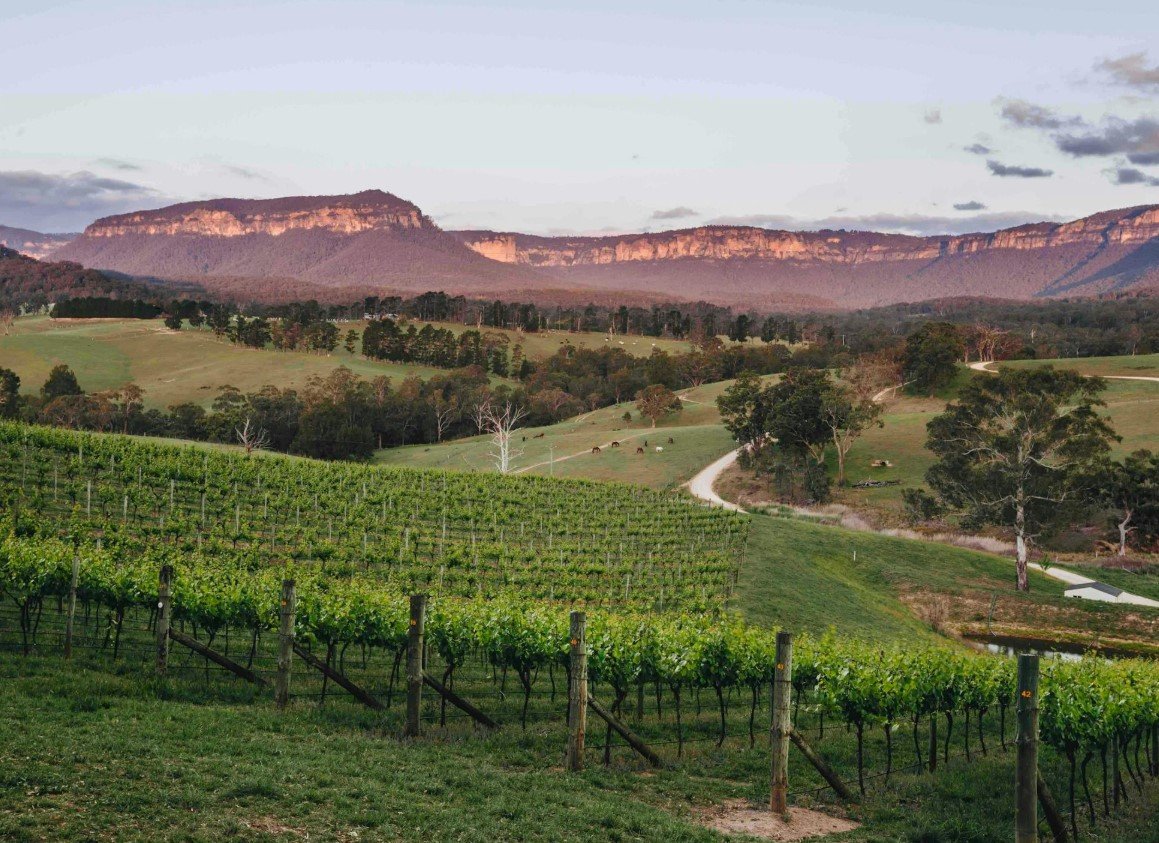
Megalong Valley is a rural valley in the Blue Mountains of New South Wales, Australia, known for its green farmland, sandstone escarpments, forests, vineyards, and historic walking routes. Although it is close to popular Blue Mountains destinations such as Katoomba and Blackheath, the valley has a quieter character shaped by farming, bushland, and small-scale tourism.
The valley combines natural scenery with a surprisingly rich history. Indigenous connections, nineteenth-century settlement, shale mining, the historic Six Foot Track, and modern vineyards and farm stays have all contributed to its distinctive identity.
Megalong Valley Quick Facts
| Fact | Details |
|---|---|
| Location | Blue Mountains, New South Wales |
| Country | Australia |
| Region | Blue Mountains |
| Elevation | About 600–700 m in the valley area |
| Famous For | Rural scenery, bushwalking, vineyards and Six Foot Track |
| Climate | Cool temperate mountain climate |
| Main Waterway | Coxs River |
| Best Months | March–May and September–November |
| Nearby Town | Blackheath and Katoomba |
Where Is Megalong Valley?
Megalong Valley is in the Blue Mountains of New South Wales, west of Katoomba and below the surrounding sandstone plateau. It sits on the western side of Narrow Neck, with the higher Blue Mountains settlements of Blackheath and Katoomba providing the main nearby services.
The valley is relatively secluded compared with the major tourist areas on the plateau. Access from Blackheath involves a winding descent through the mountains, eventually reaching the valley floor and its farming properties, accommodation, vineyards, and walking routes.
Geography and Landscape
The landscape is defined by a broad rural valley surrounded by steep sandstone escarpments and forested slopes. Open pastures occupy parts of the valley floor, while eucalyptus woodland, rainforest pockets, creeks, and rugged cliffs dominate the surrounding terrain.
The Coxs River is an important watercourse associated with the valley, while the surrounding sandstone landscape contains gullies, ridges, and natural passes. Narrow Neck separates Megalong Valley from the Jamison Valley farther east.
The combination of farmland and native bushland gives the area a character that differs from the more developed mountain towns above it. The valley’s landscape is also part of the wider Greater Blue Mountains World Heritage Area.
History of Megalong Valley
Megalong Valley is traditionally associated with the Gundungurra people, whose connection with the Blue Mountains region extends back thousands of years. The landscape provided food, water, travel routes, and other resources long before European settlement.
European exploration reached the area in the early nineteenth century. Land was taken up for settlement during the 1830s, and farming became an important part of the valley’s economy. Cattle and other agricultural activities remain part of its rural identity today.
Mining later brought another chapter to Megalong Valley’s history. Oil shale was discovered in the nineteenth century, and the Glen Shale Mine operated during the late 1800s. A settlement developed around the mining industry, although the village eventually disappeared as the industry declined.
The Six Foot Track also became an important part of the area’s history. Established as a route between Katoomba and Jenolan Caves in the nineteenth century, it passed through Megalong Valley and helped improve access between the mountain settlements and the caves.
How Was Megalong Valley Formed?
Megalong Valley is part of the ancient sandstone landscape of the Blue Mountains. The broader region was shaped by layers of sediment deposited hundreds of millions of years ago, followed by uplift and long-term erosion.
Over geological time, rivers and weathering processes cut into the elevated plateau, creating valleys, cliffs, ridges, and deep drainage systems. The distinctive sandstone escarpments around Megalong are therefore the result of prolonged erosion acting on the uplifted landscape rather than a single geological event.
Megalong Valley Weather Throughout the Year
Megalong Valley has a cooler mountain climate than many lower-elevation parts of New South Wales. Conditions can change quickly, and rainfall occurs throughout the year.
January to March
Summer is generally the warmest period, with daytime temperatures commonly reaching the low to mid-20s Celsius. Rainfall and thunderstorms can occur, particularly during the wetter parts of summer. Mornings and evenings are usually cooler than the daytime.
April to June
Autumn brings cooler temperatures and generally comfortable conditions for walking and exploring. By June, daytime temperatures are often around the mid-teens Celsius, while nights can become quite cold.
July to September
Winter is the coldest period. Daytime temperatures are commonly around 10–13°C, with overnight temperatures sometimes approaching freezing. Frost and occasional snow or sleet can occur in the higher Blue Mountains, although substantial snow on the valley floor is uncommon.
October to December
Spring gradually becomes warmer, with temperatures typically rising from the mid-teens into the low 20s Celsius. Rain remains possible, while December begins the warmer summer period.
Best Weather for Visiting Megalong Valley
Autumn and spring are particularly comfortable for exploring Megalong Valley because temperatures are generally mild and suitable for walking, sightseeing, and outdoor activities. Spring can also be rewarding for seeing native vegetation in bloom, while autumn offers cooler days and changing foliage.
Things to Do in Megalong Valley
Walk the Six Foot Track
The historic Six Foot Track is the valley’s best-known walking route. Visitors can undertake sections of the trail or complete the longer journey toward Jenolan Caves.
Explore the Vineyards
Dryridge Estate and Megalong Creek Estate provide opportunities to experience the valley’s emerging wine industry, with vineyard landscapes and cellar-door experiences.
Go Horse Riding
Horse-riding experiences allow visitors to explore the rural landscape and surrounding bushland from a different perspective.
Enjoy Local Food
The valley has developed a small but distinctive food scene, including the long-established Megalong Valley Tearooms and farm-focused dining experiences.
Photograph the Landscape
The combination of open pasture, sandstone cliffs, forests, vineyards, and changing mountain light makes the valley particularly appealing to landscape photographers.
Go Camping
Camping and outdoor accommodation are available in and around the valley, providing a way to experience its quieter rural environment after day visitors have left.
Famous Attractions in and Around Megalong Valley
Six Foot Track
This historic walking route connects Katoomba with the Jenolan Caves area and passes through the heart of Megalong Valley.
Dryridge Estate
A working vineyard and rural destination, Dryridge Estate is known for its mountain setting, wine experiences, and accommodation.
Megalong Creek Estate
This boutique vineyard offers another opportunity to experience local wine production against the valley’s escarpment scenery.
Megalong Valley Tearooms
The tearooms are a long-established local stop, known for traditional refreshments and their peaceful rural setting.
Hargraves Lookout
Located near Blackheath, Hargraves Lookout provides elevated views across the surrounding mountain landscape and toward the valleys below.
Coachwood Glen Nature Trail
This short nature experience near Blackheath provides an opportunity to see the wetter forest environments associated with the Blue Mountains.
Hydro Majestic Hotel
Located in nearby Medlow Bath, this historic hotel overlooks the Blue Mountains landscape and dates from the early twentieth century. Its position on the escarpment makes it a notable nearby heritage attraction.
Wildlife and Nature
Megalong Valley forms part of a wider ecosystem containing eucalyptus forests, sandstone woodland, rainforest pockets, grasslands, waterways, and protected natural areas. The surrounding Blue Mountains support a diverse range of native plants and animals.
Wildlife in the wider area includes wallabies, kangaroos, wombats, possums, gliders, echidnas, and many native bird species. The region also contains threatened species and specialized plant communities. The critically endangered Megalong Valley bottlebrush is particularly associated with the area and can produce pink-purple flowers in late spring.
How to Reach Megalong Valley
The main road into the valley is Megalong Valley Road, reached from the Blackheath area via Shipley Road. The route descends from the Blue Mountains plateau and is winding, so drivers should allow extra time and use caution.
Katoomba and Blackheath are the nearest major Blue Mountains service centers. Sydney is roughly a two-hour drive away under normal conditions. Visitors can also travel by train from Sydney to nearby Medlow Bath or other Blue Mountains stations and arrange onward road transport.
Road conditions can change following heavy rain, storms, bushfires, or other environmental events, so checking local conditions before travelling is advisable.
Where to Stay Near Megalong Valley
Accommodation ranges from rural cottages and farm stays to eco-lodges, cabins, glamping sites, and campgrounds. Staying within the valley provides a quieter countryside experience, while Blackheath, Katoomba, and Medlow Bath offer a wider selection of accommodation and services.
Visitors looking for a heritage experience can also stay in the Medlow Bath area, while those wanting closer access to walking routes may prefer rural accommodation around the valley itself.
Why Is Megalong Valley Famous?
Megalong Valley is famous for its combination of rural farmland, dramatic Blue Mountains scenery, vineyards, bushwalking, and historic connections to the Six Foot Track and nineteenth-century mining. Its peaceful valley-floor setting also provides a contrast to the busier tourist centers on the surrounding plateau.
Megalong Valley FAQs
Where is Megalong Valley located?
Megalong Valley is in the Blue Mountains of New South Wales, Australia, west of Katoomba and below the Blackheath plateau.
What is Megalong Valley famous for?
It is known for its rural landscapes, sandstone escarpments, vineyards, bushwalking, horse riding, and the historic Six Foot Track.
What is the weather like in Megalong Valley?
The valley has a cool mountain climate, with warm summers and cold winters. Rain can occur throughout the year.
What are the best months to visit Megalong Valley?
Autumn and spring generally provide comfortable temperatures for outdoor activities, although the valley can be visited throughout the year.
What can you do in Megalong Valley?
Visitors can hike, visit vineyards, go horse riding, enjoy local food, photograph the landscape, and experience rural accommodation.
How do you reach Megalong Valley?
The valley is primarily accessed by road from Blackheath via Shipley Road and Megalong Valley Road. Public transport can take visitors to nearby Blue Mountains towns, but onward road transport is needed.
Does Megalong Valley get snow?
Snow is possible during cold winter conditions in the Blue Mountains, although significant snowfall on the valley floor is uncommon.
Final Thoughts
Megalong Valley offers a quieter side of the Blue Mountains, combining historic walking routes, farming landscapes, native bushland, vineyards, and dramatic sandstone scenery. It is particularly suited to visitors who want outdoor experiences and rural surroundings without the intensity of a major tourist center.
For More Visit Stay And Update
