
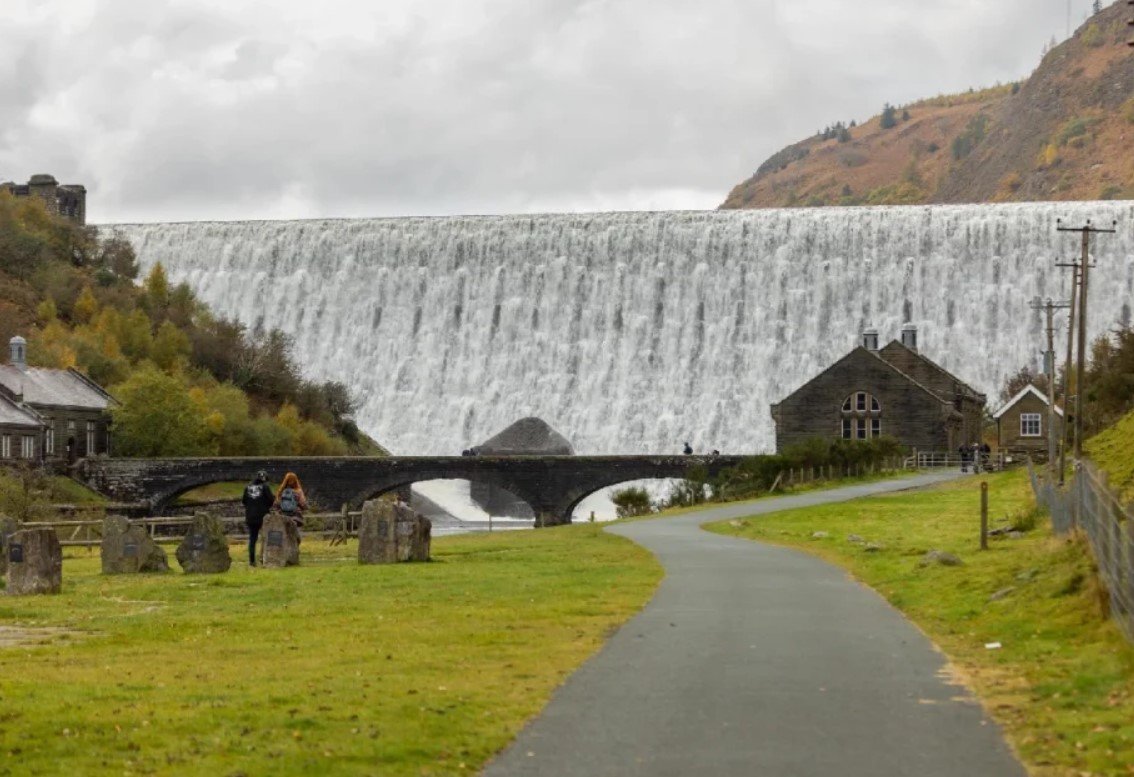
Elan Valley is a scenic upland valley in central Wales, best known for its spectacular reservoirs, historic dams, open landscapes, and peaceful outdoor setting. Located within the Cambrian Mountains, the valley forms part of one of Wales’s most important water catchment areas and attracts visitors interested in walking, cycling, wildlife, and landscape photography.
Unlike a valley defined by a single river or dramatic mountain wall, Elan Valley is closely associated with a remarkable network of reservoirs built to supply water to Birmingham. Today, its combination of Victorian engineering and protected natural landscapes gives the area a distinctive identity.
| Fact | Details |
|---|---|
| Location | Powys, central Wales |
| Country | Wales, United Kingdom |
| Region | Cambrian Mountains |
| Main Water Features | Elan Valley reservoirs |
| Famous For | Victorian dams, reservoirs and scenic landscapes |
| Landscape | Upland valleys, reservoirs, moorland and woodland |
| Climate | Temperate oceanic |
| Best Months | April to October |
| Nearby Town | Rhayader |
| Major Purpose | Water supply and recreation |
Where Is Elan Valley?
Elan Valley is located in Powys in central Wales, within the upland landscape of the Cambrian Mountains. It lies west of the market town of Rhayader and forms part of a sparsely populated area known for its reservoirs and open countryside.
The valley is within easy reach of Rhayader, which serves as the main nearby town for visitors. Its central Welsh location makes it accessible by road from several parts of Wales and England, although the surrounding landscape remains notably rural.
Geography and Landscape
The Elan Valley landscape consists of a series of upland valleys shaped by rivers, reservoirs, rolling hills, moorland, woodland, and steep-sided slopes. The River Elan and its tributaries have played an important role in shaping the terrain.
The most distinctive geographical feature is the chain of reservoirs created by dams across the valley. These include Claerwen Reservoir, Craig Goch Reservoir, Pen-y-Garreg Reservoir, Garreg-ddu Reservoir, and Caban Coch Reservoir.
The surrounding countryside forms part of the Cambrian Mountains, an extensive upland region in central Wales. Open moorland and wooded areas provide a strong contrast with the dark waters and stone structures of the reservoir system.
History of Elan Valley
Human activity in the Elan Valley dates back thousands of years, and archaeological evidence from the wider area shows a long history of settlement and land use. The landscape contains evidence of prehistoric and later communities, although its modern identity is strongly connected with the development of the reservoirs.
During the late nineteenth century, Birmingham required a major new water supply to support its growing population. The Birmingham Corporation selected the Elan Valley because of its high rainfall and suitable upland catchment.
Construction of the original reservoir system began in the 1890s and involved the building of several major dams. The Elan Valley water scheme became one of the largest engineering projects of its period, supplying water from rural Wales to Birmingham through an aqueduct.
The dams and reservoirs transformed parts of the original valley landscape. Over time, however, the area also became known for recreation and tourism, with visitors drawn to its engineering heritage and surrounding countryside.
How Was Elan Valley Formed?
Elan Valley developed over a long period through geological uplift, weathering, and river erosion. The underlying rocks of the region were formed hundreds of millions of years ago, while rivers gradually cut through the upland landscape and created the valleys seen today.
Later human engineering dramatically altered parts of the natural valley. Dams were constructed across river valleys, creating the reservoirs that now define much of Elan Valley’s modern landscape.
Elan Valley Weather Throughout the Year
Elan Valley has a temperate oceanic climate, with relatively mild temperatures, frequent rainfall, and changing conditions throughout the year. Its upland location means weather can feel cooler and wetter than in lower parts of Wales.
January to March
Winter and early spring are generally cool and wet. Frost, strong winds, and occasional snow can occur on higher ground. Daylight is limited during the winter months, but the reservoirs and surrounding landscapes can be particularly atmospheric.
April to June
Spring brings longer days and gradually warmer temperatures. April and May can still be changeable, with sunshine, rain, and cool winds all possible. This is a good period for walking and observing spring vegetation.
July to September
Summer usually offers the warmest conditions and the longest opportunities for outdoor activities. Rain remains possible throughout the season, so waterproof clothing is useful even during warmer weather.
October to December
Autumn brings cooler temperatures and increasingly wet conditions. Woodland areas can become particularly attractive as leaves change color, while winter weather gradually returns toward the end of the year.
Best Weather for Visiting Elan Valley
Late spring through early autumn, generally from April to October, offers the most comfortable conditions for walking, cycling, and sightseeing. Summer provides longer daylight hours, while late spring and early autumn can offer quieter conditions.
Things to Do in Elan Valley
- Walking: Explore waymarked routes around reservoirs, woodland, and open countryside.
- Cycling: The valley offers scenic cycling opportunities along quiet roads and designated routes.
- Dam sightseeing: Visitors can admire the scale and architecture of the historic dams.
- Wildlife watching: The varied upland habitats support birds and other native wildlife.
- Photography: Reservoir reflections, stone dams, woodland, and changing weather create excellent photographic opportunities.
- Visitor centre experiences: The Elan Valley Visitor Centre provides information about the area’s history, water system, and landscape.
- Scenic driving: Roads through the surrounding countryside provide access to viewpoints and reservoir areas.
Famous Attractions in and Around Elan Valley
Elan Valley Reservoirs
The reservoir system is the area’s defining attraction. The chain of lakes and dams combines practical water engineering with some of central Wales’s most impressive scenery.
Craig Goch Dam
Craig Goch is one of the most dramatic dams in the valley and is known for its impressive stone construction and elevated position within the reservoir landscape.
Pen-y-Garreg Dam
This historic dam is an important part of the original Elan Valley water scheme and remains a notable example of Victorian engineering.
Garreg-ddu Dam
Garreg-ddu Dam is another key structure within the reservoir system and forms part of the water supply network developed for Birmingham.
Caban Coch Dam
Caban Coch is located near the lower part of the reservoir system and is among the major historic dams visitors can view in the valley.
Claerwen Reservoir
Located farther into the uplands, Claerwen Reservoir is surrounded by open countryside and offers a more remote landscape experience.
Elan Valley Visitor Centre
The visitor centre is a useful starting point for learning about the valley, its dams, water supply history, and outdoor opportunities.
Wildlife and Nature
Elan Valley supports a mixture of upland habitats, woodland, rivers, reservoirs, and moorland. These environments provide important habitats for a range of birds, mammals, and plant life.
The wider area is particularly valuable for birdlife, including species associated with open upland landscapes and woodland. The reservoirs and surrounding watercourses also contribute to the valley’s ecological diversity. Conservation and land management are important because the area combines a working water catchment with valuable natural habitats.
How to Reach Elan Valley
The nearest main town is Rhayader, located a short drive east of the valley. Most visitors reach Elan Valley by car using roads connecting Rhayader with the surrounding areas of central Wales.
There is no railway station directly in Elan Valley. Travelers using public transport generally need to combine rail services to larger towns with onward bus or taxi travel. Because the area is rural, having a car provides the greatest flexibility for exploring different reservoirs and walking areas.
Road conditions can be affected by winter weather, particularly on higher routes, so visitors should check conditions during periods of snow or severe weather.
Where to Stay Near Elan Valley
Rhayader is the most convenient nearby base and offers a range of accommodation, including hotels, guesthouses, bed and breakfasts, and self-catering properties.
Visitors can also find cottages and rural accommodation in the surrounding Powys countryside. Camping and other outdoor accommodation options may be available in the wider area, particularly during the main visitor season.
Staying in or near Rhayader is practical for travelers who want easy access to both Elan Valley and other parts of the Cambrian Mountains.
Why Is Elan Valley Famous?
Elan Valley is famous for its beautiful reservoir landscape and the historic dams built as part of Birmingham’s major water supply system. The combination of Victorian engineering, Welsh uplands, open countryside, and outdoor recreation makes it one of the most distinctive valley landscapes in Wales.
Elan Valley FAQs
Where is Elan Valley located?
Elan Valley is located in Powys, central Wales, west of the town of Rhayader in the Cambrian Mountains.
What is Elan Valley famous for?
It is best known for its chain of reservoirs and historic dams, which were developed as part of Birmingham’s water supply system.
What is the weather like in Elan Valley?
The valley has a temperate oceanic climate with mild temperatures, regular rainfall, and changeable weather throughout the year.
What are the best months to visit Elan Valley?
April through October generally provides the most comfortable conditions for outdoor activities, with longer daylight hours and milder temperatures.
What can you do in Elan Valley?
Visitors can walk, cycle, photograph the dams and reservoirs, watch wildlife, explore the countryside, and learn about the area’s engineering history.
How do you reach Elan Valley?
Most visitors travel by road from Rhayader. A car is generally the most convenient way to explore the different reservoir areas.
Does Elan Valley get snow?
Snow is possible during winter, particularly on higher ground in the surrounding uplands, although conditions vary from year to year.
Final Thoughts
Elan Valley offers a distinctive blend of natural upland scenery and historic engineering. Its reservoirs, dams, walking routes, and peaceful countryside make it an appealing destination for visitors who want to explore a quieter side of central Wales.
For More Visit Stay And Update
