
Hunter Valley is one of Australia’s best-known inland wine regions, located in New South Wales north of Sydney. The valley combines fertile agricultural land, vineyards, rolling hills, historic towns, and the waterways of the Hunter River and its tributaries. Its rural landscapes and long winemaking tradition have made it an important destination for both visitors and the local economy.
Beyond wine, the valley offers a mixture of food, heritage, nature, outdoor activities, and countryside scenery. Areas such as Pokolbin, Lovedale, Broke, Cessnock, and Singleton each contribute to the character of the wider Hunter Valley, making the region more diverse than its reputation as a wine destination alone suggests.
Hunter Valley Quick Facts
| Fact | Details |
|---|---|
| Location | New South Wales, Australia |
| Country | Australia |
| Region | Hunter Region |
| Main River | Hunter River |
| Famous For | Vineyards, wine, food and rural landscapes |
| Climate | Warm temperate, with hot summers and cool winters |
| Best Months | March to May and September to November |
| Nearby City | Newcastle |
| Major Towns | Cessnock, Singleton, Maitland |
Where Is Hunter Valley?
Hunter Valley is in New South Wales, approximately 170 kilometres north of Sydney and about 60 kilometres west of Newcastle. The region extends along the Hunter River and surrounding valleys, plains, and foothills.
Cessnock is an important centre for the southern wine-producing area, while Pokolbin is at the heart of the major vineyard district. Singleton lies farther north, and Maitland occupies an important position in the lower Hunter. The broader Hunter region also includes areas beyond the central wine country.
Geography and Landscape
The landscape is shaped by the Hunter River system, agricultural plains, vineyards, woodland, and surrounding mountain and foothill ranges. The Brokenback Range forms a prominent backdrop around the Pokolbin and Lovedale wine districts, while the wider valley contains fertile floodplains and gently undulating rural country.
The Hunter River is central to the region’s geography. Its tributaries drain surrounding highlands and feed the agricultural areas of the valley. The combination of suitable soils, drainage, climate, and access to water helped make parts of the region particularly productive for farming and grape growing.
The landscape changes considerably across the wider valley, from cultivated vineyards and open farmland to forested hills and more rugged country toward the surrounding national parks.
History of Hunter Valley
The Hunter Valley is traditionally associated with the Wonnarua people, whose Country encompasses much of the region. Aboriginal communities developed strong relationships with the rivers, plains, forests, and other resources of the area long before European settlement.
European exploration began in the early nineteenth century, with explorers moving into the Hunter River’s upper reaches in 1801. Settlement expanded after Newcastle’s role as a penal settlement changed in the 1820s, and fertile land along the river became increasingly important for agriculture and grazing.
Viticulture soon became a defining part of the region. Grapevines were being established in the Hunter during the 1820s, and vineyards expanded through the nineteenth century. The industry developed around places including Pokolbin and the surrounding districts, eventually giving Hunter Valley wines an international reputation.
Coal mining also became significant, particularly around Cessnock and the South Maitland Coalfields. Mining influenced the growth of local towns and communities, while agriculture and winemaking continued to shape the region’s identity.
How Was Hunter Valley Formed?
The valley developed through long-term geological processes involving erosion, sediment deposition, uplift, and the movement of water through the Hunter River drainage system. The surrounding ranges and foothills form natural boundaries around sections of the valley, while river sediments contributed to fertile lowland areas.
Over time, these physical processes created a landscape of river plains, rolling agricultural country, hills, and elevated ranges. Human land use has subsequently transformed substantial parts of the valley into farms, vineyards, and settlements.
Hunter Valley Weather Throughout the Year
Hunter Valley weather varies across the wider region, but the Cessnock area provides a useful indication of conditions in the southern wine country. Long-term averages at Cessnock Airport show warm summers and cool winters, with average maximum temperatures ranging from about 18°C in winter to around 30°C in summer.
January to March
Summer is generally warm to hot, with average maximum temperatures around 27–30°C. January is typically the warmest month, while March begins the transition toward milder autumn conditions.
April to June
Autumn brings noticeably cooler temperatures, with average daytime highs falling from about 24°C in April to around 18°C by June. This period generally provides comfortable conditions for exploring vineyards and countryside.
July to September
Winter is the coolest part of the year. Average maximum temperatures in Cessnock are around 18°C, while overnight temperatures can fall to approximately 4–7°C. Conditions gradually become warmer during August and September.
October to December
Spring and early summer bring rising temperatures, with average highs increasing from roughly 25°C in October to about 29°C in December. Warm days and greener rural landscapes make this a popular period for outdoor activities.
Best Weather for Visiting Hunter Valley
Autumn and spring are generally among the most comfortable periods to visit, offering mild temperatures without the stronger summer heat. Early autumn is particularly appealing for vineyard experiences, while spring provides pleasant countryside conditions and outdoor activities.
Things to Do in Hunter Valley
- Visit wineries and cellar doors: Wine tasting is one of the region’s signature experiences, with producers ranging from large established wineries to small boutique vineyards.
- Enjoy local food: Restaurants, farm shops, cheese producers, and other food businesses make the region a major destination for gourmet experiences.
- Take a hot-air balloon flight: Sunrise balloon rides provide aerial views across vineyards, farmland, and surrounding hills.
- Explore by bicycle: Cycling is a popular way to move between vineyards and rural attractions, particularly around the central wine districts.
- Go horseback riding: Equestrian experiences provide another way to explore the countryside around vineyards and rural properties.
- Visit galleries and gardens: Art galleries, sculpture spaces, and landscaped gardens add cultural attractions beyond the wine industry.
- Explore heritage towns: Historic communities such as Singleton, Maitland, and Wollombi provide opportunities to discover the region’s colonial-era architecture and local history.
Famous Attractions in and Around Hunter Valley
Hunter Valley Gardens
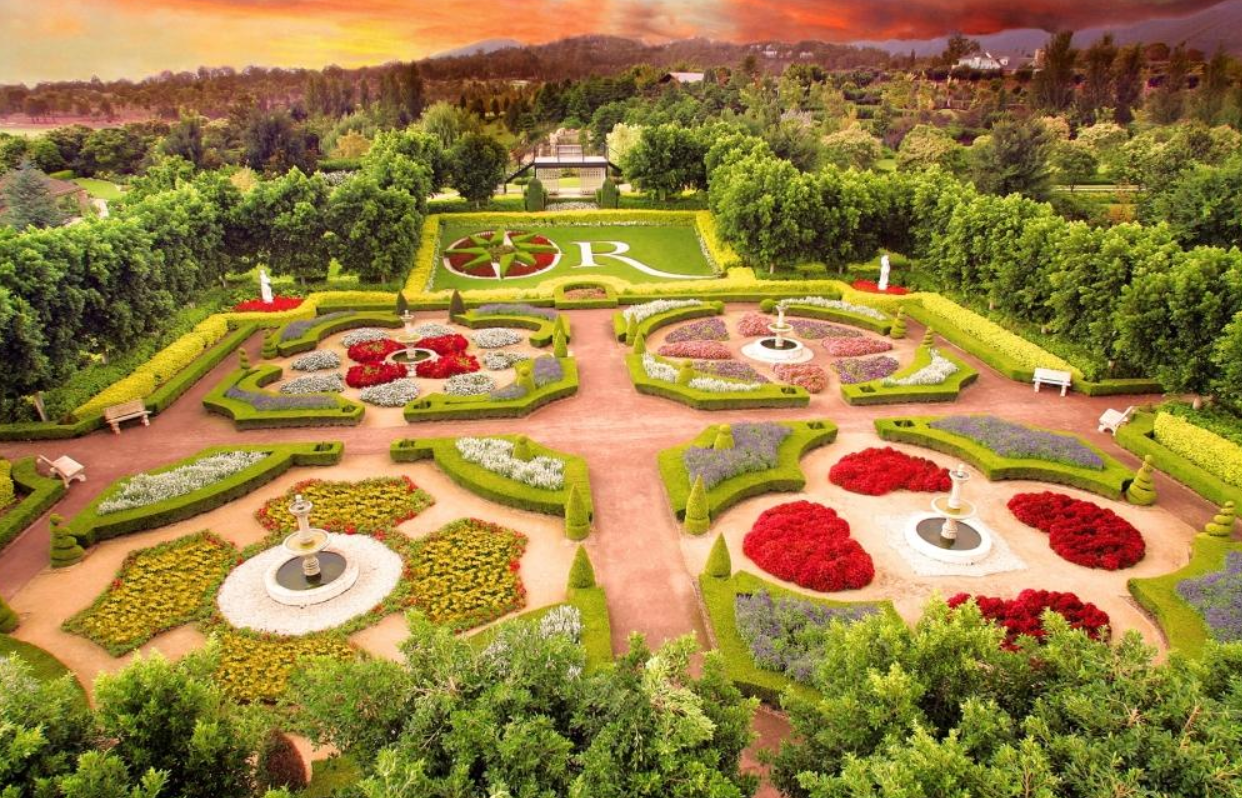
Located in Pokolbin, Hunter Valley Gardens is a large landscaped garden attraction featuring themed garden areas and seasonal displays.
Hunter Valley Wine Country
The vineyard districts around Pokolbin, Lovedale, Rothbury, and Broke contain many of the region’s most established wineries and cellar doors.
Tocal Homestead
Near Paterson, Tocal Homestead is an important historic agricultural property offering insight into the region’s pastoral and farming history.
Wollombi
Wollombi is a historic village south of the main wine district, known for its heritage buildings, rural setting, and connection to early settlement routes.
Singleton
Singleton is one of the Hunter’s historic towns, with heritage buildings, museums, cultural facilities, and access to surrounding countryside.
Barrington Tops
The Barrington Tops area north of the central Hunter provides access to protected mountain landscapes, forests, wildlife, and outdoor recreation.
Maitland
Maitland is an important historic city in the lower Hunter, known for heritage architecture, museums, galleries, and its position along the Hunter River.
Wildlife and Nature
The wider Hunter Valley contains a mixture of river environments, woodland, farmland, wetlands, and forested hills. These habitats support native birds, kangaroos, wallabies, possums, reptiles, and other Australian wildlife. Wildlife becomes more abundant away from heavily developed agricultural areas and around protected bushland.
The surrounding national parks and conservation areas are particularly important for maintaining native habitats. Barrington Tops and other protected landscapes in the broader Hunter region contain more extensive forests and mountain ecosystems, providing a sharp contrast to the cultivated vineyards of the central valley.
How to Reach Hunter Valley
Hunter Valley is easily accessible by road from Sydney and Newcastle. From Sydney, the drive generally takes around two hours via the M1 and routes toward Cessnock and the vineyards. Newcastle is roughly an hour away by road.
Newcastle Airport is the closest major airport and is approximately a 50-minute drive from the central Hunter Valley wine area, depending on the destination. Rail and bus connections are available through towns including Maitland, Morisset, and Singleton, with onward transport to Cessnock and other parts of the valley.
Once there, driving or joining an organized tour is generally the most practical way to explore the dispersed wineries and attractions.
Where to Stay Near Hunter Valley
Pokolbin is one of the most convenient areas for visitors focusing on wineries, restaurants, gardens, and vineyard experiences. Lovedale and Rothbury also provide accommodation among rural properties and vineyards.
Cessnock offers a broader selection of hotels, motels, guesthouses, and other accommodation, while towns such as Singleton and Maitland can suit visitors interested in heritage, business, or exploring the wider Hunter region. Cabins, cottages, farm stays, resorts, and camping options are also available across the countryside.
Why Is Hunter Valley Famous?
Hunter Valley is famous primarily for its long-established wine industry, particularly its Semillon and Shiraz, but its identity extends beyond vineyards. Its combination of gourmet food, historic settlements, rural scenery, cultural attractions, and easy access from Sydney and Newcastle has made it one of New South Wales’ most popular regional destinations.
Hunter Valley FAQs
Where is Hunter Valley located?
Hunter Valley is in New South Wales, Australia, north of Sydney and west of Newcastle. The central wine district is concentrated around areas including Pokolbin, Lovedale, Rothbury, and Broke.
What is Hunter Valley famous for?
It is best known for wine production, especially Semillon and Shiraz, as well as vineyards, gourmet food, countryside scenery, and tourism.
What is the weather like in Hunter Valley?
The region has warm to hot summers and cool winters. Cessnock typically records summer maximums around 30°C and winter maximums around 18°C.
What are the best months to visit Hunter Valley?
Autumn and spring are generally comfortable periods, particularly March to May and September to November, when temperatures are suitable for outdoor activities.
What can you do in Hunter Valley?
Visitors can explore wineries, enjoy local food, take balloon flights, cycle through the countryside, visit gardens and galleries, explore historic towns, and enjoy nature-based activities.
How do you reach Hunter Valley?
Most visitors drive from Sydney or Newcastle. Newcastle Airport is the closest major airport, while regional rail and bus connections provide alternatives.
Does Hunter Valley get snow?
Snow is not typical in the main valley and wine-producing areas. Winters are cool, but the region’s lower elevations generally experience temperatures well above freezing during the daytime.
What are the main towns in Hunter Valley?
Important towns and centres include Cessnock, Singleton, Maitland, Pokolbin, Lovedale, Rothbury, and Broke, although their roles within the wider Hunter region differ.
Final Thoughts
Hunter Valley combines a long agricultural and winemaking history with attractive countryside, historic communities, food experiences, and access to natural areas. Its vineyards are the defining feature, but the wider landscape offers plenty for visitors interested in history, culture, outdoor activities, and regional Australian life.
For More Visit Stay And Update
