
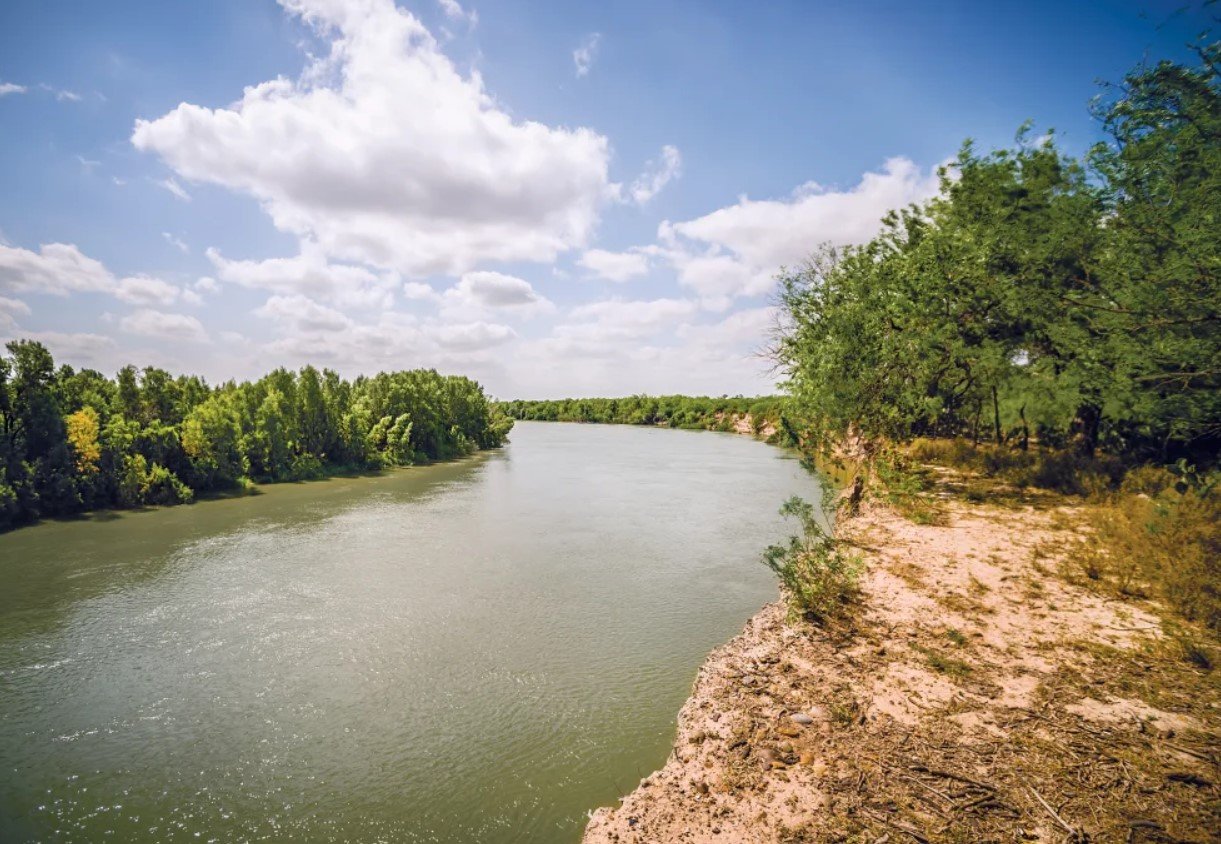
The Rio Grande Valley is a distinctive region of South Texas shaped by the lower course of the Rio Grande along the United States–Mexico border. Often simply called “the Valley,” it is known for its subtropical environment, rich agricultural land, diverse wildlife, and strong blend of American and Mexican cultural influences.
Unlike a narrow mountain valley, the Rio Grande Valley is a broad river and floodplain region. Its landscape includes agricultural areas, thorny brushlands, wetlands, resacas, subtropical woodlands, and communities stretching toward the Gulf of Mexico.
| Fact | Details |
|---|---|
| Location | Southern Texas along the Rio Grande |
| Country | United States |
| Region | South Texas / Lower Rio Grande |
| Main River | Rio Grande |
| Landscape | Broad floodplain, brushlands, wetlands and agricultural land |
| Famous For | Wildlife, birding, citrus, border culture and South Texas landscapes |
| Climate | Warm subtropical to semi-arid |
| Best Months | November to April |
| Major Cities | McAllen, Brownsville, Harlingen and Edinburg |
Where Is Rio Grande Valley?
The Rio Grande Valley is located in the southernmost part of Texas along the border with Mexico. The term commonly refers to the Lower Rio Grande region centered on Starr, Hidalgo, Willacy, and Cameron counties.
The region extends eastward toward the Gulf of Mexico and includes major communities such as McAllen, Brownsville, Harlingen, Edinburg, Mission, and Rio Grande City. Although the name suggests a single sharply defined valley, the area is better understood as a broad river corridor and floodplain shaped by the lower Rio Grande.
Geography and Landscape
The landscape is generally low and relatively flat compared with Texas’s western mountain regions. The Rio Grande has played the central role in shaping the area’s floodplain, carrying sediment and creating fertile alluvial soils.
One of the region’s distinctive features is the resaca—an abandoned or cut-off channel of the Rio Grande, similar to an oxbow lake. These water bodies and wetlands provide important habitat and add variety to an otherwise broad plain.
The surrounding South Texas landscape includes thorny brush, grasslands, subtropical woodlands, agricultural fields, and patches of palm vegetation. As the river approaches the coast, its floodplain broadens and contains evidence of former river channels and meanders.
History of Rio Grande Valley
The Rio Grande Valley has a long human history shaped by Indigenous communities and the river’s importance as a source of water and food. Native peoples lived in the wider South Texas region long before European settlement, developing ways of living within its riverine and semi-arid environment.
Spanish influence became increasingly important during the colonial period. By the eighteenth century, Spanish settlement and large ranching land grants had transformed parts of the region. The area’s position along the Rio Grande later gave it major political and military importance.
After the Mexican-American War, Brownsville developed as an important American settlement and commercial center. During the late nineteenth and early twentieth centuries, irrigation and railroad expansion transformed large parts of the Valley into productive agricultural land. Citrus, vegetables, cotton, and other crops became important to the regional economy.
Tourism also grew during the twentieth century, particularly as visitors from colder northern states began spending winters in South Texas. Today, the region remains known for agriculture, cross-border culture, wildlife tourism, and its rapidly growing urban communities.
How Was Rio Grande Valley Formed?
The Rio Grande Valley developed primarily through the long-term action of the Rio Grande and changes in the surrounding coastal plain. Over millions of years, the river transported sediment from upstream areas and deposited material across its lower floodplain.
The modern river has a low gradient and naturally meanders across the landscape. As channels shifted over time, some bends were cut off, creating resacas and oxbow-like water bodies. Flooding and sediment deposition helped build the fertile alluvial soils that distinguish much of the lower valley.
Rio Grande Valley Weather Throughout the Year
The Rio Grande Valley has a warm climate influenced by its southern location and proximity to the Gulf of Mexico. Summers are hot, while winters are generally mild. Rainfall varies across the region and is often highest during spring and early autumn.
January to March
Winter is generally mild compared with much of the United States. Daytime temperatures are often comfortable, although occasional cold fronts can bring cooler conditions. This period is popular for outdoor activities and birdwatching.
April to June
Spring brings warmer temperatures and increasing humidity. April is often comfortable, while May and June become noticeably hotter. Rainfall can occur during late spring, supporting seasonal plant growth.
July to September
Summer is hot and humid, particularly closer to the Gulf Coast. High evaporation rates are common, and the region can experience heavy rain from tropical weather systems or thunderstorms.
October to December
Autumn gradually brings cooler and more comfortable temperatures. October can still be warm, while November and December are usually mild. This period is suitable for sightseeing, nature activities, and outdoor exploration.
Best Weather for Visiting Rio Grande Valley
November through April generally offers the most comfortable weather for visiting. Winter and early spring are particularly appealing for birdwatching, wildlife viewing, and outdoor activities because temperatures are usually milder than during the summer.
Things to Do in Rio Grande Valley
Birdwatching
The region is internationally known for bird diversity, with subtropical species and migratory birds attracting visitors from across North America.
Explore Wildlife Refuges
Protected areas along the river provide opportunities to observe native plants, mammals, reptiles, butterflies, and birds.
Visit Resacas and Nature Trails
Resacas and wetland habitats offer scenic areas for walking and observing the region’s distinctive ecosystem.
Enjoy South Padre Island
The Gulf Coast is a popular destination for beaches, water recreation, fishing, and coastal wildlife.
Explore Local Culture
The Valley’s communities reflect strong Mexican and American cultural connections through food, festivals, history, and everyday life.
Visit Historic Sites
The wider region contains sites associated with Spanish colonial history, ranching, military activity, and the development of the Texas–Mexico borderlands.
Famous Attractions in and Around Rio Grande Valley
Bentsen-Rio Grande Valley State Park
This state park protects important native habitats along the Rio Grande and is widely known for birdwatching and wildlife observation.
Santa Ana National Wildlife Refuge
Located near Alamo, this refuge protects subtropical habitats and provides trails for observing birds, butterflies, and other wildlife.
Lower Rio Grande Valley National Wildlife Refuge
This refuge consists of protected lands spread across the region and helps conserve important wildlife corridors along the lower Rio Grande.
South Padre Island
Located near the Gulf of Mexico, South Padre Island is one of the region’s best-known destinations for beaches and coastal recreation.
World Birding Center
The World Birding Center connects several nature sites and communities across the Lower Rio Grande Valley, highlighting the area’s importance for bird conservation.
Quinta Mazatlán
Located in McAllen, this urban nature center preserves native habitat and offers trails, environmental programs, and opportunities to learn about regional wildlife.
Palo Alto Battlefield National Historical Park
Near Brownsville, this historic site preserves part of the landscape associated with the opening battles of the Mexican-American War.
Wildlife and Nature
The Rio Grande Valley is one of the most biologically distinctive regions in Texas. Its location creates a transition between temperate and tropical environments, supporting species that are uncommon or absent elsewhere in the United States.
Native habitats include thorny brushlands, riparian woodlands, wetlands, resacas, and subtropical vegetation. Wildlife associated with the region includes green jays, chachalacas, crested caracaras, javelinas, bobcats, and numerous butterflies and reptiles. Endangered species such as the ocelot and northern aplomado falcon are also closely associated with the Lower Rio Grande Valley.
Habitat loss has reduced much of the original native vegetation, making wildlife refuges, state parks, and conservation corridors particularly important for protecting remaining ecosystems.
How to Reach Rio Grande Valley
The region is accessible by major highways from other parts of Texas. U.S. Highway 83 and Interstate 2 provide important east-west connections through several Valley communities.
McAllen International Airport and Valley International Airport in Harlingen provide commercial air access. Brownsville also has an airport serving the southern part of the region.
Most visitors use a private vehicle because the Valley covers a large area and attractions are spread across multiple cities and protected landscapes. Local transportation options are available within individual communities, but driving offers the greatest flexibility.
Where to Stay Near Rio Grande Valley
Accommodation is widely available throughout the region. McAllen is a convenient base for visitors interested in urban services, restaurants, shopping, and nearby nature areas.
Harlingen offers access to central Valley locations and transportation links, while Brownsville is useful for visitors exploring the eastern Valley and nearby historic or coastal areas.
Visitors focused on beaches often stay near South Padre Island. Hotels, motels, vacation rentals, resorts, campgrounds, and RV parks are available across the wider region.
Why Is Rio Grande Valley Famous?
The Rio Grande Valley is famous for its unique meeting of river landscapes, subtropical wildlife, fertile agricultural land, and borderland culture. It is especially important for birdwatching and biodiversity, while its connection to the Rio Grande gives the region a geographical and historical identity unlike any other part of Texas.
Rio Grande Valley FAQs
Where is the Rio Grande Valley located?
The Rio Grande Valley is in southern Texas along the Rio Grande and the United States–Mexico border.
What is the Rio Grande Valley famous for?
It is known for subtropical wildlife, birdwatching, citrus agriculture, South Texas culture, and its location along the Rio Grande.
What is the weather like in the Rio Grande Valley?
The climate is generally warm, with hot summers and mild winters. Humidity is often higher near the Gulf Coast.
What are the best months to visit the Rio Grande Valley?
November through April generally offers the most comfortable weather for outdoor activities and nature tourism.
What can you do in the Rio Grande Valley?
Visitors can go birdwatching, explore wildlife refuges, visit historic sites, enjoy beaches, experience local culture, and explore nature trails.
How do you reach the Rio Grande Valley?
The region is accessible by major Texas highways and commercial airports in McAllen and Harlingen.
Does the Rio Grande Valley get cold?
Winters are usually mild, but occasional cold fronts can temporarily bring much cooler temperatures.
Is the Rio Grande Valley good for wildlife watching?
Yes. The region is one of the most important wildlife and birdwatching areas in the United States, particularly for subtropical and migratory species.
Final Thoughts
The Rio Grande Valley offers a different kind of valley landscape, shaped by a major river rather than steep mountain walls. Its combination of wetlands, brushlands, agriculture, wildlife, cultural history, and Gulf Coast access makes it one of the most distinctive regions in South Texas.
For More Visit Stay And Update
