
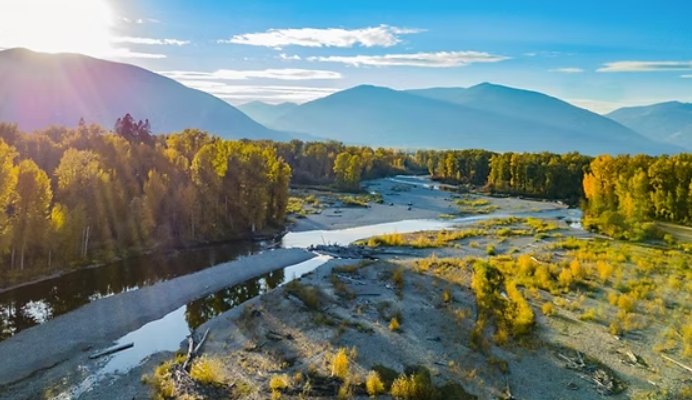
Creston Valley is a broad, fertile valley in southeastern British Columbia, Canada, surrounded by the Purcell and Selkirk mountain ranges. The area is shaped by the Kootenay River, wetlands, agricultural land, forests, and nearby Kootenay Lake, creating a landscape that combines productive farmland with important natural habitats.
The valley is particularly known for its wetlands and wildlife, long agricultural tradition, orchards, scenic mountain surroundings, and mild climate compared with many other parts of the Kootenays. The community of Creston serves as the main population and service centre, while smaller settlements and rural areas extend across the surrounding valley.
Creston Valley Quick Facts
| Fact | Details |
|---|---|
| Location | Southeastern British Columbia, Canada |
| Country | Canada |
| Region | Kootenay region |
| Elevation | Approximately 600 m in the valley floor around Creston |
| Main River | Kootenay River |
| Nearby Lake | Kootenay Lake |
| Famous For | Wetlands, agriculture, orchards, wildlife and mountain scenery |
| Climate | Warm, relatively dry summers and mild winters |
| Best Months | Generally May to September |
| Nearby Town | Creston |
Where Is Creston Valley?
Creston Valley is located in southeastern British Columbia, south of Kootenay Lake and close to the Canada–United States border. It occupies part of the broad Kootenay River valley between the Purcell Mountains to the east and the Selkirk Mountains to the west.
The town of Creston is the principal community in the valley and provides most of the area’s services, accommodation, shopping, and visitor facilities. Other communities and rural settlements are spread throughout the agricultural landscape, including Wynndel and areas toward the Kootenay Lake shore.
Geography and Landscape
The valley forms part of the Purcell Trench, a large geological depression extending through the Kootenay region. Its relatively broad and level floor contrasts with the mountains rising on both sides.
The Kootenay River is the valley’s dominant waterway. It flows through the agricultural lowlands before reaching Kootenay Lake, while numerous smaller waterways, wetlands, marshes, and drainage channels contribute to the valley’s landscape.
Creston Valley is also notable for its productive agricultural land. Orchards, grain fields, farms, and pasture occupy much of the valley floor, while forested slopes and higher mountain terrain surround it. The combination of wetlands and farmland gives the region a landscape quite different from the steep, heavily forested mountain valleys found elsewhere in British Columbia.
History of Creston Valley
The valley has a long Indigenous history associated with the Ktunaxa people. The Lower Kootenay Band, also known as the Yaqan nuʔkiy, has longstanding connections with the land and waterways of the region. Hunting, fishing, gathering, and movement through the valley were important parts of traditional life.
European exploration increased in the early nineteenth century. David Thompson traveled through the Kootenay region in the early 1800s and documented the landscape and its Indigenous communities. Later, prospectors and settlers arrived as interest in mining and agricultural settlement expanded.
During the late nineteenth and early twentieth centuries, agriculture became increasingly important. Early settlers worked to control the Kootenay River’s seasonal flooding so that more of the fertile valley floor could be cultivated. Dikes and drainage projects eventually transformed substantial areas of the floodplain into agricultural land.
Creston developed into the valley’s main community, while orchards, grain production, livestock, and other agricultural activities shaped the local economy. The region also developed a significant conservation movement as residents recognized the importance of protecting the remaining wetlands and wildlife habitat.
How Was Creston Valley Formed?
Creston Valley developed within the broad Purcell Trench, which was shaped by long-term geological activity and later modified by glaciers and rivers. During the last ice age, glaciers occupied much of the region and helped carve and reshape the existing terrain.
As the glaciers retreated, sediments accumulated across the lower valley. The Kootenay River and associated waterways continued to shape the floodplain, depositing rich alluvial material that later became valuable agricultural soil. The valley’s wetlands are closely connected to this river system and its changing water patterns.
Creston Valley Weather Throughout the Year
Creston Valley has a relatively warm and dry climate for southeastern British Columbia. Summers are generally hot and dry, while winters are comparatively mild but can bring snow. The surrounding mountains create noticeable local differences in temperature and precipitation.
January to March
Winter is generally cool, with temperatures often around or below freezing at night. Snowfall occurs, although the valley floor typically has less persistent snow than higher mountain areas. By March, temperatures begin to rise and early signs of spring appear.
April to June
Spring brings a rapid change in conditions. April can still be cool and unsettled, while May and June become warmer. Vegetation becomes increasingly green, orchards bloom, and outdoor conditions become more suitable for hiking, cycling, and exploring the wetlands.
July to September
Summer is typically the warmest and driest part of the year. July and August can bring hot days with plenty of sunshine, while evenings are generally more comfortable. September remains pleasant but gradually becomes cooler as autumn approaches.
October to December
Autumn brings cooler temperatures, changing foliage, and increasing precipitation. October can still have mild days, while November and December are noticeably colder. Snow becomes more likely as winter develops, particularly in the surrounding mountains.
Best Weather for Visiting Creston Valley
May through September generally offers the most comfortable conditions for exploring the valley, with warmer temperatures, longer daylight hours, and good opportunities for outdoor activities. Late spring and early summer are particularly appealing for gardens, orchards, wetlands, and wildlife, while autumn brings colorful scenery and cooler temperatures.
Things to Do in Creston Valley
- Explore the wetlands: Walking trails, dikes, boardwalks, and viewing areas provide opportunities to experience the valley’s wetland environment.
- Hiking and walking: Flat valley trails and nearby mountain routes offer options for different levels of ability.
- Birdwatching: The wetlands attract numerous resident and migratory birds throughout the year.
- Cycling: Quiet rural roads and valley routes provide opportunities to explore farmland and surrounding communities by bicycle.
- Fishing: The Kootenay River, Kootenay Lake, and nearby waterways provide fishing opportunities subject to local regulations.
- Visit farms and orchards: Agriculture is an important part of the valley’s identity, and seasonal farm products and local food experiences are popular.
- Photography: Mountains, wetlands, agricultural fields, waterways, and changing seasonal scenery create varied photography opportunities.
Famous Attractions in and Around Creston Valley
Creston Valley Wildlife Management Area
This large protected wetland complex contains marshes, waterways, lake habitat, and surrounding land. It is one of the valley’s most important natural attractions.
Kootenay River
The river is central to the valley’s geography and history, flowing through the floodplain before reaching Kootenay Lake.
Kootenay Lake
Located north of the valley, Kootenay Lake provides a major recreational and scenic destination surrounded by mountains and forest.
Creston Museum
The museum explores the area’s settlement, agriculture, Indigenous history, mining connections, and community development.
Yaqan Nukiy Heritage Centre
Located near Creston, the heritage centre provides an opportunity to learn more about the culture and history of the Yaqan nuʔkiy Ktunaxa people.
Creston Valley Farmers’ Market
The local market showcases regional agricultural products, food, crafts, and the valley’s strong farming tradition.
Skimmerhorn Winery
The winery is part of the area’s growing wine and agricultural tourism scene and provides visitors with an opportunity to experience locally produced wine.
Wildlife and Nature
The Creston Valley is especially important for wetland wildlife. The Creston Valley Wildlife Management Area covers about 7,000 hectares and includes a lake, numerous marshes, the Kootenay River system, and adjoining habitats.
The wetlands provide breeding, staging, and wintering habitat for many bird species, making the area particularly valuable for birdwatchers. Waterfowl, shorebirds, raptors, and songbirds can be found in different habitats and seasons.
Mammals and other wildlife also inhabit the valley and surrounding mountains. Species associated with the broader region include black bears, deer, beavers, coyotes, and a variety of smaller mammals. The protected wetlands are also important habitat for species such as the northern leopard frog. Conservation programs focus on maintaining wetland habitat, managing water levels, and protecting biodiversity.
How to Reach Creston Valley
Creston Valley is primarily accessed by road. Highway 3 passes through Creston and connects the valley with other communities in southeastern British Columbia, including Cranbrook and the Salmo area. Highway 3 also provides connections toward the United States border.
The nearest major commercial airport is Canadian Rockies International Airport near Cranbrook, although visitors can also approach from regional airports depending on their itinerary. Bus services connect Creston with other communities in British Columbia and the Kootenay region.
Kootenay Lake ferry services are also relevant for travelers exploring the northern side of the valley and surrounding Kootenay communities. Winter driving conditions can affect mountain routes, so travelers should check road conditions before setting out.
Where to Stay Near Creston Valley
Creston is the main accommodation base, with hotels, motels, guesthouses, bed-and-breakfast properties, vacation rentals, and other lodging options. Staying in town provides convenient access to restaurants, shops, visitor services, and surrounding attractions.
Travelers looking for a quieter rural experience can find farm-based accommodation, cabins, and guesthouses in the surrounding countryside. Camping and recreational accommodation are also available in the wider region, particularly around lakes, rivers, and forested areas.
Why Is Creston Valley Famous?
Creston Valley is best known for its combination of fertile agricultural land, extensive wetlands, the Kootenay River, surrounding mountains, and rich wildlife habitat. Its relatively mild climate supports orchards and farming, while the protected wetlands give the region national and international importance for nature and bird conservation.
Creston Valley FAQs
Where is Creston Valley located?
Creston Valley is in southeastern British Columbia, Canada, between the Purcell and Selkirk mountain ranges and south of Kootenay Lake.
What is Creston Valley famous for?
It is known for wetlands, agriculture, orchards, wildlife, the Kootenay River, and its mountain scenery.
What is the weather like in Creston Valley?
The valley has warm, generally dry summers and relatively mild winters. Snow is possible during winter, particularly in surrounding higher elevations.
What are the best months to visit Creston Valley?
May through September generally offers the best combination of warm weather and outdoor conditions, although autumn is also attractive for cooler temperatures and seasonal scenery.
What can you do in Creston Valley?
Popular activities include hiking, birdwatching, cycling, fishing, photography, visiting farms and exploring wetlands.
How do you reach Creston Valley?
Most visitors arrive by road via Highway 3. Creston is also connected by regional bus services, while the nearest major commercial airport is near Cranbrook.
Does Creston Valley get snow?
Yes. Snow occurs during winter, although conditions vary from year to year and snow is generally more persistent at higher elevations.
What attractions are near Creston Valley?
Major attractions include the Creston Valley Wildlife Management Area, Kootenay River, Kootenay Lake, Creston Museum, Yaqan Nukiy Heritage Centre, local farms, markets, and wineries.
Final Thoughts
Creston Valley offers a distinctive blend of fertile farmland, wetlands, waterways, mountain scenery, wildlife, and cultural history. Its combination of natural habitats and a long agricultural tradition makes it an appealing destination for travelers interested in nature, outdoor recreation, local heritage, and the landscapes of southeastern British Columbia.
For More Visit Stay And Update
