
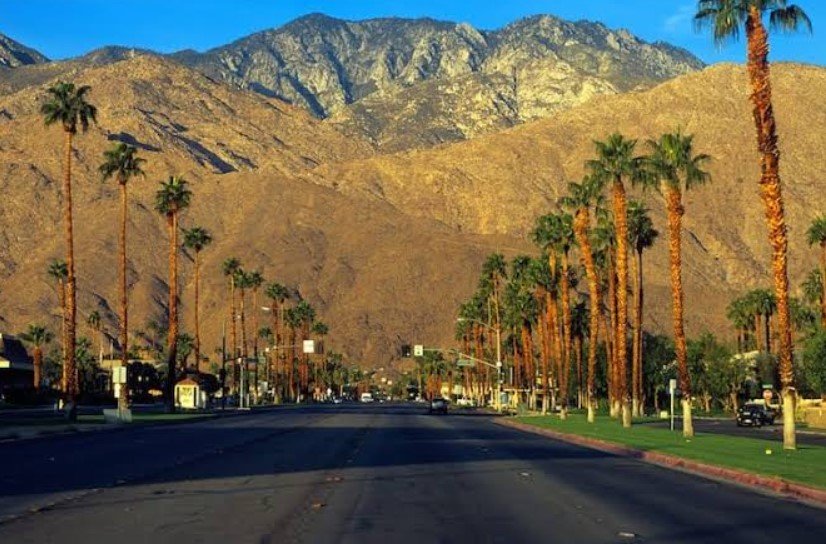
Coachella Valley is a broad desert valley in Southern California, best known for its warm climate, palm-filled landscapes, agricultural communities, mountain scenery, and the resort cities of the Palm Springs area. Although it is internationally associated with the Coachella Valley Music and Arts Festival, the valley itself is a much larger geographic region with a distinctive natural and cultural identity.
The valley stretches from the San Bernardino Mountains toward the Salton Sea and sits within the Colorado Desert portion of the Sonoran Desert. Its combination of desert terrain, irrigated farmland, mountain ranges, geothermal features, and resort communities makes it one of California’s most recognizable desert valleys.
| Fact | Details |
|---|---|
| Location | Southern California |
| Country | United States |
| Region | Colorado Desert, Sonoran Desert |
| Elevation | From below sea level near the Salton Sea to higher surrounding mountains |
| Famous For | Palm Springs, desert resorts, agriculture, dates and the Coachella Valley music festival |
| Climate | Hot desert climate |
| Main Water Feature | Coachella Valley groundwater basin and nearby Salton Sea |
| Best Months | Generally October to April |
| Nearby Cities/Towns | Palm Springs, Indio, Coachella, Palm Desert, La Quinta |
Where Is Coachella Valley?
Coachella Valley is located in Riverside County in southeastern California, approximately 100 miles east of Los Angeles. The valley extends southeast from the Palm Springs area toward the Salton Sea and is bordered by the San Bernardino Mountains to the north, the San Jacinto and Santa Rosa Mountains to the southwest, and the Little San Bernardino Mountains to the northeast.
Major communities within the valley include Palm Springs, Cathedral City, Rancho Mirage, Palm Desert, Indian Wells, La Quinta, Indio, Coachella, and Desert Hot Springs. The area is connected by Interstate 10, which runs along the northern side of much of the valley.
Geography and Landscape
Coachella Valley is a low-lying desert basin surrounded by rugged mountain ranges. The valley floor is characterized by sandy desert, irrigated agricultural land, palm groves, developed communities, and extensive areas of open terrain.
Its geology is strongly influenced by the San Andreas Fault system, which runs through the region. The valley is part of the Salton Trough, a major structural depression extending from Southern California into northern Mexico.
The valley’s western end includes the San Jacinto and Santa Rosa Mountains, while the northern and eastern sides rise toward the San Bernardino and Little San Bernardino Mountains. This dramatic contrast between a broad desert floor and steep mountain walls gives the region much of its distinctive scenery.
History of Coachella Valley
The history of Coachella Valley begins with Indigenous communities that lived in and around the desert long before the arrival of European settlers. The Agua Caliente Band of Cahuilla Indians has longstanding cultural and historical connections to the Palm Springs area and surrounding lands. The Cahuilla developed detailed knowledge of desert plants, water sources, and seasonal resources.
During the nineteenth century, American settlement and transportation gradually expanded across the region. The arrival of railroads helped connect the valley with other parts of Southern California and supported the development of agriculture and communities.
Irrigation transformed the valley during the late nineteenth and early twentieth centuries. Agricultural development became particularly important, with dates emerging as one of the region’s signature crops. Palm Springs also developed into a major desert resort destination, attracting visitors seeking warm winter weather, mineral springs, golf, and recreation.
In the modern era, the valley has become both a major agricultural region and a tourism destination. The annual Coachella Valley Music and Arts Festival, first held in 1999, helped give the region global cultural recognition.
How Was Coachella Valley Formed?
Coachella Valley is part of the Salton Trough, a geological depression created by tectonic movement along the boundary between the Pacific and North American tectonic plates. The San Andreas Fault and related fault systems have played a major role in shaping the valley and its surrounding mountains.
Over long periods, sediment eroded from the surrounding mountains accumulated across the low-lying basin. Geological changes and ancient water systems also contributed to the valley’s present landscape. The nearby Salton Sea occupies part of this larger depression.
Coachella Valley Weather Throughout the Year
Coachella Valley has a hot desert climate characterized by extremely hot summers, mild winters, very low rainfall, and abundant sunshine. Temperatures can vary considerably between the valley floor and the surrounding mountains.
January to March
Winter is generally the coolest period of the year. Daytime temperatures are often comfortable for outdoor activities, while nights can be cool. Rainfall remains limited, although occasional winter storms can bring precipitation.
April to June
Spring becomes progressively hotter. April is usually warm and pleasant, but temperatures rise significantly by May and June. This period can provide good conditions for desert sightseeing early in the season, before summer heat becomes intense.
July to September
Summer is the hottest period, with daytime temperatures frequently exceeding 100°F (38°C). July and August can be particularly severe, especially during the afternoon. Outdoor activities are generally best planned for early morning or evening during the hottest months.
October to December
Temperatures begin falling in October, creating more comfortable desert conditions. November and December are generally mild during the day and cooler at night, making late autumn and early winter popular periods for visiting.
Best Weather for Visiting Coachella Valley
October through April generally offers the most comfortable weather for exploring the valley. Winter is especially attractive for visitors seeking mild daytime temperatures, while spring is popular for outdoor events and desert landscapes before the extreme summer heat arrives.
Things to Do in Coachella Valley
- Hiking: Trails in the surrounding mountains and desert areas offer options ranging from easy walks to challenging climbs.
- Golf: The valley is home to numerous golf courses, particularly around Palm Desert, La Quinta, Indian Wells, and Rancho Mirage.
- Explore desert landscapes: Visitors can discover palm oases, mountain scenery, canyons, and open desert.
- Photography: Desert vegetation, mountains, architecture, and changing light provide excellent photography opportunities.
- Visit hot springs: Mineral-rich geothermal waters are an important part of the area’s longstanding resort culture.
- Attend cultural events: Music, art, food, and sporting events take place throughout the valley, particularly in the larger resort communities.
- Explore agricultural areas: Date farms and other agricultural landscapes showcase the valley’s distinctive desert farming economy.
Famous Attractions in and Around Coachella Valley
Palm Springs Aerial Tramway
The Palm Springs Aerial Tramway carries visitors from the desert floor into the San Jacinto Mountains, offering a dramatic change in elevation and climate.
Joshua Tree National Park
Located northeast of the valley, Joshua Tree National Park is known for its distinctive Joshua trees, rugged rock formations, desert landscapes, and hiking opportunities.
Coachella Valley Preserve
The Coachella Valley Preserve protects important desert habitat and is particularly known for its native palm oases and wildlife.
Indian Canyons
Located near Palm Springs, Indian Canyons contain palm oases, streams, hiking trails, and landscapes associated with the Agua Caliente Band of Cahuilla Indians.
Salton Sea
The Salton Sea lies southeast of the valley and is a major landmark of the surrounding desert basin. Its unusual history and changing ecosystem make it an important regional destination.
Living Desert Zoo and Gardens
Located in Palm Desert, this attraction focuses on desert wildlife and plants from desert environments around the world.
San Jacinto Mountains
The mountains rise dramatically above the western valley and provide hiking, scenic viewpoints, and cooler high-elevation environments.
Coachella Valley Music and Arts Festival
Held annually at the Empire Polo Club in Indio, the Coachella festival is one of the world’s best-known music and arts events and has become closely associated with the valley’s international identity.
Wildlife and Nature
Coachella Valley supports plants and animals adapted to one of Southern California’s driest environments. Native vegetation includes creosote bush, desert shrubs, cacti, and the California fan palm, which grows naturally in desert oases where groundwater reaches the surface.
The Coachella Valley Preserve protects important habitat for the endangered Coachella Valley fringe-toed lizard, a species specially adapted to living in shifting sand. Desert bighorn sheep, coyotes, kit foxes, roadrunners, hawks, and numerous other birds and reptiles can also be found across the wider region.
The valley’s palm oases are particularly important ecological areas because they provide shade, water, and habitat within an otherwise extremely dry environment. Conservation programs protect these habitats from development and other pressures.
How to Reach Coachella Valley
The valley is primarily reached by road. Interstate 10 is the principal east-west highway and connects the Palm Springs area with Los Angeles, the Inland Empire, and communities farther east.
Palm Springs International Airport provides the most convenient commercial air access for many visitors. Ontario International Airport and Los Angeles International Airport provide additional options, although they are farther away.
Once in the valley, visitors can travel between communities by car, rideshare services, local buses, and other transportation options. A private vehicle is particularly useful for reaching mountain areas, desert preserves, and attractions outside the main resort districts.
Where to Stay Near Coachella Valley
Accommodation is concentrated throughout the valley’s resort communities. Palm Springs offers a wide range of hotels, boutique properties, resorts, and vacation rentals, while Palm Desert, Rancho Mirage, Indian Wells, and La Quinta are known for larger resorts and golf-oriented accommodation.
Indio and Coachella provide additional hotels and vacation rentals, while campgrounds and outdoor accommodation can be found in surrounding desert and mountain areas. Visitors attending major events should book accommodation well in advance because demand can increase substantially.
Why Is Coachella Valley Famous?
Coachella Valley is famous for its combination of desert scenery, palm oases, mountain landscapes, agriculture, resort communities, and major cultural events. Its association with Palm Springs and the internationally recognized Coachella music festival has given the valley a global profile, while its agricultural and Indigenous heritage provide a deeper identity beyond tourism.
Coachella Valley FAQs
Where is Coachella Valley located?
Coachella Valley is in Riverside County, Southern California. It stretches from the Palm Springs area southeast toward the Salton Sea.
What is Coachella Valley famous for?
It is known for Palm Springs, desert resorts, date agriculture, mountain scenery, palm oases, and the Coachella Valley Music and Arts Festival.
What is the weather like in Coachella Valley?
The valley has a hot desert climate with very hot summers, mild winters, little rainfall, and abundant sunshine.
What are the best months to visit Coachella Valley?
October through April generally provides the most comfortable temperatures for sightseeing and outdoor activities.
What can you do in Coachella Valley?
Popular activities include hiking, golfing, photography, visiting palm oases, exploring nearby parks, attending events, and experiencing the region’s resort culture.
How do you reach Coachella Valley?
Interstate 10 is the main road connection, while Palm Springs International Airport provides convenient air access to the western part of the valley.
Does Coachella Valley get snow?
Snow is extremely rare on the valley floor because of its desert climate. However, snow can occur at much higher elevations in the surrounding San Jacinto and other mountain ranges.
What attractions are near Coachella Valley?
Popular nearby attractions include Joshua Tree National Park, the Palm Springs Aerial Tramway, Indian Canyons, Coachella Valley Preserve, the Salton Sea, and the San Jacinto Mountains.
Final Thoughts
Coachella Valley is more than a famous desert festival destination. Its combination of desert geography, mountain scenery, Indigenous heritage, agriculture, wildlife habitats, and resort communities creates a distinctive region with something to explore in every season. For visitors interested in desert landscapes, outdoor recreation, culture, and warm-weather escapes, the valley offers a diverse Southern California experience.
For More Visit Stay And Update
