
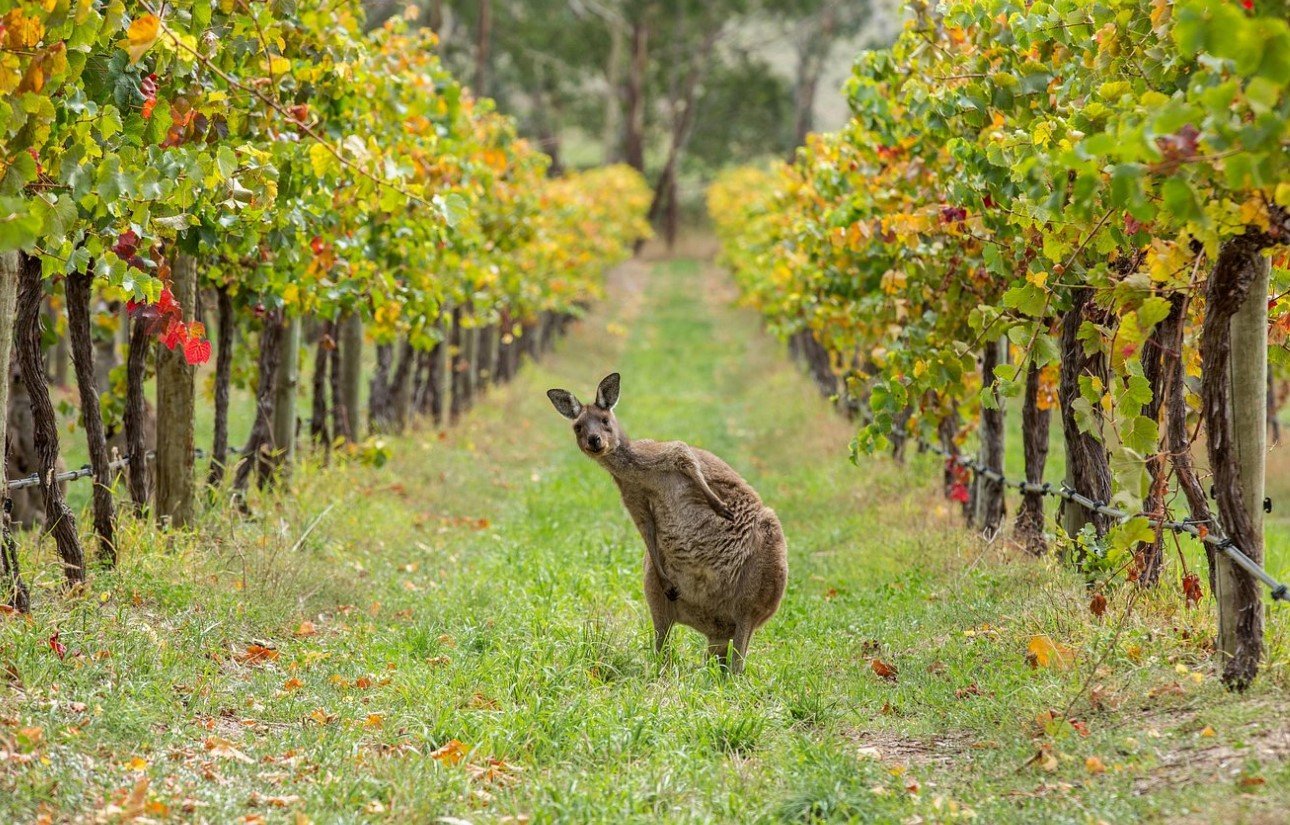
Barossa Valley is one of Australia’s best-known wine regions, located in South Australia northeast of Adelaide. The valley combines vineyard-covered hills, historic townships, farmland, seasonal creeks, and a long agricultural tradition. Its landscape and cultural character have been shaped by generations of European settlement, winemaking, farming, and strong community traditions.
Beyond its reputation for wine, the valley offers a varied landscape and a rich regional identity. Historic villages, cellar doors, local food producers, heritage buildings, gardens, and scenic countryside make it a destination that can be explored for its history, nature, food, and rural character as well as its vineyards.
Barossa Valley Quick Facts
| Fact | Details |
|---|---|
| Location | South Australia, northeast of Adelaide |
| Country | Australia |
| Region | Barossa region |
| Elevation | Varies across the valley and surrounding hills |
| Famous For | Wine, vineyards, food and German heritage |
| Climate | Mediterranean-style climate |
| Main Towns | Tanunda, Nuriootpa and Angaston |
| Best Months | March to May and September to November |
| Nearby City | Adelaide |
Where Is Barossa Valley?
Barossa Valley is in South Australia, approximately 70 kilometers northeast of Adelaide. It lies between the Barossa Ranges to the east and the Mount Lofty Ranges farther west, with vineyards and agricultural land spread across the valley and surrounding hills.
The principal towns are Tanunda, Nuriootpa, and Angaston. Smaller communities, including Bethany, Lyndoch, and Williamstown, are also part of the broader Barossa landscape. Its relatively short distance from Adelaide makes the valley readily accessible for both day trips and longer stays.
Geography and Landscape
The Barossa landscape consists of rolling hills, broad agricultural areas, vineyards, grazing land, woodland, and small waterways. The region is not a single flat basin; its vineyards extend across different elevations and terrain, creating noticeable variations in soil, exposure, and growing conditions.
The North Para River is an important waterway in the region and flows through parts of the Barossa. The surrounding hills and valleys create a scenic mixture of cultivated land and natural vegetation, while dry conditions during summer give the landscape a distinctly Mediterranean appearance.
Soils vary considerably throughout the region. Some vineyard areas contain deep, fertile soils, while others have shallower or more gravelly ground. These differences contribute to the distinct growing conditions found across the wine region.
History of Barossa Valley
The Barossa Valley has a much older history than its European wine industry. The traditional owners of the broader region include the Ngadjuri and Peramangk peoples, who lived across the surrounding lands before European settlement.
European settlement expanded during the nineteenth century. The area became particularly associated with German-speaking immigrants, many of whom arrived in South Australia in the 1830s and 1840s. They established farms, villages, churches, and vineyards, creating cultural traditions that remain visible throughout the region.
Vine cultivation developed rapidly during the nineteenth century. Johann Christian Henschke, Joseph Ernst Seppelt, and other early producers contributed to the development of South Australia’s wine industry, while families established vineyards that later became important long-running wine businesses.
The region’s wine industry continued to develop through the twentieth century, eventually making Barossa internationally recognized for premium wines, particularly Shiraz. Today, historic buildings, old vineyards, churches, cemeteries, and family businesses preserve much of the valley’s distinctive heritage.
How Was Barossa Valley Formed?
The landscape of Barossa Valley reflects a long geological history involving ancient rocks, erosion, weathering, and the gradual development of valleys between surrounding uplands. The Barossa region contains some of the oldest geological formations in South Australia.
Over time, erosion shaped the hills and valleys while rivers and seasonal waterways transported and deposited sediment. The resulting variations in elevation, soil, drainage, and exposure have helped create the diverse agricultural and vineyard landscapes seen throughout the region today.
Barossa Valley Weather Throughout the Year
Barossa Valley has a Mediterranean-style climate, characterized by warm to hot, relatively dry summers and cooler winters with most of the region’s rainfall occurring during the colder months.
January to March
Summer begins hot and dry, with January and February generally being the warmest months. March brings a gradual decline in temperatures and the beginning of more comfortable conditions for outdoor exploration.
April to June
Autumn is one of the most appealing periods in the valley. April remains relatively mild, while May and June become cooler as winter approaches. Rainfall generally increases during this period, and vineyard activity remains an important part of the seasonal landscape.
July to September
Winter is cool and wetter than summer. Frost can occur, particularly in lower-lying vineyard areas. By September, temperatures begin to rise and spring growth becomes increasingly visible across vineyards and surrounding countryside.
October to December
Spring brings mild to warm conditions and increasing daylight. October and November are generally comfortable for exploring the region, while December marks the transition toward the hotter, drier summer period.
Best Weather for Visiting Barossa Valley
March through May and September through November are generally among the most comfortable periods to visit. Autumn offers pleasant temperatures and harvest-season activity, while spring provides mild weather and green vineyard landscapes before the hotter summer conditions arrive.
Things to Do in Barossa Valley
Visit Local Wineries
Exploring cellar doors is one of the region’s signature experiences. Visitors can taste local wines, learn about production, and discover differences between vineyards and wine styles.
Explore the Countryside
Driving through the valley provides an easy way to experience its vineyards, farmland, hills, and historic settlements. Scenic roads connect many of the region’s towns and rural communities.
Enjoy Local Food
Barossa has a strong food culture supported by wineries, restaurants, farm producers, bakeries, and specialty food businesses. Local produce pairs naturally with the region’s wine traditions.
Explore Historic Towns
Tanunda, Angaston, and Nuriootpa each have their own character and provide opportunities to see heritage buildings, local shops, galleries, churches, and community landmarks.
Walk and Cycle
Walking and cycling routes provide a slower way to experience the countryside. The Barossa Trail is a popular shared path connecting several communities and vineyard areas.
Experience Local Events
Food, wine, music, and cultural events take place throughout the year. Seasonal events can provide insight into the region’s agricultural and community traditions.
Famous Attractions in and Around Barossa Valley
Mengler Hill
Mengler Hill overlooks the Barossa Valley and provides broad views across vineyards, towns, and surrounding countryside. It is also home to the Barossa Sculpture Park.
Barossa Chateau and Gardens
Located near Lyndoch, the Barossa Chateau is known for its heritage setting and extensive gardens, including the historic rose garden.
Whispering Wall
The Whispering Wall is a curved dam wall at Williamstown with an unusual acoustic effect. A person standing at one end can hear a quiet voice from the opposite end.
Seppeltsfield
Seppeltsfield is a historic wine estate established in the nineteenth century. Its heritage buildings and long winemaking history make it one of the region’s notable cultural attractions.
Tanunda
Tanunda is one of the valley’s main towns and an important center for Barossa’s German heritage, food, wine, shopping, and tourism.
Angaston
Angaston is one of South Australia’s historic settlements and features heritage buildings, local food businesses, galleries, and access to surrounding vineyard country.
Barossa Valley Sculpture Park
Located at Mengler Hill, this outdoor collection features large-scale sculptures positioned among the hills overlooking the valley.
Wildlife and Nature
Although much of the valley has been modified for agriculture and vineyards, native vegetation remains across hills, reserves, roadsides, and less-developed areas. The broader Barossa landscape supports native birds, reptiles, and mammals adapted to South Australia’s seasonal conditions.
Kangaroos are commonly associated with the surrounding countryside, while native birdlife includes species such as parrots, honeyeaters, kookaburras, and other woodland and open-country birds. Vegetation includes native eucalyptus woodland alongside vineyards, farmland, gardens, and introduced plant species.
Conservation work in the region focuses on protecting remaining native vegetation, waterways, biodiversity, and habitat corridors while balancing these priorities with the area’s long-established agricultural use.
How to Reach Barossa Valley
The valley is easiest to reach by road from Adelaide. The drive generally takes around an hour to an hour and a half depending on the starting point and destination within the region.
Major roads connect Adelaide with towns including Gawler, Nuriootpa, Tanunda, and Angaston. Adelaide Airport is the nearest major airport, while regional bus services provide connections between Adelaide and parts of the Barossa. Guided wine tours and private transfers are also widely used by visitors who do not want to drive.
Where to Stay Near Barossa Valley
Accommodation is available throughout the main towns and vineyard districts. Tanunda, Angaston, and Nuriootpa provide convenient bases with hotels, guesthouses, bed-and-breakfast properties, cottages, and other visitor accommodation.
The surrounding countryside also includes vineyard retreats, farm stays, cottages, and boutique accommodation. Staying outside the main towns can provide a quieter rural setting, while town-based accommodation offers easier access to restaurants, shops, and services.
Why Is Barossa Valley Famous?
Barossa Valley is famous primarily for its long-established wine industry, particularly its Shiraz, but its identity extends beyond vineyards. Historic German-influenced communities, heritage properties, local food, rolling agricultural landscapes, and generations of winemaking have created a distinctive cultural and rural region within South Australia.
Barossa Valley FAQs
Where is Barossa Valley located?
Barossa Valley is in South Australia, approximately 70 kilometers northeast of Adelaide. Its main towns include Tanunda, Nuriootpa, and Angaston.
What is Barossa Valley famous for?
It is internationally known for wine, particularly Shiraz, as well as its historic villages, food culture, vineyards, and German heritage.
What is the weather like in Barossa Valley?
The region has a Mediterranean-style climate with hot, dry summers and cooler, wetter winters. Autumn and spring generally offer comfortable conditions for visitors.
What are the best months to visit Barossa Valley?
March to May and September to November are generally favorable because temperatures are milder and the countryside offers attractive seasonal scenery.
What can you do in Barossa Valley?
Visitors can explore wineries, taste local food, visit historic towns, walk or cycle through the countryside, see heritage attractions, and attend regional events.
How do you reach Barossa Valley?
Most visitors drive from Adelaide, with the journey generally taking around one to one and a half hours. Bus services, organized tours, and private transfers are also available.
Does Barossa Valley get snow?
Snow is extremely uncommon in the valley. Winter is generally cool and wetter, although frost can occur during colder nights.
What are the main attractions in Barossa Valley?
Notable attractions include Mengler Hill, the Barossa Sculpture Park, Seppeltsfield, Barossa Chateau and Gardens, the Whispering Wall, Tanunda, and Angaston.
Final Thoughts
Barossa Valley offers a distinctive combination of vineyards, historic communities, agricultural landscapes, food traditions, and South Australian countryside. Its long connection with winemaking gives the region a strong identity, while its heritage and natural surroundings make it interesting even for visitors who are not focused solely on wine.
For More Visit Stay And Update
