
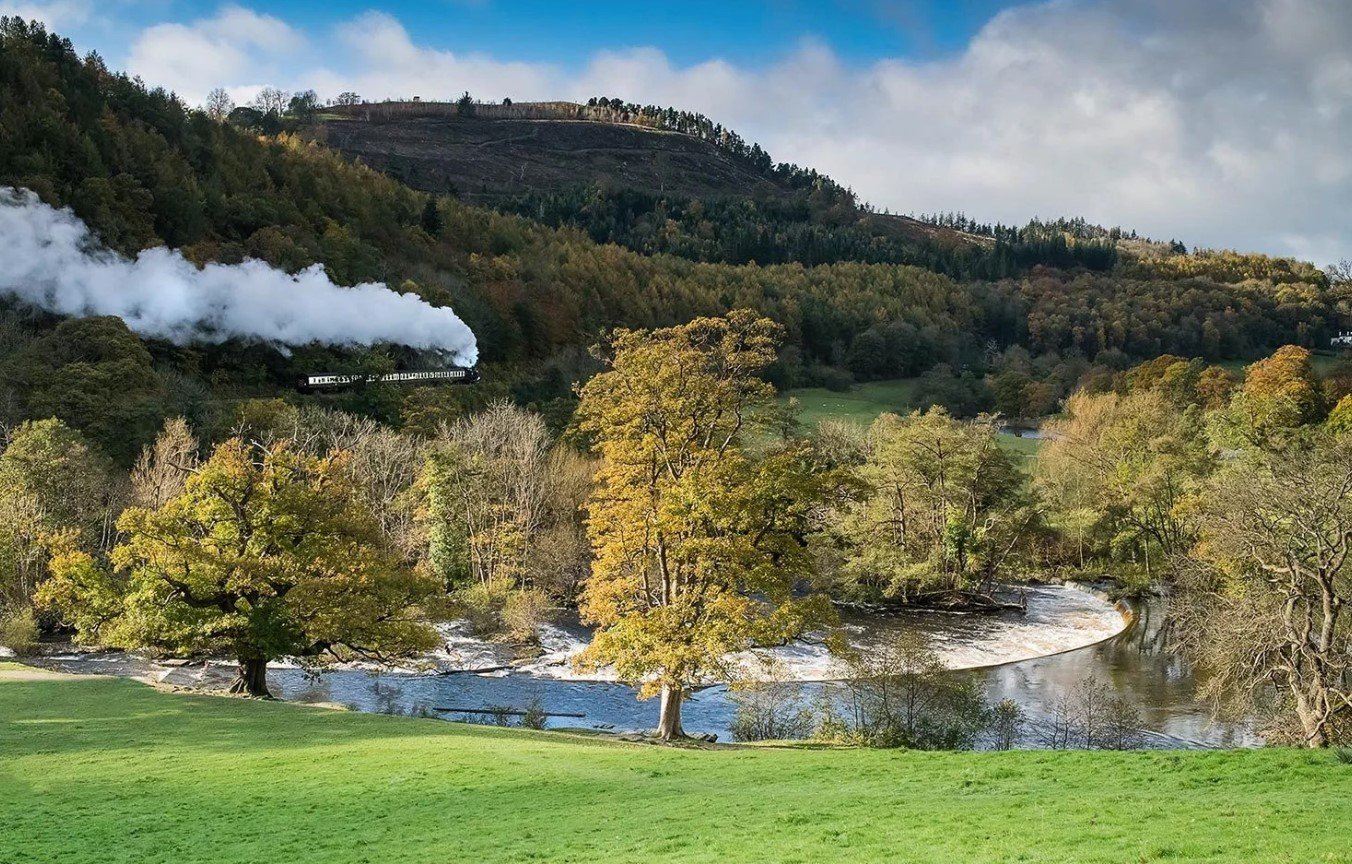
Llangollen Valley, also known as the Vale of Llangollen, is a scenic valley in northeast Wales shaped by the winding River Dee. Surrounded by wooded hills, limestone escarpments, farmland, and historic landmarks, the valley forms a natural route between the Welsh borderlands and the mountainous interior of North Wales.
The valley is closely associated with the town of Llangollen and is particularly notable for its combination of natural scenery, industrial heritage, medieval remains, and canal engineering. The Pontcysyllte Aqueduct and Canal, Horseshoe Falls, Castell Dinas Brân, and Valle Crucis Abbey are among the landmarks that give the area its distinctive character.
Llangollen Valley Quick Facts
| Fact | Details |
|---|---|
| Location | Northeast Wales |
| Country | Wales, United Kingdom |
| Region | Denbighshire and surrounding Dee Valley |
| Main River | River Dee |
| Landscape | River valley, hills, limestone cliffs and farmland |
| Famous For | Pontcysyllte Aqueduct, canal, Dinas Brân and scenic countryside |
| Climate | Temperate maritime |
| Best Months | May to September |
| Main Town | Llangollen |
| Nearby Areas | Wrexham, Corwen, Ruabon and the Berwyn Mountains |
Where Is Llangollen Valley?
Llangollen Valley lies in northeast Wales along the River Dee, centered on the town of Llangollen. The valley extends through a landscape that connects the English border area with the uplands of North Wales.
Llangollen is the principal settlement in the valley and provides most visitor services. Nearby places include Trevor, Ruabon, Corwen, and Wrexham, while the larger cities of Chester and Liverpool are within practical driving distance. The valley’s position has long made it an important natural communication route between eastern Wales and the country’s mountainous interior.
Geography and Landscape
The Vale of Llangollen is a relatively narrow, winding valley following the course of the River Dee. Its northern side is marked by the striking Eglwyseg limestone escarpment, while higher ground to the south separates it from the Ceiriog Valley.
The landscape combines steep wooded slopes, open farmland, limestone outcrops, river scenery, and upland hills. The River Dee is the valley’s principal waterway and gives the area much of its visual character.
Human engineering is also deeply integrated into the landscape. The Llangollen Canal crosses the valley on the Pontcysyllte Aqueduct, while Horseshoe Falls is a curved weir that diverts water from the Dee into the canal system.
History of Llangollen Valley
Llangollen’s history reflects its position along an important route through North Wales. The surrounding landscape contains evidence of prehistoric and medieval activity, while the town developed around its river crossing, religious foundations, and later transport connections.
The ruins of Valle Crucis Abbey, founded in the early thirteenth century by Cistercian monks, provide an important reminder of the medieval period. Nearby Eliseg’s Pillar is an earlier monument associated with the history and traditions of Welsh rulers.
The valley changed significantly during the Industrial Revolution. The Llangollen Canal was developed as part of the wider canal network, helping transport materials associated with local industries, including slate and limestone. Thomas Telford and William Jessop were involved in the canal engineering, including the remarkable water-feeding system at Horseshoe Falls.
Llangollen later developed into a popular tourist destination. Its historic buildings, railway, canal, countryside, and cultural events helped establish the town and surrounding valley as an important visitor area.
How Was Llangollen Valley Formed?
The valley’s present landscape reflects long-term erosion and geological processes acting on the rocks of the region. The River Dee and its tributaries helped establish and deepen the valley, while erosion exposed the distinctive limestone formations around Eglwyseg.
Glacial activity during the Ice Age also influenced the wider Dee Valley landscape. Later river processes and weathering continued to modify the valley floor and surrounding slopes, producing the combination of steep sides, river terraces, and upland landscapes visible today.
Llangollen Valley Weather Throughout the Year
Llangollen Valley has a temperate maritime climate, with relatively mild temperatures, rainfall possible throughout the year, and noticeably wetter conditions than many parts of lowland Britain. Weather can change quickly because of the valley’s surrounding hills.
January to March
Winter and early spring are cool and often wet. Frost is possible, while snow can occur during colder periods, particularly on surrounding higher ground. March usually brings gradually longer days and increasing temperatures.
April to June
Spring becomes milder, with increasingly green vegetation and longer daylight hours. Rain showers remain possible, but May and June generally offer increasingly favorable conditions for walking, sightseeing, and exploring the valley.
July to September
Summer is normally the warmest period, although temperatures remain moderate compared with hotter continental climates. Rainfall can occur even during summer, so visitors planning outdoor activities should be prepared for changing conditions.
October to December
Autumn brings cooler temperatures, shorter days, and more frequent wet weather. The valley’s wooded slopes can provide attractive autumn colors before winter conditions become more established toward December.
Best Weather for Visiting Llangollen Valley
May through September generally offers the most comfortable conditions for exploring the valley outdoors. Late spring and early summer are particularly suitable for walking and sightseeing, while autumn can appeal to visitors interested in seasonal scenery.
Things to Do in Llangollen Valley
- Walk along the River Dee: Riverside paths provide an easy way to experience the valley’s scenery and reach central Llangollen.
- Hike the surrounding hills: Footpaths lead into the countryside and provide views over the Dee Valley.
- Cycle through the valley: Quiet country roads and challenging routes appeal to recreational and experienced cyclists.
- Take a canal boat trip: Visitors can experience the historic canal from the water, including traditional horse-drawn boat trips.
- Ride the heritage railway: Llangollen Railway offers a nostalgic way to explore part of the Dee Valley by steam or heritage train.
- Try outdoor adventure activities: The valley and surrounding countryside provide opportunities for activities including climbing, fishing, and watersports.
- Explore local history: Historic churches, abbey ruins, castles, and museums provide insight into the area’s cultural development.
Famous Attractions in and Around Llangollen Valley
Pontcysyllte Aqueduct
This extraordinary cast-iron aqueduct carries the Llangollen Canal high above the River Dee. Completed in 1805, it forms part of the Pontcysyllte Aqueduct and Canal UNESCO World Heritage Site.
Castell Dinas Brân
The ruins of this medieval Welsh castle stand dramatically above Llangollen on a hill that also contains earlier Iron Age earthworks. The elevated position provides extensive views across the surrounding countryside.
Horseshoe Falls
Horseshoe Falls is an engineered weir designed to divert water from the River Dee into the Llangollen Canal. Its curved design and riverside setting make it one of the valley’s distinctive landmarks.
Valle Crucis Abbey
Located north of Llangollen, the remains of this medieval Cistercian abbey preserve important elements of the region’s religious and architectural history.
Plas Newydd
This historic house is associated with the Ladies of Llangollen, Lady Eleanor Butler and Sarah Ponsonby, whose unusual eighteenth-century life at the property became widely known.
Llangollen Railway
The heritage railway follows part of the former railway route through the Dee Valley and provides a distinctive way to experience the surrounding landscape.
Eglwyseg Escarpment
The limestone escarpment north of the valley is one of the area’s most recognizable geological and landscape features, with dramatic cliffs and open countryside.
Wildlife and Nature
The River Dee and surrounding countryside support a range of habitats, including river margins, woodland, grassland, farmland, and upland environments. The wider Dee catchment is recognized for its conservation importance and supports species associated with clean freshwater habitats.
Birds of prey, woodland birds, waterfowl, mammals, and a variety of insects can be found across the wider valley landscape. The surrounding Clwydian Range and Dee Valley protected landscape also helps conserve important habitats and traditional countryside.
How to Reach Llangollen Valley
Llangollen is primarily accessed by road. The A5 provides an important east-west route through the town, while the A539 connects the area with surrounding communities. Wrexham is one of the nearest larger towns, with further road connections toward Chester and the wider North Wales network.
For visitors arriving by rail, the nearest mainline stations include Ruabon and Chirk, from where onward road or bus connections can be used. Llangollen itself is served by the heritage Llangollen Railway rather than a conventional mainline passenger railway.
Where to Stay Near Llangollen Valley
Accommodation is concentrated around Llangollen and nearby villages. Visitors can choose from hotels, guesthouses, bed-and-breakfasts, self-catering cottages, holiday properties, and campsites.
Staying in Llangollen is convenient for visitors who want easy access to the town’s attractions, canal, river, and railway. Rural accommodation around the valley provides a quieter option, while nearby towns offer additional choices for travelers who prefer larger accommodation networks.
Why Is Llangollen Valley Famous?
Llangollen Valley is famous for bringing together dramatic Welsh scenery and an unusually rich concentration of cultural and engineering landmarks. Its identity is closely tied to the River Dee, Pontcysyllte Aqueduct and Canal World Heritage Site, medieval remains, historic transport routes, and the town of Llangollen itself.
Llangollen Valley FAQs
Where is Llangollen Valley located?
Llangollen Valley is in northeast Wales, centered on the town of Llangollen and following the River Dee through the Welsh border region.
What is Llangollen Valley famous for?
It is particularly known for Pontcysyllte Aqueduct, the Llangollen Canal, Horseshoe Falls, Castell Dinas Brân, Valle Crucis Abbey, and its scenic countryside.
What is the weather like in Llangollen Valley?
The valley has a mild, changeable maritime climate. Rain can occur throughout the year, while winter brings cooler conditions and occasional snow on higher ground.
What are the best months to visit Llangollen Valley?
May to September generally provides the most comfortable conditions for outdoor activities, although the valley can be visited throughout the year.
What can you do in Llangollen Valley?
Popular activities include walking, cycling, canal trips, heritage railway journeys, fishing, sightseeing, climbing, and exploring historic sites.
How do you reach Llangollen Valley?
Llangollen is mainly reached by road via the A5 and A539. Ruabon and Chirk provide nearby mainline railway connections for visitors arriving by train.
Can you visit Pontcysyllte Aqueduct from Llangollen?
Yes. The aqueduct is located within the wider Llangollen canal landscape and can be reached from the town by road, walking and cycling routes, depending on the chosen route.
Does Llangollen Valley get snow?
Snow is possible during winter, particularly on higher surrounding hills, although persistent snow in the valley itself is less common.
Final Thoughts
Llangollen Valley offers a distinctive combination of river scenery, limestone landscapes, historic sites, canal engineering, and outdoor recreation. Its compact setting makes it particularly appealing to visitors who want to experience Welsh countryside while also exploring significant cultural and historical landmarks.
For More Visit Stay And Update
