
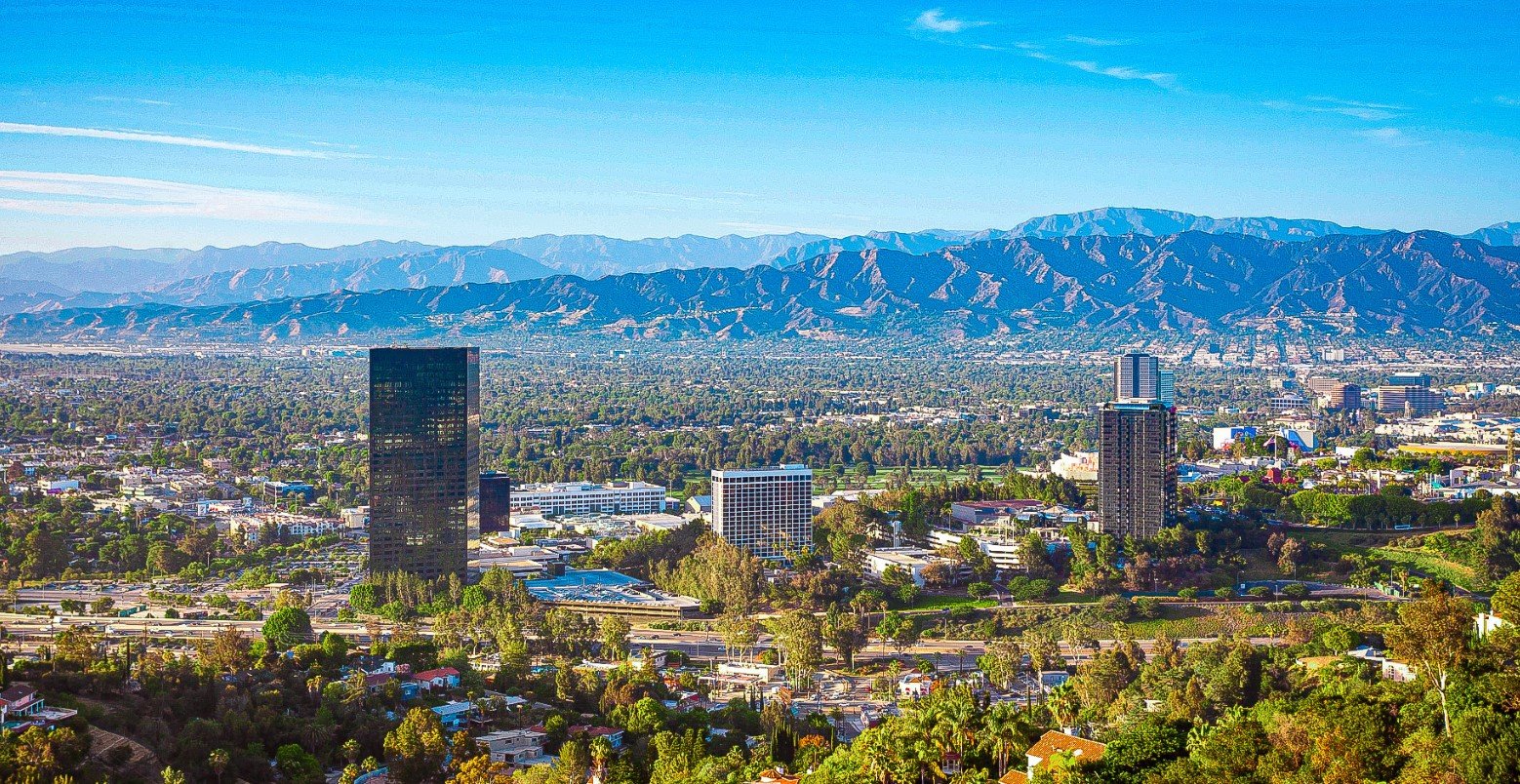
San Fernando Valley is a broad urban valley in Southern California, forming a major part of the city of Los Angeles and extending into the surrounding Los Angeles County region. Known for its residential neighborhoods, entertainment industry, parks, historic sites, and distinctive Mediterranean climate, the valley combines a densely developed urban environment with mountains, open spaces, waterways, and recreational areas.
Often simply called “the Valley,” San Fernando Valley has played an important role in the development of Los Angeles. Its history reaches back to Indigenous communities and the Spanish mission era, while its modern identity has been shaped by agriculture, suburban growth, aviation, film and television production, and expanding transportation networks.
| Fact | Details |
|---|---|
| Location | Los Angeles County, Southern California |
| Country | United States |
| Region | Los Angeles metropolitan area |
| Elevation | Generally around 600–1,500 feet, varying by location |
| Famous For | Suburban communities, entertainment, agriculture, parks and history |
| Climate | Mediterranean, with hot summers and mild winters |
| Main Waterway | Los Angeles River |
| Best Months | Generally March to May and September to November |
| Nearby City/Town | Los Angeles, Burbank, Glendale, Calabasas |
Where Is San Fernando Valley?
San Fernando Valley is located in the southern part of California within Los Angeles County. Much of the valley is incorporated into the City of Los Angeles, while communities and areas around its edges extend into other parts of the county.
The valley lies northwest of central Los Angeles and is surrounded by several mountain and hill systems, including the Santa Susana Mountains to the northwest, the Santa Monica Mountains to the south, the Verdugo Mountains to the northeast, and the Simi Hills toward the west. Major communities include Van Nuys, North Hollywood, Encino, Tarzana, Reseda, Canoga Park, Northridge, Panorama City, Chatsworth, Sherman Oaks, Woodland Hills, and San Fernando.
Geography and Landscape
San Fernando Valley is a large basin surrounded by mountains and hills. Unlike California’s remote natural valleys, much of its landscape has been transformed by residential neighborhoods, commercial districts, roads, schools, and industrial development.
The Los Angeles River begins in the eastern San Fernando Valley at the confluence of several local waterways before flowing southeast through the Los Angeles region. The river has been heavily engineered and channelized through much of the urban area, but sections of the Sepulveda Basin retain wetlands, open land, and flood-control areas.
The valley’s western and northern edges contain more prominent natural landscapes, including rocky hills, oak-covered areas, and open spaces around Chatsworth and the Santa Susana Mountains. These contrasts between developed neighborhoods and surrounding hills are an important part of the valley’s physical character.
History of San Fernando Valley
The San Fernando Valley has a long Indigenous history. Before Spanish settlement, the area was inhabited by Native peoples including communities associated with the Tongva and Tataviam, who used the valley’s waterways, plants, and other natural resources.
Spanish settlement became a major influence after the establishment of Mission San Fernando Rey de España in 1797. The mission was founded by Spanish Franciscans and became an important center for agriculture and livestock. The surrounding area subsequently became associated with the name San Fernando.
Following Mexican independence and the secularization of California’s missions, large land holdings developed across the region. Agriculture became an important part of the valley’s economy, particularly during the nineteenth and early twentieth centuries. Ranches, orchards, and fields occupied land that is now covered by urban development.
The twentieth century brought rapid population growth and suburbanization. The valley became increasingly connected to the expanding Los Angeles metropolitan area through roads, streetcars, automobiles, and later freeways. It also became strongly associated with the entertainment industry, with numerous film and television productions using locations and studios across the region.
How Was San Fernando Valley Formed?
San Fernando Valley is a structural basin shaped by tectonic activity, erosion, sediment accumulation, and changes in the surrounding mountain ranges. The basin gradually accumulated sediments carried from nearby uplands and mountains, creating the relatively broad and flat valley floor seen today.
Its surrounding mountains and hills are part of the complex geology of Southern California, a region strongly influenced by movement along the San Andreas and related fault systems. The valley’s landscape continues to be shaped by erosion, earthquakes, urban drainage, and other natural processes.
San Fernando Valley Weather Throughout the Year
San Fernando Valley has a Mediterranean-type climate, but its inland location means it generally experiences hotter summers than coastal Los Angeles. Winter brings most of the area’s annual rainfall, while summers are typically dry.
January to March
Winter and early spring are generally mild, with daytime temperatures commonly ranging from the mid-60s to low 70s Fahrenheit. Rainfall is more likely during this period, particularly when Pacific storm systems move across Southern California. Nights can be cool.
April to June
Spring brings warmer and increasingly dry conditions. Daytime temperatures commonly move from the low 70s into the 80s, while May and June can bring periods of cloudiness and cooler mornings followed by warmer afternoons.
July to September
Summer is the hottest period of the year. Temperatures frequently reach the 90s Fahrenheit in inland sections, with occasional periods of much higher heat. Rain is uncommon, although thunderstorms can occasionally affect the region. Hot, dry conditions can increase wildfire concerns around the valley’s mountainous edges.
October to December
Autumn often begins warm before temperatures gradually become milder. October can still experience summer-like heat, while November and December generally bring cooler conditions and increasing chances of rainfall. Santa Ana winds can produce particularly dry, warm, and windy conditions during autumn.
Best Weather for Visiting San Fernando Valley
March through May and September through November generally offer comfortable conditions for exploring outdoor attractions and neighborhoods. Summer can be enjoyable for visitors who prefer warm weather but may be too hot for extended outdoor activities during heat waves.
Things to Do in San Fernando Valley
Explore Local Parks and Open Spaces
The valley has numerous parks and recreation areas, ranging from neighborhood green spaces to large regional facilities around the Sepulveda Basin.
Visit Historic Sites
Visitors can explore historic locations such as Mission San Fernando Rey de España and other sites connected with the area’s early development.
Enjoy Outdoor Recreation
Walking, cycling, sports, photography, and birdwatching are available in parks and open areas throughout the valley.
Experience the Entertainment Industry
The Valley’s connection to Hollywood makes studio tours, film-related landmarks, and entertainment venues popular choices for visitors interested in movies and television.
Explore Local Neighborhoods
Communities such as Sherman Oaks, Encino, Studio City, North Hollywood, and Woodland Hills each have their own restaurants, shopping districts, cultural venues, and local character.
Visit Gardens and Cultural Spaces
Specialized gardens, museums, and cultural attractions provide quieter alternatives to the area’s larger entertainment destinations.
Famous Attractions in and Around San Fernando Valley
Mission San Fernando Rey de España
Founded in 1797, this historic Spanish mission is one of the valley’s most important cultural and architectural landmarks.
Universal Studios Hollywood
Located in Universal City at the southeastern edge of the Valley, Universal Studios Hollywood combines a working film studio with a major theme park and entertainment complex.
Sepulveda Basin Recreation Area
This large flood-control and recreational area contains sports facilities, open land, wildlife habitat, and the Japanese Garden.
The Japanese Garden
Also known as SuihoEn, the Japanese Garden in Van Nuys features traditional landscaping, ponds, waterfalls, bridges, and carefully designed garden spaces.
El Escorpión Park
Located near the western side of the valley, El Escorpión Park provides access to natural landscapes, trails, and views around the foothills.
Chatsworth Park South
This park sits near the rocky landscapes of Chatsworth and provides hiking opportunities, recreational facilities, and views toward the surrounding hills.
Van Nuys Sherman Oaks Recreation Center
The recreation center is a significant community facility offering sports fields, courts, pools, and other recreational amenities.
Wildlife and Nature
Although heavily urbanized, San Fernando Valley retains important natural habitats. The Sepulveda Basin provides wetlands, open spaces, and seasonal habitat for birds and other wildlife, while the surrounding foothills support native plants and animals adapted to Southern California’s dry climate.
Birds are particularly visible around parks, waterways, and open areas. Local natural landscapes can also support coyotes, rabbits, squirrels, lizards, and other species. Native and drought-tolerant vegetation is common in less-developed areas, while oak woodlands and chaparral occur around portions of the surrounding hills. Conservation efforts increasingly focus on protecting remaining habitat and improving ecological conditions along waterways and open spaces.
How to Reach San Fernando Valley
San Fernando Valley is highly accessible by road and public transportation because it forms an important part of the Los Angeles metropolitan area. Major freeways serving the region include Interstate 405, Interstate 5, U.S. Route 101, and State Route 170.
The closest major commercial airport is Hollywood Burbank Airport, located near the southeastern side of the valley. Los Angeles International Airport is farther away but provides a much larger selection of domestic and international flights.
Metro and other regional transit services connect several valley communities with destinations across Los Angeles. Travel times can vary significantly because traffic congestion is a major consideration, particularly during weekday commuting hours.
Where to Stay Near San Fernando Valley
Accommodation is available throughout the valley, with hotels, motels, guesthouses, and vacation rentals concentrated around major commercial and transportation corridors. Sherman Oaks, Studio City, North Hollywood, Van Nuys, Woodland Hills, and nearby Burbank offer convenient choices for different types of visitors.
Travelers interested in theme parks and entertainment may prefer accommodation around Universal City and Studio City, while those exploring western valley neighborhoods may find Woodland Hills and Canoga Park more convenient. Camping is more limited within the urban valley, although outdoor accommodation options are available in surrounding mountain and recreation areas.
Why Is San Fernando Valley Famous?
San Fernando Valley is famous for its role in Los Angeles’s suburban development, its long agricultural history, major entertainment industry presence, diverse communities, historic mission, and extensive network of parks and recreation areas. Its combination of urban neighborhoods and surrounding mountain landscapes gives the valley a character distinct from central Los Angeles and the nearby coastal communities.
San Fernando Valley FAQs
Where is San Fernando Valley located?
San Fernando Valley is in Los Angeles County in Southern California, northwest of central Los Angeles. Most of the valley is within the City of Los Angeles.
What is San Fernando Valley famous for?
It is known for suburban communities, film and television production, agriculture, Mission San Fernando, parks, and its location within the Los Angeles metropolitan area.
What is the weather like in San Fernando Valley?
The valley has a Mediterranean-type climate with hot, dry summers and mild, wetter winters. Inland locations can become considerably hotter than coastal Los Angeles.
What are the best months to visit San Fernando Valley?
Spring and autumn generally offer comfortable temperatures for sightseeing and outdoor activities. Summer is warmer and can bring periods of extreme heat.
What can you do in San Fernando Valley?
Visitors can explore historic sites, parks, gardens, entertainment attractions, hiking areas, restaurants, shopping districts, and cultural venues.
How do you reach San Fernando Valley?
The valley is served by several major freeways, public transportation, and nearby Hollywood Burbank Airport. Los Angeles International Airport is another option for travelers arriving by air.
Does San Fernando Valley get snow?
Snow is extremely rare in the valley itself because of its relatively low elevation and mild climate. Snow is more likely in higher mountain areas elsewhere in Southern California.
What are the main attractions in San Fernando Valley?
Notable attractions include Mission San Fernando Rey de España, Universal Studios Hollywood, the Sepulveda Basin, the Japanese Garden, Chatsworth Park, and surrounding natural areas.
Final Thoughts
San Fernando Valley offers a different perspective on Southern California from the beaches and central districts commonly associated with Los Angeles. Its combination of history, entertainment, residential communities, parks, waterways, and surrounding hills makes it a distinctive valley worth exploring and understanding.
For More Visit Stay And Update
