
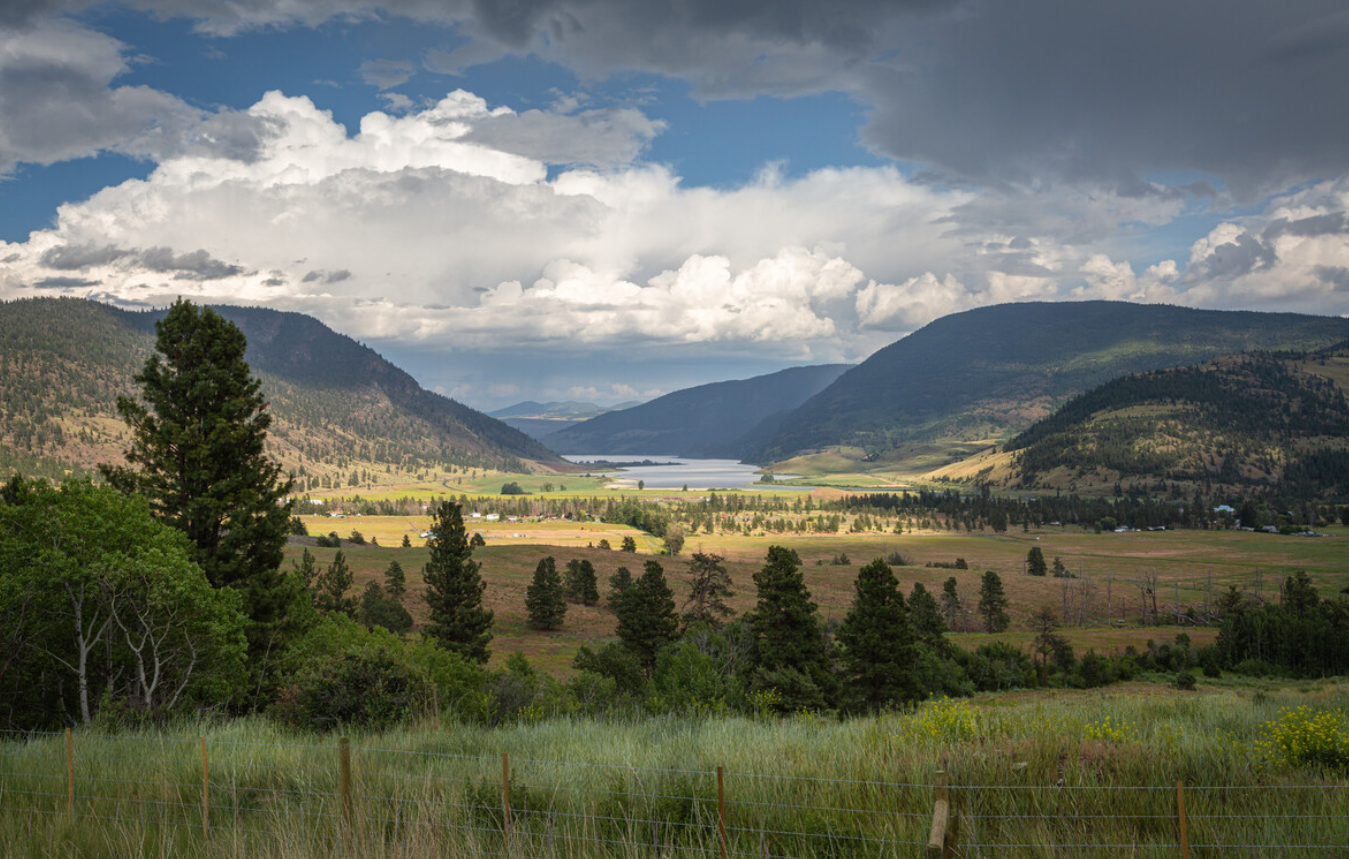
Nicola Valley is a scenic valley in south-central British Columbia, known for its grasslands, ranching heritage, lakes, rivers, forests, and mountain surroundings. The valley’s main community and regional hub is Merritt, while smaller communities such as Nicola and Quilchena contribute to its historic and rural character.
The landscape combines dry interior grasslands with forested hills, lakes, waterways, and broad mountain scenery. Its location between major routes connecting British Columbia’s coast and Interior makes it both an important regional corridor and a convenient base for outdoor recreation.
Nicola Valley Quick Facts
| Fact | Details |
|---|---|
| Location | South-central British Columbia, Canada |
| Country | Canada |
| Region | Thompson-Okanagan / Southern Interior |
| Main Community | Merritt |
| Main Waterways | Nicola River and Coldwater River |
| Major Lake | Nicola Lake |
| Climate | Semi-arid interior climate |
| Famous For | Ranching, grasslands, lakes, outdoor recreation and Western heritage |
| Best Months | Generally May to September |
| Nearby City | Kamloops |
Where Is Nicola Valley?
Nicola Valley is located in the Southern Interior of British Columbia, between the Coast Mountains and the interior plateau. Merritt sits near the southern-central part of the valley at the meeting of the Nicola and Coldwater rivers and serves as its principal service centre.
The valley extends northward toward Nicola Lake and the communities around it. Kamloops is roughly an hour north of Merritt by road, while Hope lies to the southwest. Kelowna is accessible to the east, making the valley relatively well connected to several major population centres in southern British Columbia.
Geography and Landscape
The valley is characterized by rolling grasslands, dry hills, forested slopes, lakes, rivers, and surrounding mountain terrain. Its landscape reflects the relatively dry conditions of British Columbia’s Interior, with sagebrush, bunchgrass, ponderosa pine, and Douglas-fir occurring across different elevations and habitats.
Nicola Lake is one of the area’s defining geographic features. The long, narrow lake lies northeast of Merritt and forms part of the Nicola River system. The Nicola River flows through the valley, while the Coldwater River joins it near Merritt.
The surrounding terrain also contains evidence of past glaciation. Ancient shorelines and deposits from former glacial lakes can be seen in parts of the valley, adding another layer to its distinctive landscape.
History of Nicola Valley
Nicola Valley has a long Indigenous history. The area has traditionally been home to Nlaka’pamux and Syilx peoples, whose communities, languages, cultural practices, and traditional place names remain important to the region. The valley supported seasonal settlements and provided access to water, plants, wildlife, and grassland resources.
European exploration and the fur trade expanded during the nineteenth century. The name Nicola is associated with a prominent Indigenous leader whose name was recorded by fur traders in forms that eventually became “Nicola.” The name was subsequently applied to the lake, river, and valley.
Modern settlement developed around ranching, agriculture, transportation, mining, and forestry. William Henry Voght became an important figure in the development of Merritt after arriving in the valley in the nineteenth century. Merritt later grew as a commercial centre, particularly after railway development and the expansion of coal mining and forestry.
Ranching remains an important part of the valley’s identity. The region is also known for its Western heritage, historic buildings, rodeo traditions, and connections to the Canadian country music scene.
How Was Nicola Valley Formed?
The physical landscape of Nicola Valley developed through a combination of geological uplift, erosion, faulting, and glacial activity. The broader region contains volcanic and sedimentary rocks as well as extensive deposits created and reshaped by glaciers and meltwater.
During the last ice age, glaciers influenced the valley’s drainage patterns and helped shape its lakes, grasslands, and surrounding terrain. Nicola Lake and other landscape features reflect this glacial history, while ongoing erosion continues to modify the valley’s rivers and slopes.
Nicola Valley Weather Throughout the Year
Nicola Valley has a semi-arid Interior climate, with warm, dry summers and cold winters. Merritt, at about 595 metres above sea level, receives relatively little precipitation and enjoys abundant sunshine.
January to March
Winter is generally cold, with daytime temperatures gradually rising from around freezing in January to roughly 10°C in March. Snow is possible, although the valley’s relatively dry climate means snowfall is generally less persistent than in many mountainous areas.
April to June
Spring brings rapidly warming temperatures and longer, sunnier days. Average daytime temperatures typically rise from the mid-teens Celsius in April toward the low 20s by June. Rainfall remains relatively limited, although late spring can be one of the wetter periods.
July to September
Summer is warm, dry, and sunny. July and August are typically the hottest months, with daytime temperatures around the upper 20s Celsius in Merritt. The surrounding lakes and outdoor recreation areas become particularly popular during this period.
October to December
Autumn begins with mild days before temperatures decline through November and December. Precipitation increases during the later part of the year, and winter conditions gradually return by December.
Best Weather for Visiting Nicola Valley
May through September generally provides the most comfortable conditions for hiking, camping, boating, sightseeing, and exploring the valley’s lakes and rural landscapes. July and August are particularly suitable for warm-weather recreation, while late spring and early autumn offer milder temperatures.
Things to Do in Nicola Valley
- Hiking and walking: Trails and open landscapes around Merritt, Nicola Lake, and nearby provincial parks provide opportunities for different levels of outdoor exploration.
- Boating and swimming: Nicola Lake supports boating, swimming, windsurfing, and other summer water activities.
- Fishing: The valley’s lakes and rivers attract anglers, with opportunities varying by location and season.
- Camping: Campgrounds around Nicola Lake and other recreational areas allow visitors to stay close to the landscape.
- Horseback riding: The valley’s ranching environment provides opportunities for exploring the countryside on horseback.
- Wildlife watching: Grasslands, forests, wetlands, and waterways support a variety of birds and mammals.
- Western and cultural experiences: Rodeos, ranching traditions, heritage sites, and Merritt’s country music history provide a connection to the region’s local culture.
Famous Attractions in and Around Nicola Valley
Nicola Lake
A long, narrow Interior lake northeast of Merritt, Nicola Lake is one of the valley’s most prominent natural landmarks and a major recreation area.
Monck Provincial Park
Located on Nicola Lake, Monck Provincial Park offers camping and access to the lake’s shoreline within a landscape of grasslands, ponderosa pine, and volcanic rock.
Merritt
The valley’s principal community contains heritage buildings, museums, public art, music-related attractions, and visitor services.
Nicola
The historic community of Nicola lies near the northern part of the valley and provides insight into the area’s ranching and settlement heritage.
Quilchena
Situated near Nicola Lake, Quilchena is known for its historic hotel and long association with ranching and recreation in the valley.
Douglas Lake Ranch
Established in the nineteenth century, this large working cattle ranch is an important part of the area’s ranching heritage and landscape.
Nicola Valley Museum & Archives
Located in Merritt, the museum preserves local artifacts, photographs, documents, and stories relating to the valley’s communities and development.
Nicola Valley Rodeo Grounds
Merritt’s rodeo facilities reflect the region’s enduring Western and ranching culture and host events connected with the valley’s equestrian traditions.
Wildlife and Nature
Nicola Valley’s dry grasslands and surrounding forests create habitat for a diverse range of wildlife. Mule deer, coyotes, black bears, and other mammals can be found in the wider region, while lakes, rivers, and wetlands provide habitat for numerous bird species.
Vegetation changes with elevation, moisture, and exposure. Grasslands and sagebrush dominate many lower, drier areas, while ponderosa pine and Douglas-fir occur across suitable slopes and higher terrain. Riparian areas along the Nicola and Coldwater rivers support greener vegetation and provide important ecological corridors.
How to Reach Nicola Valley
Merritt is the main gateway to Nicola Valley and is connected to major highways serving British Columbia’s Interior. The Coquihalla Highway provides access from Hope and the Lower Mainland, while Highway 5 connects the area with Kamloops. Highway 5A follows the Nicola Lake corridor toward the north and Princeton toward the south.
Kamloops Airport is the nearest major commercial airport, while Kelowna International Airport provides another practical option for visitors arriving by air. Travelers should check current road conditions during winter, particularly when mountain routes are affected by snow.
Where to Stay Near Nicola Valley
Merritt offers the widest selection of accommodation, including hotels, motels, guesthouses, and other visitor facilities. Staying in Merritt is convenient for travelers who want easy access to restaurants, shops, services, and roads leading throughout the valley.
Camping and recreational accommodation are available around Nicola Lake and other outdoor areas. Communities such as Nicola and Quilchena provide additional options, while rural properties and ranch-style accommodations can offer a more countryside-focused experience.
Why Is Nicola Valley Famous?
Nicola Valley is best known for its combination of dry Interior grasslands, lakes, ranching landscapes, Indigenous heritage, outdoor recreation, and Western culture. Merritt’s role as the valley’s commercial and cultural centre adds a distinctive community character to an area otherwise dominated by open countryside, forests, waterways, and mountains.
Nicola Valley FAQs
Where is Nicola Valley located?
Nicola Valley is in south-central British Columbia, Canada, with Merritt serving as its main community and regional hub.
What is Nicola Valley famous for?
The valley is known for ranching, grasslands, Nicola Lake, outdoor recreation, Western heritage, and Merritt’s strong connection to Canadian country music.
What is the weather like in Nicola Valley?
It has a relatively dry Interior climate, with warm, sunny summers and cold winters. Merritt receives considerably less precipitation than many wetter parts of British Columbia.
What are the best months to visit Nicola Valley?
May through September generally offers the best conditions for outdoor recreation, particularly activities around Nicola Lake and the valley’s trails.
What can you do in Nicola Valley?
Visitors can hike, camp, fish, boat, swim, watch wildlife, explore heritage sites, attend rodeo events, and enjoy the region’s ranching landscapes.
How do you reach Nicola Valley?
Merritt can be reached by major highways from Vancouver and the Lower Mainland, Kamloops, Kelowna, and other Interior communities.
Does Nicola Valley get snow?
Yes. Winter snowfall occurs in the valley, although its relatively dry climate means conditions are generally less snowy than in many higher-elevation mountain areas.
What attractions are near Nicola Valley?
Nicola Lake, Monck Provincial Park, Merritt, Nicola, Quilchena, Douglas Lake Ranch, and the Nicola Valley Museum & Archives are among the area’s notable attractions.
Final Thoughts
Nicola Valley offers a distinctive combination of Interior British Columbia scenery, ranching history, lakes, grasslands, forests, and cultural heritage. With Merritt at its centre and numerous outdoor destinations nearby, it is a useful destination for travelers interested in both the natural landscape and the history of the Southern Interior.
For More Visit Stay And Update
