
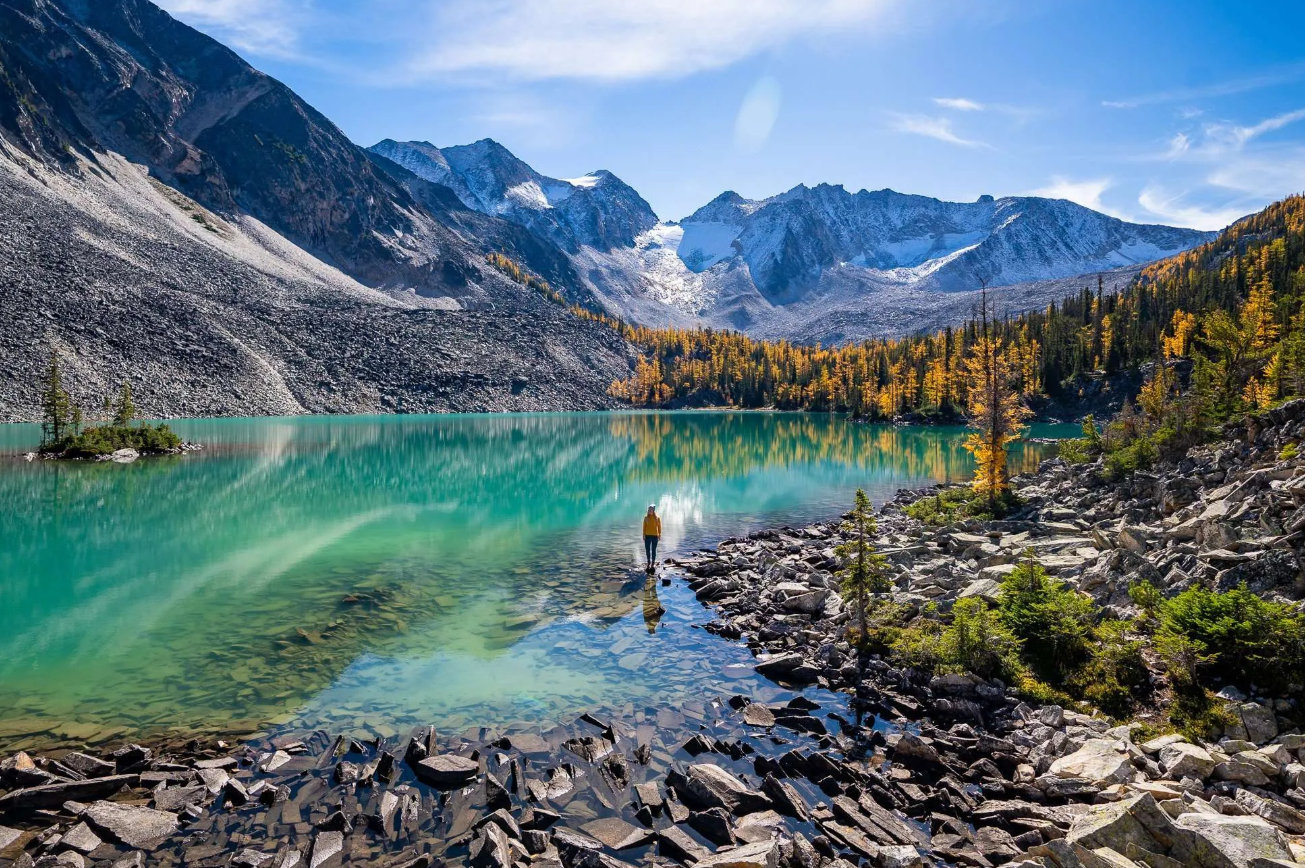
The Columbia Valley is a broad mountain valley in southeastern British Columbia, Canada, shaped by the Columbia River and surrounded by the rugged ranges of the Canadian Rockies and Purcell Mountains. The valley is known for its combination of mountain scenery, lakes, forests, wetlands, wildlife habitats, and communities built around outdoor recreation.
Unlike a single compact valley with one central landmark, the Columbia Valley is a long geographic corridor containing several communities and distinct landscapes. From Columbia Lake in the south to the Columbia River wetlands and the larger lakes farther north, the area provides a transition between high mountain environments and broad river valleys.
Columbia Valley Quick Facts
| Fact | Details |
|---|---|
| Location | Southeastern British Columbia, Canada |
| Country | Canada |
| Region | East Kootenay |
| Elevation | Varies considerably along the valley |
| Main River | Columbia River |
| Famous For | Mountains, lakes, wetlands, wildlife and outdoor recreation |
| Climate | Semi-arid to humid mountain climate, varying by elevation |
| Best Months | June to September for general outdoor activities |
| Nearby Towns | Invermere, Radium Hot Springs, Canal Flats, Fairmont Hot Springs |
Where Is Columbia Valley?
The Columbia Valley is located in the East Kootenay region of southeastern British Columbia, between the Purcell Mountains to the west and the Rocky Mountains to the east. It follows the upper Columbia River system and extends through a series of communities and natural areas.
Important communities in the valley include Canal Flats, Fairmont Hot Springs, Windermere, Invermere, and Radium Hot Springs. The valley is also connected to major destinations such as Kootenay National Park and the Columbia Wetlands.
Its location places it within easy reach of the Alberta border, making the region accessible to visitors traveling between British Columbia and the Canadian Rockies.
Geography and Landscape
The Columbia Valley is characterized by a wide valley floor bordered by substantial mountain ranges. The Purcell Mountains rise along the western side, while the Rocky Mountains form much of the eastern backdrop. This contrast between broad lowlands and steep mountain terrain gives the region much of its visual character.
The Columbia River is the valley’s defining waterway. It begins at Columbia Lake near Canal Flats and travels north through the valley before continuing toward the Arrow Lakes and eventually reaching the Pacific Ocean.
Several lakes contribute to the landscape, including Columbia Lake and Windermere Lake. The Columbia Wetlands, one of the largest wetland complexes in North America, occupy a significant portion of the valley and provide important habitat for fish, birds, and other wildlife.
The valley floor contains forests, grasslands, wetlands, agricultural areas, and developed communities, while higher elevations transition into dense mountain forests and alpine environments.
History of Columbia Valley
The Columbia Valley has a long Indigenous history, with the region traditionally used by Indigenous peoples including the Ktunaxa. The Columbia River and surrounding waterways provided routes for travel, fishing, hunting, and gathering long before European settlement.
European exploration and the fur trade brought new activity to the region during the nineteenth century. Later, prospecting, transportation, ranching, forestry, and agriculture became important influences on local settlement.
The development of communities such as Canal Flats, Invermere, and Radium Hot Springs was closely connected with natural resources, transportation, farming, and tourism. Canal Flats also became associated with the timber industry, while mineral hot springs helped establish Fairmont Hot Springs and Radium Hot Springs as recreational destinations.
Tourism gradually became one of the valley’s major economic activities, supported by lakes, mountain landscapes, golf courses, ski areas, hot springs, and access to nearby protected areas.
How Was Columbia Valley Formed?
The Columbia Valley’s landscape reflects millions of years of geological activity involving uplift, faulting, erosion, and sediment deposition. The surrounding mountain ranges were shaped by tectonic forces that raised and folded large areas of rock, while erosion gradually carved valleys and drainage channels through the landscape.
The modern Columbia River system further shaped the valley by transporting water and sediment through the lowlands. Glacial activity during the Ice Age also affected the region, helping modify mountain slopes and valley floors. The combination of geological uplift, river processes, and glaciation produced the broad valley and rugged mountains visible today.
Columbia Valley Weather Throughout the Year
The Columbia Valley has a varied mountain climate. Conditions differ between the valley floor and surrounding high elevations, but summers are generally warm and relatively dry while winters are cold and snowy.
January to March
Winter brings cold temperatures and regular snowfall, particularly in the surrounding mountains. Daytime conditions can remain below freezing, while snow cover is common. This is an important period for skiing and other winter recreation.
April to June
Spring brings a gradual rise in temperatures, melting snow at lower elevations and increasing flows in rivers and streams. April can still feel wintry, while May and June become progressively milder. By June, outdoor conditions are generally much more comfortable.
July to September
Summer is typically the warmest and driest part of the year. Valley temperatures can reach the upper 20s Celsius or occasionally higher during warm periods. Long daylight hours make this a popular season for hiking, boating, fishing, cycling, camping, and sightseeing.
October to December
Autumn begins with cooler temperatures and changing foliage before winter returns. October can still provide pleasant daytime conditions, while November and December become increasingly cold and snowy. Mountain snowfall generally increases as winter approaches.
Best Weather for Visiting Columbia Valley
June through September generally offers the most comfortable weather for exploring the valley’s lakes, trails, wetlands, and mountain scenery. July and August are particularly suitable for water-based recreation and camping, while September can provide cooler conditions and early autumn colors.
Things to Do in Columbia Valley
- Hiking: Explore trails ranging from easy valley walks to challenging mountain routes.
- Boating: Windermere Lake and other waterways provide opportunities for boating and paddling.
- Fishing: The Columbia River, lakes, and surrounding waterways support several recreational fishing opportunities.
- Cycling: Roads and trails through the valley provide options for both casual and more demanding rides.
- Golfing: Several courses take advantage of the region’s open valley landscapes and mountain views.
- Wildlife watching: The wetlands and surrounding forests provide opportunities to observe birds and mammals.
- Winter recreation: Nearby mountain areas support skiing, snowboarding, snowshoeing, and other cold-weather activities.
Famous Attractions in and Around Columbia Valley
Columbia Wetlands
The Columbia Wetlands form a vast network of marshes, channels, ponds, and waterways along the upper Columbia River. The area is important for biodiversity and is one of the valley’s most significant natural attractions.
Columbia Lake
Located near Canal Flats, Columbia Lake is the source of the Columbia River. Its surrounding mountains and relatively undeveloped shoreline make it an important recreational and scenic area.
Windermere Lake
Windermere Lake is one of the region’s best-known recreational lakes. Its warm summer waters and surrounding communities make it popular for boating, swimming, fishing, and lakeside recreation.
Radium Hot Springs
Radium Hot Springs is known for its mineral-rich natural hot springs located near the entrance to Kootenay National Park. The destination combines thermal bathing with access to mountain scenery.
Fairmont Hot Springs
Fairmont Hot Springs is another major thermal destination in the valley, with naturally heated mineral water and extensive resort facilities.
Kootenay National Park
Located east of the valley, Kootenay National Park protects a large mountain landscape containing forests, rivers, wildlife habitats, and dramatic peaks.
Invermere
Invermere is one of the principal communities in the valley and serves as a base for recreation around Windermere Lake and the surrounding mountains.
Wildlife and Nature
The Columbia Valley contains a remarkable range of habitats, from wetlands and river corridors to forests, grasslands, and high mountain environments. The Columbia Wetlands are particularly important for waterfowl and other birds, while the surrounding forests provide habitat for larger mammals.
Wildlife found in the broader region includes elk, mule deer, white-tailed deer, black bears, grizzly bears, moose, mountain goats, and bighorn sheep. The valley’s waterways also support fish populations and provide important breeding and feeding habitat for aquatic species.
Conservation is especially significant around the Columbia Wetlands, where maintaining healthy waterways and wetland habitats helps support regional biodiversity and the wider Columbia River ecosystem.
How to Reach Columbia Valley
The Columbia Valley is primarily accessed by road. Highway 93/95 is the main north-south route through much of the region, connecting communities such as Radium Hot Springs, Invermere, and Canal Flats.
The nearest major airports with broader commercial connections are in Calgary, Alberta, and Cranbrook, British Columbia. From Calgary, travelers can drive west into the Columbia Valley through the Rocky Mountains. Cranbrook provides another practical gateway from southeastern British Columbia.
Road conditions can change considerably during winter, when snow and ice affect mountain highways. Travelers should check current highway conditions before driving during the colder months.
Where to Stay Near Columbia Valley
Accommodation is available throughout the valley, with Invermere, Radium Hot Springs, Fairmont Hot Springs, and surrounding communities providing the widest range of choices.
Visitors can find hotels, resorts, lodges, guesthouses, vacation rentals, cabins, and campgrounds. Camping is particularly popular during summer, while resort and hotel accommodation provides convenient access to lakes, hot springs, golf courses, and mountain recreation.
Why Is Columbia Valley Famous?
The Columbia Valley is famous for its combination of mountain scenery, lakes, the Columbia River, extensive wetlands, hot springs, and year-round outdoor recreation. Its position between the Purcell Mountains and Rocky Mountains also gives the region a distinctive landscape that connects several major natural and recreational destinations in southeastern British Columbia.
Columbia Valley FAQs
Where is Columbia Valley located?
Columbia Valley is in southeastern British Columbia, Canada, within the East Kootenay region. It stretches along the upper Columbia River between the Purcell Mountains and Rocky Mountains.
What is Columbia Valley famous for?
It is known for the Columbia River, Columbia Wetlands, mountain scenery, Windermere Lake, hot springs, wildlife, and outdoor recreation.
What is the weather like in Columbia Valley?
The valley has warm, relatively dry summers and cold winters with significant snowfall. Conditions become colder and wetter at higher elevations.
What are the best months to visit Columbia Valley?
June through September generally offers the best conditions for hiking, boating, camping, cycling, and sightseeing.
What can you do in Columbia Valley?
Popular activities include hiking, boating, fishing, cycling, golfing, wildlife watching, camping, and winter sports.
How do you reach Columbia Valley?
Most visitors arrive by road, particularly via Highway 93/95. Calgary and Cranbrook are the closest major air gateways for many travelers.
Does Columbia Valley get snow?
Yes. Winter snowfall is common, especially in the surrounding mountains, and the region supports several winter recreational activities.
What are the main attractions near Columbia Valley?
Major attractions include the Columbia Wetlands, Columbia Lake, Windermere Lake, Radium Hot Springs, Fairmont Hot Springs, Kootenay National Park, and the community of Invermere.
Final Thoughts
Columbia Valley offers a distinctive combination of river landscapes, mountain scenery, wetlands, lakes, forests, and recreational communities. Its varied geography and four-season climate make it appealing to visitors interested in both relaxing by the water and exploring the surrounding mountains.
For More Visit Stay And Update
