
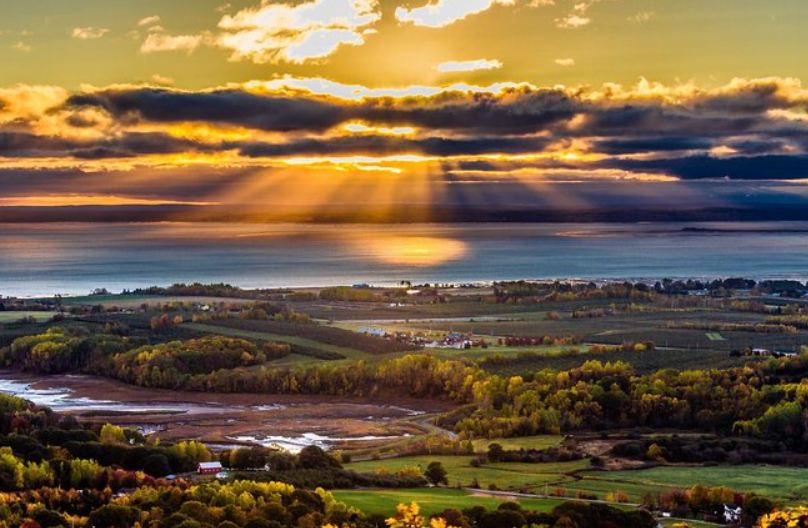
Annapolis Valley is a fertile agricultural region in western Nova Scotia, Canada, stretching between the North Mountain and South Mountain and opening toward the Bay of Fundy. Orchards, farms, vineyards, tidal wetlands, historic communities, and river valleys give the region a character that is closely tied to both agriculture and the surrounding coastal environment.
The valley is also one of Nova Scotia’s most historically significant landscapes. Mi’kmaq communities have long used the area, while Acadian settlement transformed portions of the coastal marshes into productive farmland through an extensive system of dykes and drainage channels. Today, Annapolis Valley combines agriculture, heritage sites, outdoor recreation, wine tourism, and access to the dramatic tides of the Bay of Fundy.
Annapolis Valley Quick Facts
| Fact | Details |
|---|---|
| Location | Western Nova Scotia, Canada |
| Country | Canada |
| Region | Nova Scotia |
| Elevation | Valley floor generally low-lying; surrounding mountains rise above 250 m |
| Famous For | Agriculture, apples, vineyards, Acadian heritage and Bay of Fundy tides |
| Climate | Temperate maritime with warm summers and cold winters |
| Main Rivers | Annapolis River and Cornwallis River |
| Best Months | May to October |
| Nearby Cities/Towns | Wolfville, Kentville, Annapolis Royal, Windsor |
Where Is Annapolis Valley?
Annapolis Valley is located in western Nova Scotia between the Bay of Fundy to the north and the South Mountain uplands to the south. The valley extends broadly from the Annapolis Basin near Annapolis Royal in the west toward the Minas Basin around Wolfville and the eastern part of the region.
Important communities include Annapolis Royal, Middleton, Kentville, Berwick, Wolfville, Windsor, and surrounding rural communities. Halifax is the nearest major city and lies roughly 85 kilometres southeast of Grand-Pré.
Geography and Landscape
The valley is a long, relatively narrow lowland bordered by two major uplands. North Mountain forms its northern boundary and is largely associated with basaltic rock, while South Mountain is composed largely of older igneous and metamorphic rocks. Between them are lower areas of sedimentary rocks and glacial deposits that have contributed to the region’s productive agricultural soils.
Two major river systems define much of the valley’s drainage. The Annapolis River flows west toward Annapolis Basin, while the Cornwallis River flows east toward Minas Basin. Smaller rivers and streams, along with tidal marshes and dyked farmland, add to the valley’s varied landscape.
The valley’s position between mountain ranges also contributes to a comparatively sheltered agricultural environment. Orchards, vegetable farms, vineyards, fields, forests, and marshlands create a landscape that changes considerably between the coast and inland communities.
History of Annapolis Valley
The history of Annapolis Valley begins with the Mi’kmaq, who lived, travelled, hunted, fished, and traded throughout the region long before European settlement. The valley formed part of Mi’kma’ki, and the river and coastal corridors were important routes connecting communities.
French settlers established Acadian communities in the region from the seventeenth century onward. At Grand-Pré, Acadian farmers developed an innovative system of dykes and drainage structures known as aboiteaux, allowing salt marshes to be converted into fertile agricultural land. Grand-Pré eventually became one of the largest Acadian settlements in the region.
The area later became a major setting in the struggle between French and British powers. In 1755, the Deportation of the Acadians began, profoundly affecting communities throughout the valley. British and New England settlers subsequently occupied many former Acadian lands, while agriculture remained central to the region’s development.
How Was Annapolis Valley Formed?
The physical valley developed through a combination of erosion, geological structure, and glacial activity. Softer Triassic sedimentary rocks between the North and South Mountains were more readily eroded, creating the elongated lowland that characterizes the valley today. Later glacial processes deepened and modified the landscape and deposited layers of sediment across parts of the valley floor.
Its drainage pattern was also shaped by these processes, with the Annapolis River flowing toward the Annapolis Basin and the Cornwallis River toward the Minas Basin.
Annapolis Valley Weather Throughout the Year
The Annapolis Valley has a maritime climate influenced by the Atlantic Ocean and Bay of Fundy. Winters are cold, summers are generally mild to warm, and precipitation occurs throughout the year. Conditions can vary between the valley floor, surrounding mountains, and coastal areas.
January to March
Winter is cold, with snow, freezing temperatures, and occasional winter storms. January and February are generally the coldest months, while March begins the gradual transition toward spring. Snow can remain on higher ground even as lower elevations begin to thaw.
April to June
Spring brings steadily warmer temperatures and longer daylight hours. April can remain cool, but May and June are increasingly pleasant, with vegetation developing and orchards becoming especially attractive. Rainfall is possible throughout the season.
July to September
Summer is generally the warmest period, with July and August offering the best conditions for outdoor exploration, farm visits, hiking, and vineyard experiences. September remains relatively mild and begins the transition toward the region’s colorful autumn landscape.
October to December
October is known for fall colour and the agricultural harvest, while November becomes cooler and wetter. December brings winter conditions, with shorter days, colder temperatures, and increasing potential for snow.
Best Weather for Visiting Annapolis Valley
May through October generally offers the broadest range of visitor experiences. Summer is particularly suitable for outdoor activities and wineries, while September and October combine comfortable temperatures with harvest activities and autumn scenery.
Things to Do in Annapolis Valley
- Visit wineries: Explore vineyards around Wolfville and other wine-producing communities.
- Explore farm markets: Buy locally grown fruit, vegetables, cider, and other regional products.
- Hike and cycle: Trails such as the Harvest Moon Trail provide opportunities to explore the countryside on foot or by bicycle.
- Explore tidal landscapes: Visit coastal locations where the Bay of Fundy dramatically changes the shoreline between high and low tide.
- Go whale watching: The outer Annapolis Valley and nearby Digby area provide access to Bay of Fundy whale-watching excursions.
- Visit historic communities: Explore Annapolis Royal, Wolfville, Grand-Pré, and other communities with strong regional heritage.
- Enjoy local food and wine: Restaurants, farm experiences, wineries, and seasonal events showcase the valley’s agricultural production.
Famous Attractions in and Around Annapolis Valley
Grand-Pré National Historic Site
This important Acadian heritage site preserves the story of the region’s Acadian settlement, agricultural landscape, and Deportation. It forms part of the Landscape of Grand Pré UNESCO World Heritage Site.
Fort Anne National Historic Site
Located in Annapolis Royal, Fort Anne preserves an important part of the colonial struggle between France and Britain and is Canada’s first administered national historic site.
Port-Royal National Historic Site
Near Annapolis Royal, the reconstructed Habitation at Port-Royal interprets one of the earliest French settlements in North America and the area’s relationship with the Mi’kmaq.
Annapolis Royal Historic Gardens
These extensive gardens provide a cultural and horticultural attraction within the historic Annapolis Royal area.
Wolfville
Wolfville is a major cultural and wine-tourism centre, surrounded by vineyards, farms, and views toward the Minas Basin.
Bay of Fundy Coast
The coastal areas north of the valley provide access to dramatic tidal landscapes, rocky shorelines, marshes, and viewpoints overlooking the Bay of Fundy.
Wildlife and Nature
Annapolis Valley contains a mixture of agricultural land, forests, freshwater habitats, tidal marshes, rivers, and coastal ecosystems. The surrounding Bay of Fundy supports marine wildlife, including whales and seals, while wetlands and farmland provide habitat for numerous bird species.
The valley’s natural environment has been substantially shaped by agriculture, particularly the historic conversion of salt marshes into farmland. Grand-Pré demonstrates how human land management and the natural tidal environment have interacted for centuries.
How to Reach Annapolis Valley
The valley is primarily explored by road. Highway 101 provides the main east-west connection through much of the region, while other provincial highways connect communities and attractions to the surrounding parts of Nova Scotia.
Halifax Stanfield International Airport is the nearest major airport for most travelers arriving by air. From Halifax, visitors can drive west toward communities such as Windsor, Wolfville, Kentville, and Annapolis Royal. The region is best explored by car because attractions and rural communities are spread across a large area.
Where to Stay Near Annapolis Valley
Accommodation is available throughout the region, with Wolfville, Annapolis Royal, Kentville, Windsor, and surrounding rural communities providing convenient bases. Visitors can choose from hotels, inns, bed-and-breakfasts, cottages, vineyard accommodations, campgrounds, and other independent lodging options.
Wolfville is particularly useful for travelers interested in wineries, restaurants, Grand-Pré, and the eastern part of the valley, while Annapolis Royal provides convenient access to western valley heritage attractions.
Why Is Annapolis Valley Famous?
Annapolis Valley is famous for its productive farmland, apple orchards, vineyards, Acadian heritage, historic communities, and close relationship with the Bay of Fundy. Its combination of agriculture, culture, tidal landscapes, and historic sites gives the valley a distinctive identity within Nova Scotia.
Annapolis Valley FAQs
Where is Annapolis Valley located?
Annapolis Valley is in western Nova Scotia, Canada, between North Mountain and South Mountain and along the inland side of the Bay of Fundy.
What is Annapolis Valley famous for?
It is particularly known for apples, agriculture, vineyards, Acadian heritage, historic communities, and access to the Bay of Fundy’s dramatic tides.
What is the weather like in Annapolis Valley?
The region has cold winters, mild to warm summers, and precipitation throughout the year. Weather can vary between the valley floor, mountains, and coastal areas.
What are the best months to visit Annapolis Valley?
May through October generally provides the widest selection of outdoor, agricultural, cultural, and wine-related experiences.
What can you do in Annapolis Valley?
Visitors can explore wineries and farms, hike or cycle, visit historic sites, experience local food, and explore the nearby Bay of Fundy coastline.
How do you reach Annapolis Valley?
Most visitors drive from Halifax or other parts of Nova Scotia. Highway 101 is the principal east-west route through much of the valley.
Does Annapolis Valley get snow?
Yes. Winter brings snowfall and freezing conditions, although the amount and duration vary from year to year and between different elevations.
What are the main attractions in Annapolis Valley?
Grand-Pré National Historic Site, Fort Anne, Port-Royal, Annapolis Royal, Wolfville, local wineries, and the surrounding Bay of Fundy coastline are among the region’s major attractions.
Final Thoughts
Annapolis Valley offers a distinctive combination of fertile farmland, historic settlements, Acadian culture, vineyards, rivers, and tidal landscapes. Its agricultural traditions and long human history are closely connected to the geography of the valley, making it an especially interesting destination for visitors who want more than scenery alone.
For More Visit Stay And Update
