
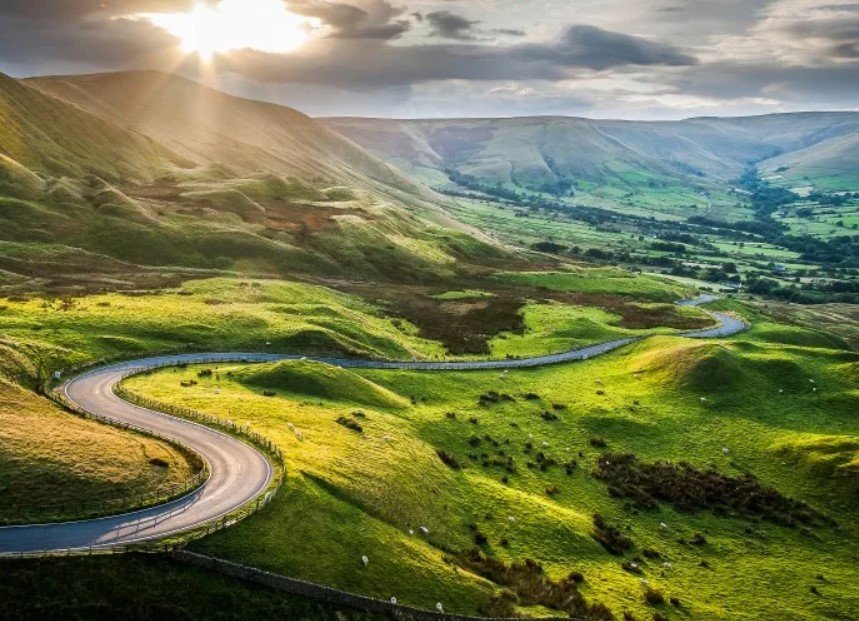
Hope Valley is a scenic rural valley in Derbyshire, England, at the heart of the Peak District National Park. Known for its green countryside, limestone landscapes, dramatic hills and traditional villages, it is one of the most popular areas for walking and outdoor exploration in northern England.
The valley includes well-known places such as Castleton, Hope, Edale, Hathersage and Bamford. With historic sites, show caverns, reservoirs and some of the Peak District’s best-known walking routes nearby, Hope Valley offers far more than a single viewpoint or landmark.
Hope Valley Quick Facts
| Fact | Details |
|---|---|
| Location | Derbyshire, England |
| Country | United Kingdom |
| Region | Peak District, East Midlands |
| Main Settlements | Hope, Castleton, Edale, Hathersage and Bamford |
| Main Watercourses | Peakshole Water, River Noe and River Derwent |
| Famous For | Walking, villages, caverns and Peak District scenery |
| Climate | Temperate maritime |
| Best Months | April to October |
| Nearby City | Sheffield |
| National Park | Peak District National Park |
Where Is Hope Valley?
Hope Valley is located in Derbyshire in central northern England, within and around the Peak District National Park. The area is centred on the village of Hope and stretches through a collection of valleys and settlements between the western Peak District and Sheffield.
Castleton lies toward the western end, while Hathersage and Grindleford are farther east. Edale sits to the north-west and is closely associated with the wider Hope Valley area. Sheffield is the nearest major city and provides convenient access from the east.
Geography and Landscape
Hope Valley sits between contrasting Peak District landscapes, including limestone areas of the White Peak and the gritstone moorlands associated with the Dark Peak. Its landscape includes rolling farmland, steep hills, wooded valleys, limestone gorges and open upland country.
The valley’s water system changes along its length. Near Castleton, Peakshole Water flows toward Hope, where it joins the River Noe. The Noe then continues eastward before joining the River Derwent near the Bamford and Shatton area. Other streams, including Burbage Brook, contribute to the wider valley landscape.
Prominent surrounding hills include Mam Tor, Lose Hill and Win Hill. Nearby Winnats Pass cuts through striking limestone scenery and demonstrates the geological diversity that makes this part of the Peak District distinctive.
History of Hope Valley
Hope Valley has a long history of settlement and movement. Archaeological and historical evidence shows that the surrounding Peak District has been inhabited and farmed for thousands of years. Hope itself occupied an important position near ancient communication routes and was associated with routes used from prehistoric and Roman times.
The Roman fort at Brough, just east of Hope, is an important reminder of Roman activity in the area. The settlement was strategically located near routes crossing the Peak District, and the fort is generally associated with Roman interests in the region, including access to areas connected with lead mining.
Hope was also recorded in the Domesday Book of 1086. During the medieval period, the wider area developed around farming, quarrying and other rural industries. Castleton became particularly important for its castle and underground mineral resources.
In more recent centuries, tourism has become a major part of the local economy. The creation of the Peak District National Park in 1951 helped protect the wider landscape, while the railway connection between Sheffield and Manchester made the area increasingly accessible to visitors.
How Was Hope Valley Formed?
Hope Valley was shaped over millions of years by geological processes including erosion, weathering and changes to the underlying rocks of the Peak District. The area contains both limestone and gritstone landscapes, reflecting different ancient environments and rock formations.
During the Ice Age, meltwater helped reshape parts of the surrounding landscape. Winnats Pass, for example, was enlarged by glacial meltwater after earlier geological processes formed the limestone terrain. Rivers and streams have continued to erode and shape the valley system over time.
Hope Valley Weather Throughout the Year
Hope Valley has a temperate maritime climate, with changeable weather throughout the year. Conditions can vary significantly between sheltered villages and exposed surrounding hills.
January to March
Winter is generally cool and damp, with frost and occasional snow possible, especially on higher ground. January and February are often the coldest months, while March gradually brings longer days and early signs of spring.
April to June
Spring brings milder temperatures and greener landscapes. April can still be changeable, but May and June often provide pleasant conditions for walking. Rain remains possible at any time.
July to September
Summer is usually the warmest period and is popular for hiking, cycling and sightseeing. Temperatures are generally moderate compared with hotter parts of Europe, although rain and windy conditions can still affect exposed routes.
October to December
Autumn brings changing colours to woodland areas and cooler conditions across the valley. Rainfall becomes more frequent as winter approaches, while higher ground may experience frost or occasional snow.
Best Weather for Visiting Hope Valley
Late spring through early autumn, particularly May to September, generally offers the most comfortable conditions for outdoor activities. April and October can also be rewarding for visitors who prefer quieter trails and seasonal scenery.
Things to Do in Hope Valley
Hiking and Walking
Hope Valley is surrounded by some of the Peak District’s best-known walking routes, including walks around Mam Tor, the Great Ridge and Edale.
Explore the Villages
Castleton, Hope, Hathersage and Edale each offer a different character, with historic buildings, local pubs and easy access to the countryside.
Visit the Caverns
The Castleton area is famous for its underground caves and show caverns, including sites associated with the rare Blue John mineral.
Cycle Through the Countryside
Quiet lanes and surrounding routes provide opportunities for road cycling and mountain biking, although some terrain can be steep.
Enjoy Reservoir Walks
The wider Hope Valley area includes popular waterside routes around Ladybower Reservoir and nearby reservoirs.
Photography and Scenic Viewing
Hills, limestone formations, villages and changing seasonal light make the area a popular destination for landscape photography.
Famous Attractions in and Around Hope Valley
Mam Tor
Mam Tor is one of the Peak District’s best-known hills. Its summit contains the remains of an Iron Age hillfort and offers wide views across the surrounding countryside.
Castleton
Castleton is a historic village known for its traditional setting, Norman heritage and famous underground caverns.
Peveril Castle
Overlooking Castleton, this Norman fortress is among England’s earliest surviving castles and provides a prominent historic landmark in the valley area.
Winnats Pass
Winnats Pass is a dramatic limestone gorge west of Castleton and one of the region’s most photographed roads.
Peak Cavern
Peak Cavern is one of Castleton’s major show caves and is known for its large entrance and long history.
Ladybower Reservoir
Located toward the eastern side of the wider valley area, Ladybower Reservoir is popular for walking, cycling and enjoying views of the surrounding hills.
Edale
Edale is closely associated with the start or end of the Pennine Way and serves as a major gateway to walks across the northern Peak District.
Wildlife and Nature
Hope Valley supports a mixture of farmland, woodland, riverside habitats, limestone grassland and upland moorland. These different environments create habitats for a wide variety of birds, mammals and plant species found across the Peak District.
The surrounding national park plays an important role in conserving landscapes shaped by both natural processes and centuries of farming. Rivers and streams support local ecosystems, while higher moorlands provide a very different environment from the sheltered valley floor.
How to Reach Hope Valley
Hope Valley is easily reached from Sheffield, Manchester and other parts of northern England. The Hope Valley railway line connects Sheffield and Manchester and serves several stations in and around the valley, including Grindleford, Hathersage, Bamford, Hope and Edale.
By road, the A6187 provides an important route through the area between Sheffield and Castleton. Local bus services also connect Sheffield with villages in the valley, including routes toward Castleton.
Manchester Airport is one of the nearest major international airports, while rail and road connections from Sheffield can provide a convenient approach from the east.
Where to Stay Near Hope Valley
Accommodation is available across the valley in the form of hotels, traditional inns, guesthouses, holiday cottages and campsites.
Castleton is a popular choice for visitors who want to stay close to caverns and major walking routes. Hope and Edale are convenient for walkers, while Hathersage and Bamford provide useful bases for exploring the eastern side of the valley. Visitors can also find accommodation in nearby Sheffield for a city-and-countryside trip.
Why Is Hope Valley Famous?
Hope Valley is famous for bringing together some of the Peak District’s most accessible countryside, historic villages and outdoor attractions. Its location between limestone dales and moorland landscapes, combined with famous walks such as Mam Tor and easy rail access, has made it one of Derbyshire’s best-known valley regions.
Hope Valley FAQs
Where is Hope Valley located?
Hope Valley is in Derbyshire, England, within the Peak District National Park and surrounding Peak District countryside.
What is Hope Valley famous for?
It is known for scenic walking routes, villages such as Castleton and Hope, limestone caverns, Mam Tor and easy access to the Peak District.
What is the weather like in Hope Valley?
The weather is temperate and changeable. Summers are generally mild to warm, while winters are cool and can bring frost or snow to higher ground.
What are the best months to visit Hope Valley?
May to September generally offers the most comfortable weather for walking and sightseeing, although spring and autumn can also be excellent.
What can you do in Hope Valley?
Visitors can hike, cycle, explore villages, visit show caverns, photograph the landscape and walk around nearby reservoirs.
How do you reach Hope Valley?
The area can be reached by road or by the Hope Valley railway line, which links Sheffield and Manchester and serves several local stations.
Does Hope Valley get snow?
Snow can occur during winter, particularly on higher hills and moorland. Snowfall on the valley floor is less predictable and usually temporary.
Is Hope Valley good for walking?
Yes. The area is one of the Peak District’s best-known walking destinations, with routes ranging from village walks to demanding upland hikes.
Final Thoughts
Hope Valley offers a distinctive introduction to the Peak District, combining historic settlements, varied geology and easy access to open countryside. Whether the goal is hiking, exploring caves, learning about local history or simply enjoying rural scenery, the valley provides a varied experience within one of England’s most important protected landscapes.
For More Visit Stay And Update
