
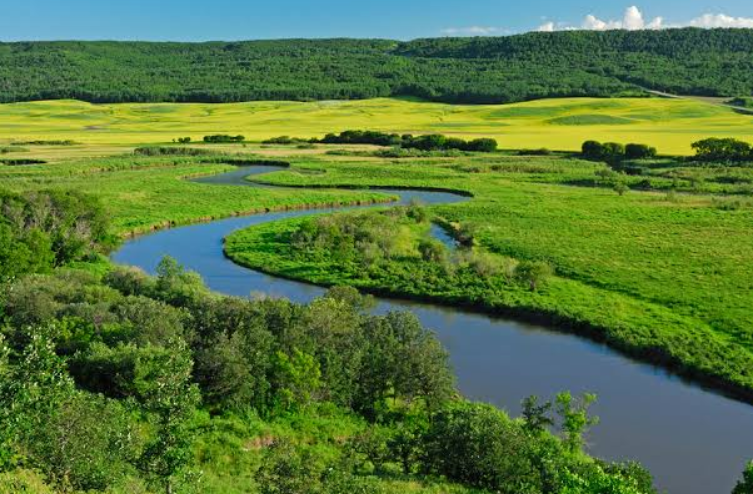
Qu’Appelle Valley is a broad, scenic valley in southern Saskatchewan, Canada, stretching across a landscape of rolling prairie, lakes, grasslands, wooded slopes, and small communities. Unlike mountain valleys defined by towering peaks, its character comes from gently undulating terrain and a chain of lakes connected by the Qu’Appelle River.
The valley has played an important role in the natural and cultural history of the Canadian Prairies. Indigenous communities have longstanding connections to the area, while later settlement, agriculture, recreation, and conservation shaped many of the communities and landscapes found along the valley. Today, the region is known for its lakes, provincial parks, outdoor recreation, and distinctive prairie scenery.
Qu’Appelle Valley Quick Facts
| Fact | Details |
|---|---|
| Location | Southern Saskatchewan, Canada |
| Country | Canada |
| Region | Canadian Prairies |
| Elevation | Varies considerably along the valley |
| Main River | Qu’Appelle River |
| Famous For | Lakes, prairie landscapes, recreation and cultural history |
| Climate | Humid continental |
| Best Months | May to September |
| Nearby City/Town | Regina, Fort Qu’Appelle and communities along the valley |
Where Is Qu’Appelle Valley?
Qu’Appelle Valley is located in southern Saskatchewan, extending generally east-west across the southern part of the province. It lies north of Regina and passes through or near several communities, including Fort Qu’Appelle, Lipton, Lumsden, and other smaller settlements.
The valley forms part of the broader prairie landscape between the Missouri Coteau and the Saskatchewan plains. Its accessible location near Regina makes it a popular destination for residents and visitors looking for lakes, parks, rural scenery, and outdoor activities without traveling to a mountainous region.
Geography and Landscape
Qu’Appelle Valley is a large glacially carved valley characterized by rolling slopes, grasslands, wooded areas, wetlands, lakes, and river channels. The Qu’Appelle River runs through the valley and connects a series of major lakes, including Pasqua Lake, Echo Lake, Mission Lake, and Katepwa Lake.
The surrounding terrain rises gradually from the valley floor into the open prairie. In some locations, the valley’s wooded slopes create a noticeable contrast with the agricultural plains above them. The combination of water, vegetation, and rolling terrain gives the region a landscape that is distinctly different from the flatter prairie areas nearby.
History of Qu’Appelle Valley
Qu’Appelle Valley has deep Indigenous history. The valley and surrounding plains were used by First Nations communities long before European settlement, with the waterways, grasslands, and wildlife providing important resources. The Cree, Saulteaux, Dakota and other Indigenous peoples have historical connections to the wider Qu’Appelle region.
The name “Qu’Appelle” is commonly associated with the Cree phrase ka-têpwêt, meaning “who calls?” European and Métis traditions later connected the name with a story about a voice calling across the prairie. Several versions of the legend exist, and the precise historical development of the name is more complex than the popular story suggests.
During the nineteenth century, the valley became an important route for transportation and settlement. The establishment of Fort Qu’Appelle and the arrival of agricultural settlers contributed to the development of permanent communities. The valley later became increasingly important for farming, ranching, recreation, and tourism.
How Was Qu’Appelle Valley Formed?
The valley was largely shaped by glacial activity during the last Ice Age. Meltwater from retreating glaciers carved and enlarged channels across southern Saskatchewan, helping create the broad depression that became the Qu’Appelle Valley.
After the glaciers retreated, water accumulated in parts of the valley and formed the chain of lakes associated with the Qu’Appelle system. Glacial deposits and later erosion continued to shape the valley’s slopes, wetlands, river channels, and surrounding prairie.
Qu’Appelle Valley Weather Throughout the Year
Qu’Appelle Valley has a continental prairie climate with cold winters, warm summers, and significant seasonal changes. Conditions can vary between the valley floor and higher surrounding terrain.
January to March
Winter is cold, with temperatures frequently below freezing and snow covering the landscape. January and February are typically the coldest months, while March begins the transition toward spring. Snow and icy conditions can affect roads and trails.
April to June
Spring brings rapidly warming temperatures and changing weather. Snow gradually disappears, vegetation begins to green, and the lakes and wetlands become active again. May and June generally provide increasingly mild conditions for outdoor exploration.
July to September
Summer is typically warm, with July and August providing the hottest conditions of the year. Long daylight hours make this a popular period for boating, fishing, camping, hiking, and visiting lakeside communities. September usually brings cooler temperatures and the beginning of autumn.
October to December
Autumn starts with cooler days and changing foliage before winter returns. October can still provide comfortable daytime conditions, while November and December become increasingly cold and snowy. By December, winter conditions are normally well established.
Best Weather for Visiting Qu’Appelle Valley
Late spring through early autumn, particularly May to September, generally offers the most comfortable conditions for exploring the valley. Summer is especially suitable for lake-based recreation, camping, hiking, and sightseeing.
Things to Do in Qu’Appelle Valley
- Hiking and walking: Trails and paths around the valley’s parks, lakes, and natural areas provide opportunities to explore the landscape on foot.
- Boating: The chain of Qu’Appelle Valley lakes supports recreational boating during the warmer months.
- Fishing: Several lakes and waterways are popular for recreational fishing.
- Camping: Provincial parks and campgrounds provide options for staying close to the valley’s lakes and natural surroundings.
- Golf: Several golf courses in and around the valley combine recreation with views of the prairie landscape.
- Photography: Lakes, wooded slopes, open prairie, and changing seasonal scenery provide varied subjects for photographers.
- Birdwatching: Wetlands, lakes, grasslands, and wooded areas attract a wide range of birds throughout the year.
Famous Attractions in and Around Qu’Appelle Valley
Fort Qu’Appelle
Fort Qu’Appelle is one of the valley’s best-known communities and has a long history connected with Indigenous peoples, the fur trade, settlement, and regional development.
Echo Valley Provincial Park
Located between Echo Lake and Pasqua Lake, the park is known for forested terrain, beaches, campgrounds, and access to the surrounding lake country.
Echo Lake
Echo Lake is one of the major recreational lakes in the valley and is popular for boating, fishing, swimming, and lakeside recreation.
Pasqua Lake
Pasqua Lake forms part of the Qu’Appelle lake system and is surrounded by wooded and prairie landscapes that make it an important recreational area.
Mission Ridge Winter Park
Located near Fort Qu’Appelle, Mission Ridge provides winter recreation and is particularly known for downhill skiing and snowboarding.
Katepwa Lake
Katepwa Lake is another prominent lake in the valley, with beaches, cottages, boating, and other seasonal recreational activities.
Treaty 4 Governance Centre
Near Fort Qu’Appelle, the Treaty 4 Governance Centre provides an important connection to the history and continuing significance of Treaty 4 territory and Indigenous communities.
Wildlife and Nature
The valley contains a mixture of prairie grasslands, wetlands, lakeshore environments, shrublands, and wooded areas. These habitats support species adapted to Saskatchewan’s changing seasons.
White-tailed deer, beavers, muskrats, coyotes, foxes, and numerous bird species can be found in the broader valley region. Waterfowl are particularly associated with the lakes and wetlands, while grasslands provide habitat for prairie birds and other wildlife.
Provincial parks and protected natural areas help conserve portions of the valley’s ecosystems while also providing space for recreation. Wetlands and lakes are especially important for birds, aquatic species, and vegetation.
How to Reach Qu’Appelle Valley
Regina is the nearest major city and provides the most convenient airport access for many visitors. From Regina, several highways lead toward communities and recreational areas throughout the valley.
Highway 10 provides access toward Fort Qu’Appelle, while other provincial roads connect the valley’s communities and lakes. Because the valley stretches across a large area, the most suitable route depends on the particular lake, park, or community being visited.
There is no single central transportation terminal for the entire valley, so visitors generally travel by private vehicle. Winter driving can require additional caution because of snow, ice, and rapidly changing prairie weather.
Where to Stay Near Qu’Appelle Valley
Accommodation is spread among communities and recreational areas rather than concentrated in one central location. Fort Qu’Appelle provides services and lodging for visitors exploring the central part of the valley.
Around the major lakes, visitors can find seasonal cottages, campgrounds, cabins, and other recreational accommodation. Provincial parks such as Echo Valley also provide camping facilities. Regina offers the widest selection of conventional hotels for travelers who prefer to stay in a larger city.
Why Is Qu’Appelle Valley Famous?
Qu’Appelle Valley is famous for its chain of lakes, broad glacial landscape, prairie scenery, Indigenous and settlement history, and year-round recreational opportunities. Its combination of water, rolling terrain, grasslands, and wooded areas gives southern Saskatchewan a landscape quite different from the surrounding open prairie.
Qu’Appelle Valley FAQs
Where is Qu’Appelle Valley located?
Qu’Appelle Valley is in southern Saskatchewan, Canada, extending across the prairie landscape north of Regina and through communities such as Fort Qu’Appelle.
What is Qu’Appelle Valley famous for?
It is known for its chain of lakes, Qu’Appelle River, rolling prairie landscape, recreational parks, and rich Indigenous and regional history.
What is the weather like in Qu’Appelle Valley?
The valley has a continental climate with cold, snowy winters and warm summers. Spring and autumn are transitional seasons with rapidly changing temperatures.
What are the best months to visit Qu’Appelle Valley?
May through September generally provides the most favorable weather for outdoor recreation, particularly activities centered around the lakes and parks.
What can you do in Qu’Appelle Valley?
Visitors can hike, camp, fish, boat, photograph the landscape, watch wildlife, play golf, and enjoy winter sports.
How do you reach Qu’Appelle Valley?
Most visitors drive from Regina or other Saskatchewan communities. Highway 10 is a major route toward Fort Qu’Appelle, with additional roads serving the valley’s lakes and communities.
Does Qu’Appelle Valley get snow?
Yes. Snow is a normal part of winter in the valley, and cold conditions can last from late autumn into early spring.
What lakes are in Qu’Appelle Valley?
Major lakes associated with the valley include Pasqua Lake, Echo Lake, Mission Lake, and Katepwa Lake, along with several smaller water bodies.
Final Thoughts
Qu’Appelle Valley offers a distinctive combination of prairie scenery, lakes, rolling terrain, wildlife, cultural history, and outdoor recreation. Its accessible location near Regina and its changing character through the seasons make it an important natural and recreational landscape in southern Saskatchewan.
For More Visit Stay And Update
