
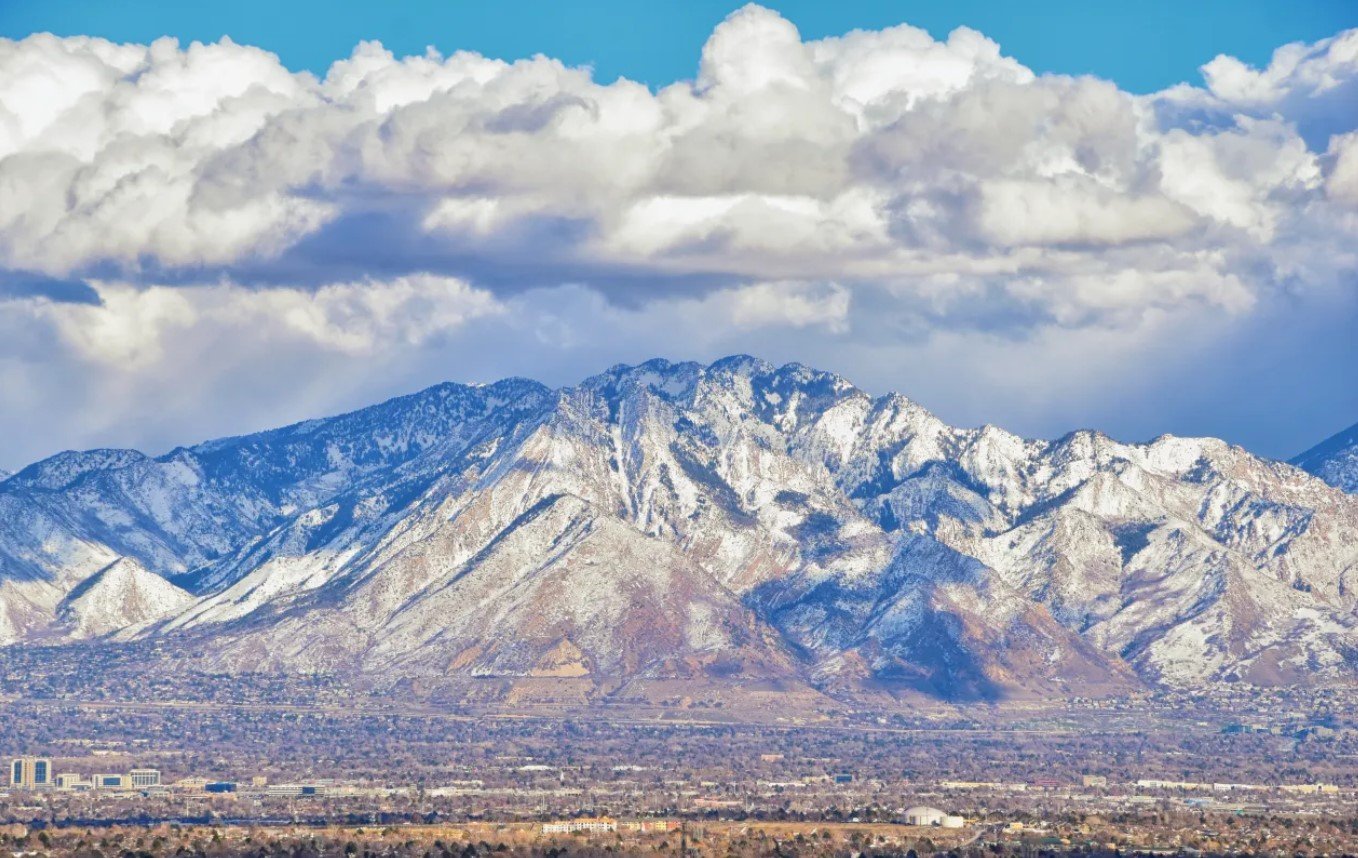
Salt Lake Valley is a broad, urbanized valley in northern Utah, best known as the setting of Salt Lake City and the communities that surround it. Framed by the Wasatch Mountains to the east and the Oquirrh Mountains to the west, the valley combines a major metropolitan area with striking mountain scenery, wetlands, foothills, and access to outdoor recreation.
The valley has played an important role in Utah’s settlement, transportation, agriculture, and economic development. Its location between the Great Salt Lake and the Wasatch Range also gives it a distinctive geography and climate. Today, Salt Lake Valley is a major gateway to northern Utah’s ski resorts, mountain trails, cultural attractions, and natural areas.
| Fact | Details |
|---|---|
| Location | Northern Utah, United States |
| Country | United States |
| Region | Wasatch Front |
| Elevation | About 4,200–5,300 feet (1,280–1,615 m), depending on location |
| Famous For | Salt Lake City, Wasatch Mountains, Great Salt Lake and outdoor recreation |
| Climate | Semi-arid, four-season climate |
| Main Water Features | Jordan River and Great Salt Lake |
| Best Months | May to October for general outdoor activities |
| Nearby Cities/Towns | Salt Lake City, Sandy, West Jordan, Murray and Draper |
Where Is Salt Lake Valley?
Salt Lake Valley is located in northern Utah along the Wasatch Front. Salt Lake City occupies much of the valley’s northern-central area, while numerous suburban communities extend southward toward the foothills and surrounding mountains.
The valley is bordered by the Wasatch Mountains on the east and the Oquirrh Mountains on the west. To the north, the terrain connects toward the Great Salt Lake, while the southern end extends toward Utah Valley through the broader Wasatch Front corridor.
Geography and Landscape
Salt Lake Valley is a large basin surrounded by mountain ranges. The Wasatch Mountains form its most prominent eastern boundary, with steep slopes rising rapidly from the developed valley floor. The Oquirrh Mountains create the western boundary and separate the valley from the Great Salt Lake’s western basin.
The Jordan River flows northward through the valley, connecting Utah Lake with the Great Salt Lake. Historically, Lake Bonneville covered much of the region, leaving behind lake terraces, sediment deposits, and other features that help explain the valley’s relatively broad and flat floor.
Urban development covers much of the central valley, but natural landscapes remain prominent along the mountain edges, river corridors, foothills, and wetlands. The combination of lowland basin and steep mountain terrain gives the valley its distinctive visual character.
History of Salt Lake Valley
Before modern settlement, the Salt Lake Valley was inhabited and used by Indigenous peoples, including the Ute, Shoshone, Paiute, Goshute, and other Native peoples with connections to the broader Great Basin and northern Utah region.
A major turning point came in 1847, when Brigham Young and members of the Church of Jesus Christ of Latter-day Saints entered the valley. Settlement expanded rapidly, with agriculture and irrigation becoming central to the development of communities around the valley floor.
Salt Lake City was established as the principal settlement, and the arrival of the transcontinental railroad in nearby areas later strengthened transportation and commercial connections. Mining in surrounding mountain regions, followed by manufacturing, government, technology, finance, and other industries, helped transform the valley into Utah’s principal metropolitan center.
The valley’s modern development is closely connected to the growth of the Wasatch Front. Salt Lake City hosted the 2002 Winter Olympics, bringing international attention to the region’s mountain environment and winter sports infrastructure.
How Was Salt Lake Valley Formed?
Salt Lake Valley is part of the Basin and Range region of the western United States, where stretching of Earth’s crust has produced alternating mountain ranges and basins. Faulting along the Wasatch Front has helped create the valley’s deep basin and steep eastern mountain boundary.
The region was also strongly influenced by ancient Lake Bonneville, a large Ice Age lake that covered much of northern Utah. As the lake receded, it left sediments and shoreline features across the valley and surrounding areas. The Great Salt Lake is a modern remnant of that much larger lake system.
Salt Lake Valley Weather Throughout the Year
Salt Lake Valley has a semi-arid climate with four distinct seasons. Elevation and proximity to the surrounding mountains create noticeable local differences in temperature and snowfall.
January to March
Winter is cold, with frequent temperature inversions in the valley. Snowfall is common, while the surrounding Wasatch Mountains receive considerably more snow than the urban valley floor. By March, temperatures begin to rise, although winter conditions can continue.
April to June
Spring brings a rapid transition from cool and wet conditions to warmer weather. April can still be unsettled, while May and June generally become increasingly mild. Mountain snowmelt contributes to higher water levels in local streams and rivers.
July to September
Summer is generally hot and dry. July and August are typically the warmest months, with daytime temperatures often reaching the 90s°F (32–37°C). Afternoon thunderstorms can develop during the summer monsoon period, particularly in the mountains.
October to December
Autumn usually brings cooler temperatures and relatively dry conditions. October is often comfortable for outdoor activities, while November and December become progressively colder. Snow becomes increasingly common toward the end of the year.
Best Weather for Visiting Salt Lake Valley
May through October generally offers the most comfortable conditions for exploring the valley, hiking, sightseeing, and enjoying outdoor attractions. Winter is preferable for visitors whose main interests include skiing and snowboarding in the nearby Wasatch Mountains.
Things to Do in Salt Lake Valley
- Hiking and trail walking: Trails in the Wasatch foothills and nearby canyons provide options ranging from easy walks to challenging mountain hikes.
- Winter sports: Skiing and snowboarding are major regional activities, with several resorts located in the Wasatch Mountains east of the valley.
- Cycling: Roads and multi-use trails provide opportunities for both recreational and more serious cycling.
- Wildlife watching: Wetlands, river corridors, foothills, and nearby mountain habitats support numerous bird and animal species.
- Scenic drives: Routes into the Wasatch canyons provide quick access to changing mountain landscapes.
- Cultural sightseeing: Museums, historic buildings, gardens, and performing arts venues offer a range of activities in the Salt Lake City area.
- Photography: The contrast between the valley’s urban landscape, mountain backdrop, and changing seasonal light makes the region popular with photographers.
Famous Attractions in and Around Salt Lake Valley
Temple Square
Located in downtown Salt Lake City, Temple Square is a major religious, cultural, and architectural landmark associated with the Church of Jesus Christ of Latter-day Saints.
Great Salt Lake
The Great Salt Lake lies northwest of the valley and is one of Utah’s defining natural features. Its saline water, islands, wetlands, and bird habitat make it an important ecological area.
Utah State Capitol
The Utah State Capitol overlooks Salt Lake City from the northern foothills and is an important architectural and governmental landmark.
Natural History Museum of Utah
Located near the foothills, the museum features extensive exhibits on Utah’s geology, paleontology, archaeology, and natural history.
Tracy Aviary & Botanical Gardens
This Salt Lake City attraction combines bird exhibits with gardens and educational programs in a historic urban setting.
Hogle Zoo
Located near the eastern side of Salt Lake City, Hogle Zoo features animals from around the world and is a popular family attraction.
Big Cottonwood Canyon
This dramatic mountain canyon east of the valley provides access to hiking, climbing, scenic viewpoints, and winter recreation.
Antelope Island State Park
Located in the Great Salt Lake, Antelope Island is known for its open landscapes, mountain scenery, wildlife, and views across the lake.
Wildlife and Nature
Salt Lake Valley contains a mixture of urban, wetland, river, foothill, and mountain ecosystems. The Jordan River corridor and wetlands near the Great Salt Lake are particularly important for birds, while the surrounding mountains provide habitat for larger mammals.
Wildlife in the broader area includes mule deer, moose, mountain goats, coyotes, bobcats, and numerous bird species. The Great Salt Lake ecosystem is especially significant for migratory and shorebirds, providing feeding and nesting habitat along the lake’s wetlands and shorelines.
Conservation efforts focus on protecting water resources, wetlands, wildlife habitat, and the remaining natural areas around an increasingly developed metropolitan valley.
How to Reach Salt Lake Valley
Salt Lake Valley is served by Salt Lake City International Airport, the region’s principal commercial airport. Interstate 15 runs north-south through the valley, while Interstate 80 provides an important east-west connection.
The Utah Transit Authority operates buses, TRAX light rail, and commuter rail services across the Wasatch Front. FrontRunner connects Salt Lake City with communities farther north and south, making public transportation a practical option for some visitors.
Road access into the Wasatch Mountains is generally straightforward, but winter snow can affect canyon roads and mountain routes. Conditions should be checked before traveling during major winter storms.
Where to Stay Near Salt Lake Valley
Salt Lake City provides the widest range of accommodation, including hotels, extended-stay properties, and vacation rentals. Downtown is convenient for visitors interested in cultural attractions, restaurants, and public transportation.
Communities such as Sandy, Murray, and Draper offer additional lodging farther south in the valley and can be useful for visitors combining city sightseeing with mountain recreation. Mountain resorts and lodges are also available in nearby Wasatch canyon areas for travelers focused primarily on skiing or hiking.
Why Is Salt Lake Valley Famous?
Salt Lake Valley is famous for its combination of metropolitan life and dramatic mountain surroundings. Its connection to Salt Lake City, the Great Salt Lake, the Wasatch Mountains, winter sports, outdoor recreation, and Utah’s settlement history gives the valley a distinctive identity within the American West.
Salt Lake Valley FAQs
Where is Salt Lake Valley located?
Salt Lake Valley is in northern Utah along the Wasatch Front. Salt Lake City sits within the central part of the valley.
What is Salt Lake Valley famous for?
It is known for Salt Lake City, the Great Salt Lake, the Wasatch Mountains, winter sports, outdoor recreation, and its historical importance to Utah.
What is the weather like in Salt Lake Valley?
The valley has four distinct seasons, with cold winters, warm and dry summers, and generally mild transitional seasons.
What are the best months to visit Salt Lake Valley?
May through October is generally the most comfortable period for sightseeing and outdoor activities. Winter is particularly attractive for skiing and snowboarding.
What can you do in Salt Lake Valley?
Visitors can hike, cycle, explore museums and historic sites, enjoy mountain recreation, visit the Great Salt Lake, and experience the region’s food and cultural attractions.
How do you reach Salt Lake Valley?
Salt Lake City International Airport provides air access, while Interstate 15, Interstate 80, and regional public transportation connect the valley with other parts of Utah and the United States.
Does Salt Lake Valley get snow?
Yes. Snow is common during winter, although the surrounding Wasatch Mountains generally receive substantially more snow than the valley floor.
What attractions are near Salt Lake Valley?
Major attractions include Temple Square, the Great Salt Lake, Utah State Capitol, Natural History Museum of Utah, Antelope Island State Park, and the Wasatch canyons.
Final Thoughts
Salt Lake Valley offers a distinctive combination of urban culture, mountain scenery, natural wetlands, outdoor recreation, and regional history. Its convenient transportation network and proximity to both the Great Salt Lake and Wasatch Mountains make it an interesting destination for travelers, nature enthusiasts, and anyone researching Utah’s geography and development.
For More Visit Stay And Update
