
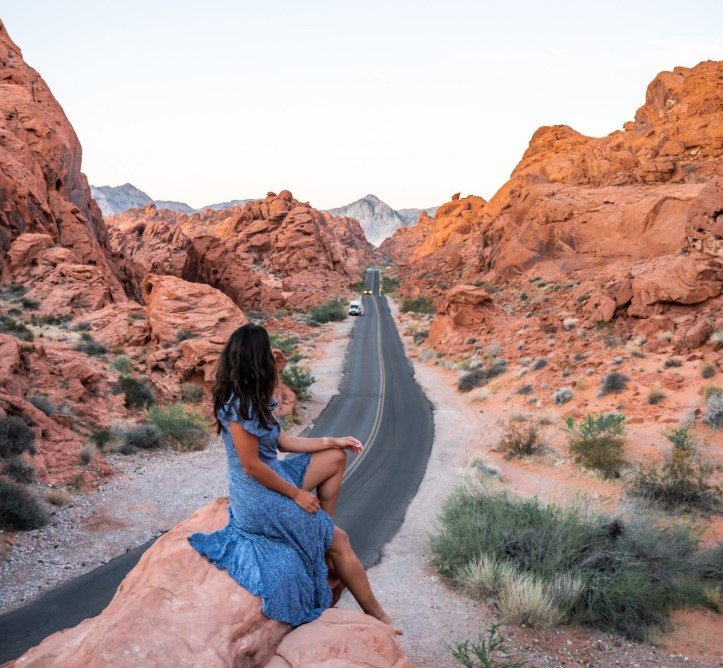
Las Vegas Valley is a broad desert basin in southern Nevada best known as the setting for Las Vegas, Paradise, Henderson, and North Las Vegas. Although the valley is closely associated with entertainment and urban development, its physical landscape is defined by the surrounding mountains, arid climate, desert washes, and the natural drainage system leading toward Lake Mead.
The valley combines a heavily developed metropolitan environment with distinctive Mojave Desert landscapes. Its location between several mountain ranges also creates notable changes in elevation, temperature, precipitation, and scenery over relatively short distances.
Las Vegas Valley Quick Facts
| Fact | Details |
|---|---|
| Location | Southern Nevada |
| Country | United States |
| Region | Mojave Desert, Basin and Range Province |
| Valley Elevation | Approximately 1,500–3,000 feet |
| Famous For | Las Vegas, desert scenery and surrounding mountains |
| Climate | Hot, arid desert |
| Main Waterway | Las Vegas Wash |
| Best Months | March–May and October–November |
| Nearby City/Towns | Las Vegas, Henderson, North Las Vegas |
Where Is Las Vegas Valley?
Las Vegas Valley is located in Clark County in extreme southern Nevada. It extends roughly northwest to southeast and covers about 600 square miles in the commonly defined metropolitan valley area. The valley contains the city of Las Vegas as well as major communities including Henderson, North Las Vegas, and Paradise.
The valley sits in the northern Mojave Desert and is surrounded by mountain ranges on most sides. Lake Mead lies to the east, while the Spring Mountains form a major western boundary. Its position makes it a natural meeting point between developed urban areas and the surrounding desert landscape.
Geography and Landscape
Las Vegas Valley has the classic structure of a Basin and Range landscape: a relatively low valley floor surrounded by uplifted mountain ranges. The valley floor generally ranges from about 1,500 feet in its eastern portion to around 3,000 feet near the western mountain front.
The Spring Mountains rise dramatically west of the valley and include Mount Charleston, which reaches 11,918 feet. Other surrounding ranges include the Sheep Range, Las Vegas Range, McCullough Range, River Mountains, Frenchman Mountain, and Sunrise Mountain.
Las Vegas Wash provides the valley’s principal natural drainage route. Water from urban runoff, reclaimed water, groundwater, and stormwater flows through the wash toward Lake Mead and ultimately the Colorado River system.
History of Las Vegas Valley
The Las Vegas Valley has a much longer history than the modern city that now occupies much of its floor. Indigenous peoples used the springs, wetlands, and desert resources of the region for generations. The valley’s natural water sources were especially important in an otherwise arid environment.
The modern settlement of Las Vegas developed around water and transportation. Las Vegas was established as a railroad town in the early twentieth century, with the city officially founded in 1905. The construction of Hoover Dam in the 1930s brought major economic and infrastructure changes to southern Nevada, while legalized gambling and the growth of resort tourism later transformed Las Vegas into an international destination.
During the second half of the twentieth century, population growth expanded far beyond the original city. Suburban communities, commercial districts, industrial areas, and transportation infrastructure spread across the valley, creating the large metropolitan landscape seen today.
How Was Las Vegas Valley Formed?
Las Vegas Valley formed through the geological processes characteristic of the Basin and Range Province. Faulting and crustal extension caused mountain blocks to rise while adjacent basins subsided. Over long periods, erosion transported sediment from the surrounding mountains into the lower basin.
The valley contains thick deposits of unconsolidated sediment, while active and potentially active faults continue to influence its geological structure. The U.S. Geological Survey’s mapping identifies numerous surficial deposits and fault systems within the valley.
Las Vegas Valley Weather Throughout the Year
The Las Vegas Valley has a hot, arid desert climate with abundant sunshine, very low annual precipitation, hot summers, and mild winters. Climate conditions vary somewhat across the valley because of differences in elevation, terrain, and urban development.
January to March
Winter is generally mild. Average highs are around 57°F (14°C) in January, 63°F (17°C) in February, and 72°F (22°C) in March. Nights can become chilly, especially in lower and less urbanized parts of the valley.
April to June
Spring becomes progressively warmer and remains relatively dry. Average highs increase from about 79°F (26°C) in April to 89°F (32°C) in May and around 100°F (38°C) in June.
July to September
Summer brings the valley’s most intense heat. Average highs reach approximately 105°F (41°C) in July, 103°F (39°C) in August, and 95°F (35°C) in September. Summer thunderstorms can occasionally develop as moist air moves into the region.
October to December
Temperatures fall quickly during autumn. Average highs are around 82°F (28°C) in October, 68°F (20°C) in November, and 57°F (14°C) in December. Winter precipitation remains limited, and snowfall on the valley floor is rare.
Best Weather for Visiting Las Vegas Valley
March through May and October through November generally offer the most comfortable conditions for exploring the valley and surrounding desert. These periods avoid the most intense summer heat while providing pleasant temperatures for outdoor activities.
Things to Do in Las Vegas Valley
- Explore desert trails: Walking and hiking opportunities range from urban trails to routes in nearby desert and mountain areas.
- Visit scenic overlooks: Higher viewpoints around the valley provide broad views across the metropolitan basin.
- Explore Red Rock Canyon: Hiking, sightseeing, and rock climbing are popular in this nearby conservation area.
- Enjoy Lake Mead recreation: Boating, fishing, hiking, and water-based recreation are available around Lake Mead.
- Visit Mount Charleston: Cooler mountain conditions make the Spring Mountains an important outdoor destination near Las Vegas.
- Experience cultural attractions: Museums, historic sites, galleries, and performing arts venues provide alternatives to outdoor recreation.
- Explore desert wildlife: Birdwatching and wildlife observation are possible in natural areas around the valley.
Famous Attractions in and Around Las Vegas Valley
Red Rock Canyon
Located west of Las Vegas, Red Rock Canyon is known for red sandstone formations, rugged mountains, scenic roads, and protected desert habitat.
Las Vegas Strip
The Strip occupies part of the unincorporated community of Paradise and is the valley’s most internationally recognized concentration of resorts, entertainment venues, restaurants, and attractions.
Springs Preserve
This cultural and environmental attraction in Las Vegas focuses on southern Nevada’s natural and cultural history, including water, desert ecology, and regional development.
Lake Mead
East of the valley, Lake Mead provides a major recreational landscape connected to the Colorado River and the Hoover Dam system.
Mount Charleston
Mount Charleston rises dramatically above the western side of the valley and provides a very different mountain environment from the hot desert floor.
Hoover Dam
Located southeast of Las Vegas near Boulder City, Hoover Dam is a major engineering landmark on the Colorado River and an important regional attraction.
Las Vegas Wash
The wash is the valley’s principal drainage corridor and an important ecological area connecting the developed valley with Lake Mead.
Wildlife and Nature
Despite extensive urban development, the Las Vegas Valley remains surrounded by Mojave Desert ecosystems. Desert vegetation includes creosote bush, bursage, cacti, and other drought-adapted plants, while higher elevations support substantially different plant communities.
Wildlife associated with the wider valley and surrounding desert includes desert bighorn sheep, coyotes, jackrabbits, desert tortoises, lizards, and numerous bird species. The Las Vegas Wash is particularly important because it provides habitat and a water-related corridor in an otherwise dry landscape. Its wetlands and riparian areas support birds and other wildlife while also helping connect the valley to Lake Mead.
How to Reach Las Vegas Valley
Harry Reid International Airport is the principal commercial airport serving the valley and is located near the southern part of the Las Vegas metropolitan area. Major road connections include Interstate 15, U.S. Route 95, Interstate 11, and other regional highways.
The valley is also served by intercity buses and extensive local road and public transportation networks. Visitors exploring surrounding natural areas should account for desert distances, limited services outside developed districts, and changing road conditions during severe weather.
Where to Stay Near Las Vegas Valley
Accommodation is widely available throughout the metropolitan area. The Las Vegas Strip and surrounding Paradise area provide the largest concentration of hotels and resorts, while downtown Las Vegas offers additional lodging and entertainment options.
Henderson and Summerlin provide alternatives for visitors who prefer a quieter base outside the central resort district. Travelers planning outdoor activities can also consider accommodation closer to Red Rock Canyon, Boulder City, or Mount Charleston, depending on their itinerary.
Why Is Las Vegas Valley Famous?
Las Vegas Valley is famous for its internationally recognized entertainment industry, but its identity extends beyond the resort corridor. The valley is also notable for its desert setting, dramatic surrounding mountains, unusual Basin and Range geology, proximity to Lake Mead and Hoover Dam, and the contrast between a highly urbanized landscape and the surrounding Mojave Desert.
Las Vegas Valley FAQs
Where is Las Vegas Valley located?
Las Vegas Valley is in Clark County in southern Nevada, within the Mojave Desert. It includes Las Vegas and several surrounding communities.
What is Las Vegas Valley famous for?
It is best known for Las Vegas and its resort industry, as well as surrounding desert landscapes, mountains, Lake Mead, and nearby Red Rock Canyon.
What is the weather like in Las Vegas Valley?
The valley has a hot, dry desert climate. Summers are extremely hot, while winters are generally mild and spring and autumn are more comfortable for outdoor activities.
What are the best months to visit Las Vegas Valley?
March through May and October through November are generally among the most comfortable periods for outdoor exploration.
What can you do in Las Vegas Valley?
Visitors can hike, sightsee, explore desert conservation areas, visit museums, enjoy cultural attractions, and take trips to nearby Lake Mead, Red Rock Canyon, and Mount Charleston.
How do you reach Las Vegas Valley?
The valley is served by Harry Reid International Airport and major highways including I-15 and U.S. Route 95.
Does Las Vegas Valley get snow?
Snow is rare on the valley floor, although the surrounding mountains, particularly the higher elevations of the Spring Mountains, receive snow during winter.
Final Thoughts
Las Vegas Valley is more than the urban landscape associated with its famous city. Its desert basin, mountain ranges, geological features, drainage system, and nearby protected landscapes create a distinctive geographic setting that continues to shape life and recreation across southern Nevada.
For More Visit Stay And Update
