
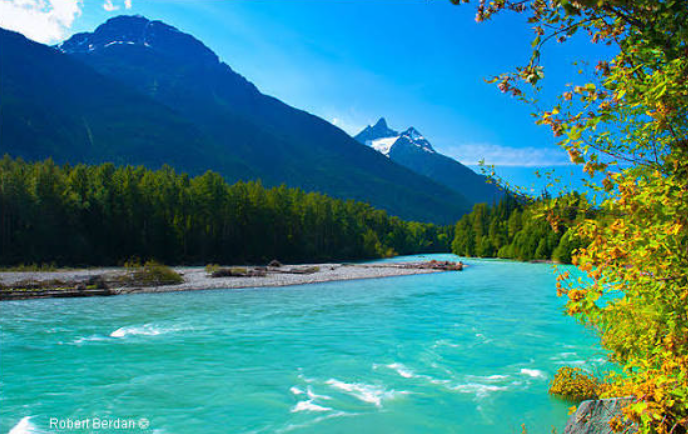
Bella Coola Valley is a spectacular mountain valley in British Columbia, Canada, where the Coast Mountains meet the central coast. Known for its dramatic peaks, deep forests, rivers, waterfalls, glaciers, and rich Indigenous history, the valley provides a striking transition between inland mountain landscapes and the Pacific coast.
The valley is centered around the Bella Coola River and the community of Bella Coola. Its relatively remote setting gives the area a quieter character than many of British Columbia’s better-known mountain destinations. Visitors come for hiking, wildlife viewing, fishing, rafting, cultural experiences, and access to the surrounding wilderness.
Bella Coola Valley Quick Facts
| Fact | Details |
|---|---|
| Location | Central Coast, British Columbia |
| Country | Canada |
| Region | Coast Mountains / Central Coast |
| Elevation | Low valley floor rising into surrounding mountains |
| Main River | Bella Coola River |
| Famous For | Mountains, glaciers, forests, wildlife and Indigenous culture |
| Climate | Cool, wet coastal-mountain climate |
| Best Months | Generally June to September |
| Nearby Town | Bella Coola |
| Protected Areas | Tweedsmuir Provincial Park and surrounding wilderness |
Where Is Bella Coola Valley?
Bella Coola Valley is located in west-central British Columbia, on the province’s central coast. The valley extends inland from the Bella Coola River estuary toward the Coast Mountains and forms the principal inhabited corridor of the Bella Coola region.
The community of Bella Coola sits near the western end of the valley, close to the river’s outlet into North Bentinck Arm. Larger population centers are far away, contributing to the area’s remote character. The valley is connected to the broader British Columbia road network through the Bella Coola Highway, while air and marine connections provide additional access.
Geography and Landscape
The valley follows the Bella Coola River through a landscape dominated by steep mountains and dense temperate rainforest. The surrounding Coast Mountains rise dramatically from the valley floor, creating a narrow corridor of forests, wetlands, rocky slopes, and alpine terrain.
The Bella Coola River is central to the valley’s geography. It flows westward through the valley before reaching the coastal fjord system around Bella Coola. Numerous smaller streams and waterfalls descend from the surrounding mountains.
Higher elevations contain glaciers, alpine meadows, snowfields, and rugged peaks. The valley also forms part of a larger ecological transition between the interior and the wet coastal environments of British Columbia.
History of Bella Coola Valley
Bella Coola Valley has a long Indigenous history. The Nuxalk people have lived in the Bella Coola region for thousands of years, developing extensive cultural, spiritual, and practical connections with the river, forests, mountains, and coastal waterways. Nuxalk culture remains an important part of the area’s identity today.
European exploration and settlement increased during the nineteenth century. The Hudson’s Bay Company established a presence in the region during the 1800s, and settlers later developed farming, ranching, trading, and other activities along the valley.
The valley’s isolation influenced its development. Transportation was historically difficult, with rivers, mountains, and coastal waterways shaping how people moved goods and traveled. Agriculture became particularly important around the valley floor, where fertile land and a relatively mild coastal climate supported farming.
Today, the region combines Nuxalk cultural heritage with a small rural community and a growing interest in wilderness tourism, outdoor recreation, and conservation.
How Was Bella Coola Valley Formed?
Bella Coola Valley was shaped by a combination of tectonic processes, river erosion, and glacial activity. The Coast Mountains were uplifted through long-term geological processes, creating the rugged mountain environment surrounding the valley.
During repeated ice ages, glaciers moved through the region and dramatically modified existing river valleys. Glacial erosion widened and deepened the valley, leaving steep-sided slopes and a characteristic U-shaped profile. Rivers and streams have continued to reshape the valley since the glaciers retreated.
Bella Coola Valley Weather Throughout the Year
Bella Coola Valley has a maritime-influenced climate. The surrounding Coast Mountains receive substantial precipitation, while the valley floor generally experiences milder temperatures than the higher elevations.
January to March
Winter is cool, wet, and frequently cloudy. Snow can occur on the valley floor, while considerably heavier and more persistent snow accumulates in the surrounding mountains. Short daylight hours and winter conditions can affect travel and outdoor activities.
April to June
Spring brings gradually warmer temperatures and longer days. Rain remains common, but snow begins to retreat from lower elevations. By late spring, forests become greener and rivers and waterfalls can carry substantial meltwater.
July to September
Summer is generally the most comfortable period for exploring the valley. Days are often mild to warm, with considerably better conditions for hiking, fishing, camping, wildlife viewing, and river-based recreation. Rain remains possible because of the region’s coastal climate.
October to December
Autumn becomes cooler and wetter, with increasingly frequent storms. Forests take on seasonal colors before winter arrives. Higher mountain elevations receive snow earlier, while the valley floor gradually transitions toward winter conditions.
Best Weather for Visiting Bella Coola Valley
June through September generally provides the best combination of milder temperatures, longer daylight hours, and accessible outdoor activities. July and August are particularly suitable for visitors planning hiking, camping, wildlife viewing, and fishing.
Things to Do in Bella Coola Valley
- Hiking: Trails lead through forests, river environments, alpine landscapes, and surrounding wilderness.
- Wildlife watching: The region provides opportunities to look for bears, eagles, deer, and other wildlife.
- Fishing: The Bella Coola River and nearby waterways support salmon and other fish species.
- River recreation: Rafting and other river-based activities are available depending on conditions and local operators.
- Camping: Campgrounds and wilderness sites allow visitors to spend more time in the surrounding natural environment.
- Photography: Mountains, waterfalls, forests, glaciers, and wildlife create excellent opportunities for landscape and nature photography.
- Cultural experiences: Visitors can learn about Nuxalk heritage, traditions, and the region’s Indigenous history.
Famous Attractions in and Around Bella Coola Valley
Bella Coola River
The river is the geographical and cultural centerpiece of the valley, flowing through the mountains before reaching the coastal fjord system.
Tweedsmuir Provincial Park
One of British Columbia’s largest provincial parks, Tweedsmuir protects an extensive wilderness of mountains, forests, lakes, rivers, and alpine environments north and east of the valley.
Bella Coola
The community provides the main services for the valley and offers access to local cultural, historical, and outdoor experiences.
Bella Coola Valley
The valley itself is an attraction, with its combination of steep Coast Mountain scenery, forests, rivers, farms, and remote wilderness.
Noosgulch River
The Noosgulch River is one of the significant waterways in the broader Bella Coola region and contributes to the valley’s extensive river and mountain landscape.
Chilcotin Plateau
The road approaching Bella Coola crosses the dramatic Coast Mountains and reaches the Chilcotin Plateau, creating a striking contrast between the interior plateau and the coastal valley.
Coast Mountain Wilderness
The mountains surrounding the valley provide a spectacular backdrop of glaciers, alpine peaks, deep forests, and rugged terrain.
Wildlife and Nature
Bella Coola Valley is part of an exceptionally productive ecosystem where coastal rainforest, rivers, wetlands, and mountain environments meet. The region supports black bears and grizzly bears, with salmon-rich waterways playing an important role in the local food chain. Bald eagles and other birds are also common sights.
The surrounding forests contain western red cedar, western hemlock, spruce, and other moisture-loving species. At higher elevations, forests transition into alpine meadows, rocky slopes, glaciers, and permanent snowfields.
The region’s protected areas help conserve large, relatively intact ecosystems. Tweedsmuir Provincial Park and other protected lands around the valley provide habitat for wildlife while supporting recreation and conservation.
How to Reach Bella Coola Valley
Bella Coola Valley is remote compared with many of British Columbia’s major tourist destinations. By road, visitors can approach through the Bella Coola Highway, which crosses the Coast Mountains between the Chilcotin Plateau and the valley.
Air travel provides another option, with Bella Coola Airport serving the region. Marine access is also important because the valley is connected to the coast, and ferry services have historically provided links between Bella Coola and other coastal communities.
Travel conditions can vary by season. Visitors driving into the region should check current road conditions, weather, and transportation schedules before beginning the journey.
Where to Stay Near Bella Coola Valley
Accommodation is concentrated around Bella Coola and nearby communities rather than being spread throughout the remote mountain areas. Visitors can find lodges, guesthouses, cabins, inns, and smaller locally operated accommodations.
Camping is another option, particularly for travelers exploring the surrounding provincial park and wilderness areas. Because accommodation choices are limited compared with larger British Columbia destinations, booking ahead is advisable during the summer season.
Why Is Bella Coola Valley Famous?
Bella Coola Valley is famous for its dramatic Coast Mountain scenery, deep forests, powerful rivers, abundant wildlife, glaciers, and strong Nuxalk cultural heritage. Its remote location and connection between the Pacific coast and interior British Columbia give it a distinctive character that sets it apart from more developed mountain destinations.
Bella Coola Valley FAQs
Where is Bella Coola Valley located?
Bella Coola Valley is in west-central British Columbia on Canada’s central coast. It follows the Bella Coola River inland from the coastal community of Bella Coola.
What is Bella Coola Valley famous for?
It is known for dramatic mountains, glaciers, forests, wildlife, salmon-bearing rivers, and Nuxalk Indigenous culture.
What is the weather like in Bella Coola Valley?
The valley has a relatively mild but wet coastal-mountain climate. Summers are generally the most comfortable, while winters are wetter and colder.
What are the best months to visit Bella Coola Valley?
June through September are generally the best months for outdoor activities because of longer days and more favorable conditions.
What can you do in Bella Coola Valley?
Popular activities include hiking, fishing, camping, wildlife viewing, photography, river recreation, and cultural experiences.
How do you reach Bella Coola Valley?
Visitors can travel by road along the Bella Coola Highway, fly into Bella Coola Airport, or use marine connections serving the coastal region.
Does Bella Coola Valley get snow?
Yes. Snow is possible in the valley during winter, while the surrounding Coast Mountains receive much greater snowfall and retain snow and glaciers at higher elevations.
What wildlife can be seen in Bella Coola Valley?
The region is particularly known for grizzly and black bears, bald eagles, salmon, and a wide range of other birds and mammals.
Final Thoughts
Bella Coola Valley offers a rare combination of dramatic mountain scenery, coastal influence, abundant wildlife, river landscapes, and living Indigenous heritage. Its remote setting makes it especially appealing to travelers looking for outdoor adventure and a closer connection with British Columbia’s wilderness.
For More Visit Stay And Update
