
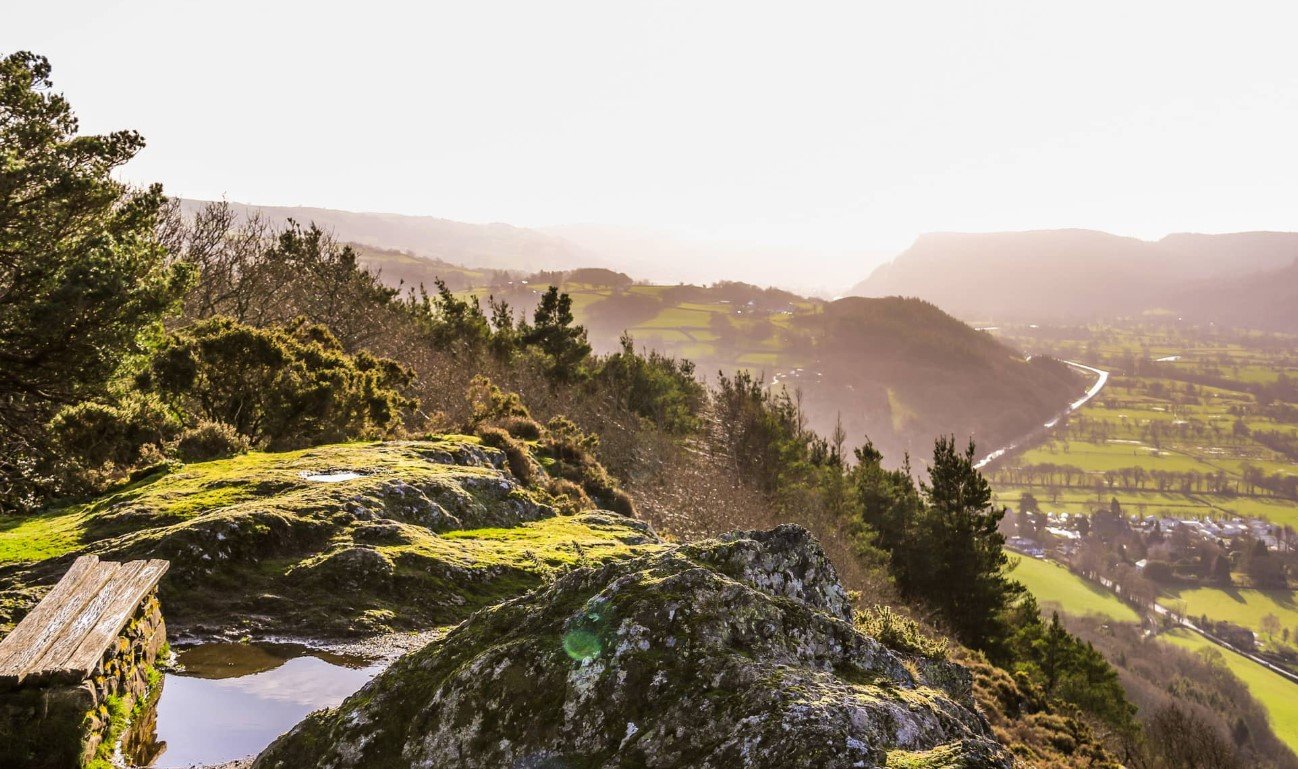
Conwy Valley is a scenic river valley in North Wales, shaped by the River Conwy as it flows south to north through the historic county of Gwynedd and Conwy County Borough. Surrounded by mountains, wooded slopes, farmland, and small Welsh communities, the valley provides a natural route between Snowdonia (Eryri) and the coast at Conwy Bay.
The valley is known for its combination of dramatic landscapes and cultural heritage. Visitors can explore historic towns, walk through mountain scenery, travel by scenic railway, and discover parts of Eryri National Park while using the valley as a gateway to North Wales.
Conwy Valley Quick Facts
| Fact | Details |
|---|---|
| Location | North Wales |
| Country | Wales, United Kingdom |
| Region | Conwy and Gwynedd |
| Main River | River Conwy |
| Famous For | River scenery, Eryri landscapes and historic towns |
| Climate | Temperate maritime |
| Best Months | May to September |
| Nearby Towns | Conwy, Betws-y-Coed, Llanrwst |
| National Park Connection | Upper valley reaches into Eryri National Park |
Where Is Conwy Valley?
Conwy Valley is located in North Wales and follows the course of the River Conwy from the mountainous interior toward Conwy Bay on the Irish Sea. The valley passes through or near communities including Betws-y-Coed, Llanrwst, Trefriw, and Conwy.
The upper valley lies close to the heart of Eryri National Park, while the lower valley opens toward the North Wales coast. Its position makes it an important natural corridor linking the mountains of inland Wales with the historic coastal town of Conwy.
Geography and Landscape
The River Conwy is the central geographical feature of Conwy Valley. It flows through a landscape that changes from rugged upland terrain in the south to broader lowland areas closer to the coast.
The upper valley is strongly influenced by the mountains and forests of Eryri. Around Betws-y-Coed, wooded landscapes, rocky riverbanks, and nearby waterfalls create a distinctly mountainous setting. Farther north, the valley broadens around Llanrwst and Trefriw, where agricultural land and lower slopes become more prominent.
The valley eventually reaches the Conwy Estuary, where the River Conwy meets the sea. This transition from mountain headwaters to tidal waters gives the wider valley a varied landscape within a relatively short geographical area.
History of Conwy Valley
Conwy Valley has a long history shaped by settlement, agriculture, transport, and the cultural development of North Wales. The River Conwy provided water and a natural route through the region, encouraging communities to develop along its banks.
The valley is closely connected with the history of the Welsh princes and medieval Wales. The town of Conwy, at the valley’s northern end, became internationally known after King Edward I built Conwy Castle and its fortified town walls during his campaign to conquer Wales in the late thirteenth century.
In later centuries, agriculture and forestry remained important to valley communities. The growth of roads and railways improved connections between the mountainous interior and the coast. Tourism also became increasingly significant, particularly around Betws-y-Coed, which developed as a popular destination for visitors exploring the landscapes of North Wales.
Today, the valley continues to reflect both Welsh cultural traditions and its role as an important travel route through the region.
How Was Conwy Valley Formed?
Conwy Valley developed over a long period through river erosion and the influence of glacial activity. The River Conwy and its tributaries gradually shaped the valley, while glaciers during the Ice Age modified the surrounding landscape.
Glacial erosion helped widen and deepen parts of the valley and influenced the shape of the surrounding mountains and slopes. After the glaciers retreated, rivers continued to transport sediment and reshape the valley floor, creating the landscape seen today.
Conwy Valley Weather Throughout the Year
Conwy Valley has a temperate maritime climate. Weather can change quickly, particularly in the upper valley and nearby mountains. Rainfall is generally higher in the mountainous areas than near the coast.
January to March
Winter is generally cool and wet, with frequent rain and occasional frost. Snow can occur on higher ground, while the valley floor usually experiences milder conditions. Early spring gradually brings longer days, although unsettled weather remains common.
April to June
Spring brings increasingly mild temperatures and greener landscapes. April and May can offer pleasant conditions for walking, although rain remains possible. June usually provides longer daylight hours and comfortable temperatures for outdoor activities.
July to September
Summer is generally the warmest period, with mild rather than extreme temperatures. Average daytime conditions are often suitable for hiking, sightseeing, cycling, and exploring local towns. Rain can occur in any month, especially near mountainous areas.
October to December
Autumn brings cooler temperatures and changing woodland colours, particularly in the upper valley. Rainfall can increase during autumn and winter storms. By December, shorter days and cooler conditions become the main features.
Best Weather for Visiting Conwy Valley
May through September generally offers the most comfortable weather for exploring Conwy Valley. Late spring provides fresh green scenery, while summer offers longer days. September can also be a pleasant choice for visitors seeking milder crowds and early autumn colours.
Things to Do in Conwy Valley
- Hiking and walking: Explore riverside paths, woodland trails, and routes leading into the surrounding mountains.
- Scenic railway travel: The Conwy Valley Line offers a picturesque way to travel between coastal and inland communities.
- Cycling: Quiet roads and designated routes provide opportunities for exploring parts of the valley by bicycle.
- River and waterfall walks: The upper valley around Betws-y-Coed offers access to woodland and riverside scenery.
- Sightseeing: Historic towns, bridges, churches, and traditional Welsh villages provide cultural experiences alongside natural landscapes.
- Photography: The changing combination of rivers, forests, mountains, and historic buildings makes the valley popular with landscape photographers.
Famous Attractions in and Around Conwy Valley
Conwy Castle
Located at the northern end of the valley, Conwy Castle is one of Wales’s most important medieval castles. Its towers and walls overlook the town and estuary.
Conwy Town Walls
The remarkably well-preserved medieval walls surround much of historic Conwy and offer views across the town and surrounding landscape.
Betws-y-Coed
Often described as a gateway to Eryri, Betws-y-Coed is a popular village surrounded by forests, rivers, and mountain scenery.
Swallow Falls
Located near Betws-y-Coed, Swallow Falls is a well-known waterfall on the River Llugwy and attracts visitors throughout the year.
Llanrwst
This historic market town lies beside the River Conwy and is known for its traditional Welsh character and proximity to the surrounding countryside.
Trefriw
Trefriw is a small village on the western side of the valley with a long history connected to the local landscape and the River Conwy.
Bodnant Garden
Located near the lower Conwy Valley, Bodnant Garden is one of North Wales’s best-known gardens, featuring extensive plant collections and views toward the surrounding countryside.
Wildlife and Nature
Conwy Valley contains a mixture of river habitats, woodland, farmland, wetlands, and upland environments. The River Conwy supports freshwater ecosystems, while the surrounding landscape provides habitats for a variety of birds and mammals.
Woodlands in the upper valley contain native and managed forest areas, while the wider Eryri region supports species adapted to upland and mountain conditions. The valley and nearby protected landscapes are important for conserving Welsh habitats and maintaining connections between lowland and upland ecosystems.
How to Reach Conwy Valley
The nearest major airports include Liverpool John Lennon Airport and Manchester Airport, both in north-west England. From there, visitors can continue by road or rail into North Wales.
The A55 provides the main road connection across North Wales, while the A470 follows an important route through parts of Conwy Valley toward Betws-y-Coed and southern Wales.
The Conwy Valley Line provides rail access between Llandudno Junction and Blaenau Ffestiniog, with stations serving communities including Conwy, Llanrwst, and Betws-y-Coed. Road and rail travel can occasionally be affected by severe weather or flooding, particularly during major storms.
Where to Stay Near Conwy Valley
Accommodation is available throughout the valley and nearby areas. Betws-y-Coed is a popular base for visitors interested in walking and exploring Eryri, with hotels, guesthouses, cottages, and other lodging options.
Conwy offers hotels and guest accommodation close to the coast, historic attractions, and transport connections. Llanrwst and smaller valley communities can provide quieter alternatives, while campsites and holiday cottages are available in the wider countryside.
Booking in advance is advisable during summer holidays and major events in North Wales.
Why Is Conwy Valley Famous?
Conwy Valley is famous for linking the mountains of Eryri with the historic coast of North Wales. Its River Conwy scenery, traditional Welsh communities, access to mountain landscapes, scenic railway, and proximity to landmarks such as Conwy Castle and Betws-y-Coed give the valley a distinctive mix of natural and cultural appeal.
Conwy Valley FAQs
Where is Conwy Valley located?
Conwy Valley is in North Wales, following the River Conwy from the mountainous interior toward Conwy Bay on the Irish Sea.
What is Conwy Valley famous for?
It is known for river scenery, access to Eryri, historic Welsh towns, woodland landscapes, and nearby attractions such as Conwy Castle.
What is the weather like in Conwy Valley?
The valley has a mild maritime climate, but rainfall is common throughout the year. Mountain areas are generally wetter and can experience more changeable conditions.
What are the best months to visit Conwy Valley?
May through September generally provides the most comfortable conditions for walking, sightseeing, and exploring the surrounding countryside.
What can you do in Conwy Valley?
Visitors can hike, cycle, travel by scenic railway, explore historic towns, visit waterfalls, and enjoy photography and sightseeing.
How do you reach Conwy Valley?
The valley can be reached by road via North Wales’s main road network and by train on the Conwy Valley Line.
Does Conwy Valley get snow?
Snow is possible during winter, particularly on nearby higher ground. Snowfall on the valley floor is less frequent and usually less persistent.
Final Thoughts
Conwy Valley offers a distinctive journey through North Wales, connecting mountain landscapes, riverside communities, forests, and historic landmarks. It is well suited to visitors who want to combine outdoor exploration with Welsh history and culture without focusing on a single destination.
For More Visit Stay And Update
