
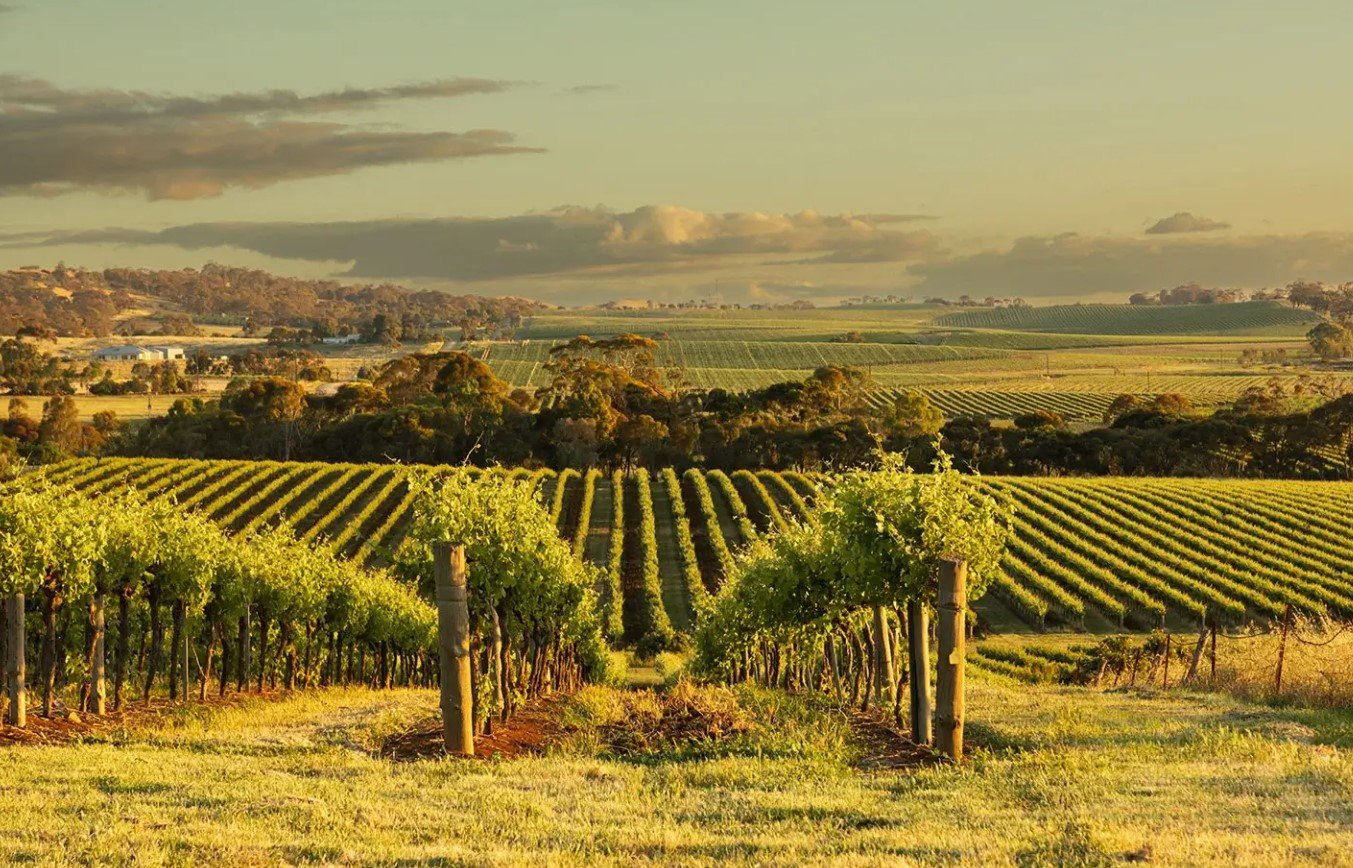
Clare Valley is a scenic rural valley in South Australia, known for its rolling hills, vineyards, historic townships, and strong agricultural character. Located north of Adelaide, the region combines a long farming history with a well-established wine industry, making it an important destination for both local communities and visitors exploring South Australia’s countryside.
The valley is particularly associated with Riesling, cool-climate vineyards, heritage villages, walking trails, and picturesque farmland. Its relatively compact size makes it easy to explore, while the combination of natural scenery and historic settlements gives the area a character that differs from South Australia’s coastal landscapes.
Clare Valley Quick Facts
| Fact | Details |
|---|---|
| Location | Mid North of South Australia |
| Country | Australia |
| Region | South Australia |
| Elevation | Generally around 400–600 m, varying across the valley |
| Famous For | Vineyards, Riesling, farming and historic towns |
| Climate | Mediterranean-influenced climate |
| Main Town | Clare |
| Best Months | March to May and September to November |
| Nearby City | Adelaide |
Where Is Clare Valley?
Clare Valley is located in South Australia’s Mid North, approximately 120 kilometers north of Adelaide by road. The valley extends through a series of rural settlements and agricultural areas, with Clare serving as the main town and regional center.
Other important communities include Auburn, Watervale, Sevenhill, Mintaro, and Penwortham. The valley sits between the surrounding ranges and agricultural plains of the Mid North, providing a transition between Adelaide and the more extensive rural landscapes farther north.
Geography and Landscape
Clare Valley is characterized by gently undulating hills, elevated vineyards, farmland, wooded areas, and narrow valleys. The landscape is greener during the cooler months and becomes drier and more golden during the warmer part of the year.
The region’s elevation contributes to its cooler conditions compared with many lower-lying parts of South Australia. The terrain also contains shallow valleys and ridges that create different aspects for agriculture and vineyards.
The River Wakefield and its tributaries drain parts of the surrounding landscape, while hills and ranges provide the valley with its distinctive rural setting. Vineyards are commonly planted on elevated slopes and rolling terrain, where soil and drainage conditions are well suited to grape growing.
History of Clare Valley
The Clare Valley region has a long Indigenous history, with the traditional lands of the Ngadjuri people extending across much of the Mid North of South Australia. Their connection to the landscape predates European settlement by thousands of years.
European settlement expanded during the nineteenth century, with agriculture becoming an important part of the local economy. Towns developed around farming, transport, and commercial activities, and many historic buildings from this period remain visible today.
The development of vineyards became another defining part of the region’s history. Early settlers introduced grape growing during the nineteenth century, and the wine industry gradually expanded alongside farming. German settlers played an important role in establishing vineyards around areas such as Sevenhill, where the Jesuits founded a significant early wine-making tradition.
Over time, Clare Valley developed a reputation for producing high-quality wines, particularly Riesling. Wine tourism subsequently became an important part of the regional economy, complementing agriculture and the area’s historic attractions.
How Was Clare Valley Formed?
Clare Valley’s landscape developed through long-term geological processes involving the uplift, erosion, and weathering of ancient rocks. The surrounding ranges and valleys reflect the geological history of the Mount Lofty Ranges and broader South Australian uplands.
Weathering and erosion gradually shaped the hills and valleys, while variations in underlying rock and soil contributed to the region’s different agricultural landscapes. These geological characteristics, together with elevation and climate, have helped create conditions suitable for vineyards and farming.
Clare Valley Weather Throughout the Year
Clare Valley has a Mediterranean-influenced climate, with warm to hot summers, cooler winters, and most rainfall occurring during the cooler months. Temperatures can vary considerably between day and night, particularly during winter.
January to March
Summer begins warm and dry, with January and February generally bringing the highest temperatures of the year. March becomes more comfortable as autumn approaches, although rainfall remains relatively limited.
April to June
Autumn is generally mild during the day and cooler at night. April and May are particularly pleasant, while June marks the beginning of the wetter winter period. Overnight temperatures can become quite cold.
July to September
Winter is cool and wetter than summer. July and August are typically among the coldest months, with chilly nights and occasional frosty conditions. September brings gradually warmer days and the beginning of spring growth.
October to December
Spring brings milder temperatures, greener landscapes, and longer daylight hours. Conditions become progressively warmer and drier during November and December as summer approaches.
Best Weather for Visiting Clare Valley
March to May and September to November are generally among the most comfortable periods to visit. Autumn offers mild conditions and vineyard activity, while spring brings fresh vegetation and pleasant temperatures for exploring the countryside.
Things to Do in Clare Valley
Explore the Wine Region
Wine tasting is one of the area’s most popular experiences, with cellar doors throughout the valley offering opportunities to sample locally produced wines.
Cycle the Riesling Trail
The Riesling Trail follows a former railway corridor between Auburn and Clare, providing a scenic route for cycling and walking through vineyards, farmland, and rural settlements.
Visit Historic Towns
Clare Valley’s villages contain heritage buildings, old churches, stone cottages, and other reminders of the region’s nineteenth-century development.
Go Hiking
Several walking opportunities allow visitors to explore the hills, farmland, and natural areas surrounding the main townships.
Enjoy Local Food
The region’s vineyards and agricultural character support a growing food scene, with local produce, restaurants, cafes, and cellar-door dining providing options for visitors.
Take a Scenic Drive
Driving between Clare, Auburn, Watervale, Sevenhill, Mintaro, and surrounding rural areas is an easy way to experience the changing landscape.
Famous Attractions in and Around Clare Valley
Riesling Trail
This former railway route is one of the region’s best-known recreational attractions, connecting several communities through vineyard and countryside landscapes.
Sevenhill Cellars
Sevenhill Cellars has deep historical connections to the region’s early Catholic and winemaking communities and is one of the area’s most significant wine destinations.
Mintaro
The historic village of Mintaro is known for its well-preserved nineteenth-century character, heritage buildings, and connection to the region’s early agricultural development.
Martindale Hall
Located near Mintaro, Martindale Hall is a notable Georgian-style historic mansion surrounded by rural landscapes and gardens.
Clare
The main town provides access to shops, restaurants, accommodation, heritage sites, and services for exploring the wider valley.
Auburn
Auburn is a historic gateway to the southern part of the valley, with heritage architecture and access to the Riesling Trail.
Watervale
Watervale is a small wine-growing community surrounded by vineyards and farmland and is particularly associated with Clare Valley’s Riesling production.
Wildlife and Nature
Clare Valley’s landscape includes agricultural land, vineyards, native vegetation, woodland, creeks, and patches of remnant habitat. Native vegetation supports a range of Australian wildlife, particularly in less-developed areas and along waterways.
Visitors may encounter kangaroos, wallabies, echidnas, possums, and a variety of native birds. The region’s birdlife includes parrots, honeyeaters, magpies, and other species adapted to woodland and open agricultural environments. Conservation efforts focus on protecting native vegetation, waterways, and remaining habitat within an increasingly cultivated landscape.
How to Reach Clare Valley
The valley is easiest to reach by road from Adelaide. The drive generally takes around 1.5 to 2 hours, depending on the destination within the region and traffic conditions.
The main approach is via the Horrocks Highway, which connects Adelaide and the Clare Valley through the Mid North. Regional roads provide access to Clare, Auburn, Watervale, Sevenhill, and other communities.
There is no major commercial airport or passenger railway station in the valley itself. Adelaide Airport is the nearest major airport, and a rental car is generally the most convenient option for exploring the wider region.
Where to Stay Near Clare Valley
Clare Valley offers accommodation across its main towns and surrounding countryside. Visitors can choose from hotels, bed-and-breakfasts, guesthouses, cottages, farm stays, holiday rentals, and smaller vineyard accommodations.
Clare provides the widest range of services and is a convenient base for exploring the central valley. Auburn, Watervale, Mintaro, and Sevenhill offer quieter alternatives, while rural properties provide a more countryside-focused experience.
Why Is Clare Valley Famous?
Clare Valley is famous for its wine industry, especially its Riesling, as well as its historic villages, agricultural landscapes, heritage architecture, and scenic walking and cycling routes. Its combination of vineyards and rural history has made it one of South Australia’s best-known inland wine regions.
Clare Valley FAQs
Where is Clare Valley located?
Clare Valley is in South Australia’s Mid North, approximately 120 kilometers north of Adelaide. Clare is the main town and regional center.
What is Clare Valley famous for?
The region is particularly famous for Riesling wine, vineyards, historic villages, farming, and scenic countryside.
What is the weather like in Clare Valley?
It has warm to hot, generally dry summers and cool, wetter winters. Spring and autumn usually provide milder conditions.
What are the best months to visit Clare Valley?
March to May and September to November are generally comfortable periods for exploring the region, although each season offers a different experience.
What can you do in Clare Valley?
Popular activities include wine tasting, cycling the Riesling Trail, visiting heritage towns, hiking, scenic driving, and enjoying local food.
How do you reach Clare Valley?
Most visitors drive from Adelaide, with the journey generally taking around 1.5 to 2 hours depending on the destination.
Does Clare Valley get frost?
Yes. Frost can occur during the colder winter months, particularly in low-lying rural areas and on clear nights.
What are the main attractions in Clare Valley?
The Riesling Trail, Sevenhill Cellars, Mintaro, Martindale Hall, Auburn, Watervale, and the town of Clare are among the region’s notable attractions.
Final Thoughts
Clare Valley offers a distinctive combination of vineyards, agricultural countryside, historic settlements, and rolling hills within easy reach of Adelaide. Its wine heritage and rural character make it especially appealing to visitors interested in food, wine, history, cycling, and relaxed exploration.
For More Visit Stay And Update
