
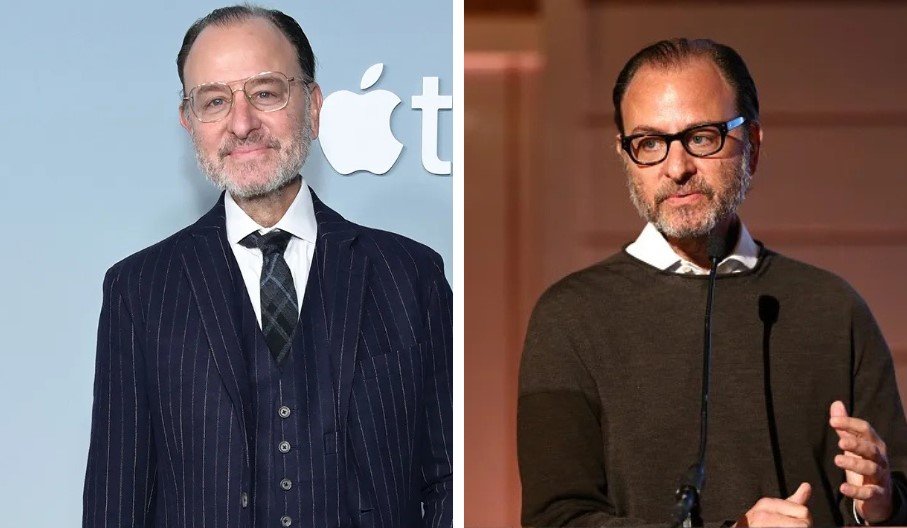
Fisher Stevens has built a distinctive career in Hollywood by moving between acting, directing, producing, and documentary filmmaking. Audiences may recognize him from films such as Short Circuit and The Grand Budapest Hotel, as well as television series including Early Edition and Succession. Behind the camera, Stevens has earned recognition for projects that examine politics, the environment, and influential public figures. His work on the documentary The Cove helped bring international attention to dolphin hunting in Japan and earned the film an Academy Award. Rather than following a single professional path, he has continually explored different ways to tell stories. His career offers an interesting look at how a character actor can develop into an award-winning filmmaker and producer. From his early days in theater to his work on major television productions, Stevens has established a reputation for versatility and creative ambition.
Quick Bio
| Detail | Information |
|---|---|
| Full Name | Fisher Stevens |
| Profession | Actor, director, producer, and writer |
| Nationality | American |
| Birth Date | November 27, 1963 |
| Birthplace | Chicago, Illinois, United States |
| Known For | Short Circuit, Hackers, The Cove, Succession |
| Major Achievement | Producing the Academy Award-winning documentary The Cove |
| Education | Studied acting and developed his craft through theater |
| Famous Connection | His collaborations with actors, filmmakers, and documentary subjects across film and television |
| Marital Status | Previously married to Alexis Bloom |
| Children | Public reporting identifies two children |
| Current/Public Status | Active in acting, directing, and producing |
Who Is Fisher Stevens?
Fisher Stevens is an American actor, director, producer, and writer whose career spans more than four decades. Born Stephen Fisher, he adopted the professional name Fisher Stevens early in his acting career. His work ranges from entertaining supporting roles in Hollywood films to documentaries that address environmental and political issues.
Stevens became familiar to movie audiences through his role as Ben Jabituya in the science-fiction comedy Short Circuit and its sequel. Over time, he developed a second identity as a filmmaker, taking on projects that demanded research, collaboration, and a different kind of storytelling.
His career stands out because he has never limited himself to one area of entertainment. He has worked on stage, appeared in popular television dramas, directed feature films, and produced documentaries that have received major industry recognition.
How Fisher Stevens Began His Acting Career
Stevens grew up in the Chicago area before moving to New York City as a teenager to pursue acting. The move introduced him to a more demanding theatrical environment, where he could develop his skills through professional productions and acting training.
Theater gave him an early opportunity to explore characters in depth. Rather than waiting for a major film role, he built experience through stage performances and smaller screen appearances. His early work helped him understand timing, character development, and the discipline required to sustain a career in entertainment.
In 1981, Stevens made his film debut in the horror movie The Burning. He followed that appearance with roles in films including Baby It’s You and The Brother from Another Planet. These early credits gradually established him as a recognizable supporting actor.
His path also illustrates the importance of persistence in an industry where performers often spend years building their reputations before landing a widely recognized role.
The Role That Made Fisher Stevens Famous: Short Circuit
One of the defining early moments in Stevens’s career came with the 1986 science-fiction comedy Short Circuit.
He played Ben Jabituya, an engineer connected to the story of Number Five, a military robot that develops human-like awareness after being struck by lightning. The film combined comedy, science fiction, and a story about identity and humanity, attracting a broad audience.
Stevens returned as the character in Short Circuit 2 in 1988. The two films became important parts of his screen legacy, particularly among viewers who grew up watching them.
Although the role brought him considerable recognition, it also became one of the most discussed aspects of his early career because the character was written as an Indian scientist. The casting and performance have since prompted conversations about representation and the use of ethnic stereotypes in Hollywood.
Stevens’s later work moved into a much wider range of characters and creative responsibilities. His career eventually became about more than the success of a single franchise.
Fisher Stevens’s Film Career Beyond Science Fiction
After Short Circuit, Stevens continued to take roles in films that differed considerably in tone and subject matter. His credits include Reversal of Fortune (1990), the political satire Bob Roberts (1992), and the technology-focused thriller Hackers (1995).
In Hackers, he appeared in a story centered on young computer enthusiasts and cybercrime. The film later developed a devoted following, particularly among audiences interested in its distinctive 1990s style and early portrayal of digital culture.
Stevens also appeared in Wes Anderson’s The Grand Budapest Hotel (2014), a film celebrated for its carefully constructed visual style and ensemble cast. His association with Anderson’s filmmaking world continued through projects including The French Dispatch and Asteroid City.
These roles demonstrate his ability to work within different filmmaking styles. He can contribute to broad comedies, dramatic productions, satirical stories, and highly stylized films without making every performance feel the same.
Fisher Stevens on Television: From Early Edition to Succession
Television has played a significant role in Stevens’s career. From 1996 to 2000, he portrayed Chuck Fishman in Early Edition, a fantasy drama about a man who receives tomorrow’s newspaper and attempts to prevent tragedies before they happen.
The role gave Stevens an extended opportunity to develop a character over multiple seasons. His performance balanced humor, loyalty, and the practical concerns of someone drawn into extraordinary circumstances.
He later appeared in several well-known television productions, including Lost, Damages, The Blacklist, and The Good Fight. These appearances introduced him to audiences across different genres, from mystery and suspense to legal and political drama.
His later role as Hugo Baker in HBO’s Succession brought renewed attention to his acting. Hugo works in communications for the powerful Roy family and frequently navigates the uneasy relationship between corporate messaging, personal ambition, and executive demands.
Succession allowed Stevens to portray a character whose importance often lies in the spaces between major decisions. His performance helped illustrate the show’s broader examination of power, loyalty, reputation, and the machinery behind corporate leadership.
When Fisher Stevens Moved Behind the Camera
Acting remained an important part of Stevens’s career, but he gradually became increasingly involved in directing and producing. His interest in filmmaking extended beyond performing a role; he wanted to help shape the stories themselves.
He co-founded the New York theater company Naked Angels, which gave performers and writers a place to develop original work. He later became involved with film production through GreeneStreet Films and other ventures.
His directorial work includes the feature film Just a Kiss (2002), a relationship-focused drama, and Stand Up Guys (2012), a crime comedy featuring veteran actors Al Pacino, Christopher Walken, and Alan Arkin.
Stevens also directed Palmer (2021), a drama starring Justin Timberlake as a former football player who forms a bond with a young boy. The film allowed Stevens to explore themes of community, acceptance, and personal change.
Moving behind the camera broadened his professional identity. Instead of relying exclusively on casting opportunities, he could develop projects, work closely with writers and performers, and help determine how a story reached its audience.
How The Cove Changed His Career
Stevens achieved one of the most significant milestones of his filmmaking career through the documentary The Cove.
Released in 2009, the film examines dolphin hunting in Taiji, Japan. It follows a team of activists and filmmakers who investigate the practice, using hidden cameras and other methods to document what happens in a restricted coastal area.
Stevens served as one of the film’s producers, working alongside director Louie Psihoyos and the wider production team. The documentary received international attention for its investigative approach and its focus on animal welfare and marine conservation.
At the 2010 Academy Awards, The Cove won the Oscar for Best Documentary Feature. The award represented a major achievement for Stevens and strengthened his standing as a producer of serious documentary films.
The film also helped establish a direction that would become central to his work behind the camera: using documentary storytelling to bring public attention to issues that many viewers might otherwise overlook.
Its impact went beyond an awards ceremony. The documentary encouraged discussion about wildlife protection, the ethics of animal captivity, and the responsibilities of people who film sensitive subjects.
Fisher Stevens’s Environmental Documentaries
Following the success of The Cove, Stevens continued working on projects that addressed environmental concerns. One of his notable productions was Mission Blue, a documentary centered on marine biologist Sylvia Earle and her efforts to protect the world’s oceans.
He also directed Before the Flood (2016), a documentary featuring Leonardo DiCaprio as he examines climate change, its consequences, and possible responses. The film combines interviews, travel, and environmental reporting to present the issue to a broad audience.
These projects reveal a recurring theme in Stevens’s filmmaking. He often works with subjects who have specialized knowledge or direct experience of a major issue, then helps present their perspectives in an accessible format.
Environmental documentaries require a different approach from fictional entertainment. Filmmakers must organize complex information, establish credibility, and make scientific or political subjects understandable without oversimplifying them.
Stevens’s documentary work has allowed him to pursue questions that extend beyond the entertainment industry. It has also connected his career with conservation advocates, researchers, journalists, and public figures.
Fisher Stevens and the David Beckham Documentary
Another major directing project was Beckham, the four-part documentary series released by Netflix in 2023. The series follows the life and career of former professional footballer David Beckham, combining personal interviews with archival footage and accounts from people who knew him.
Stevens directed the series, which examines Beckham’s rise at Manchester United, his international career with England, his move to Real Madrid, and the media attention that followed his personal life.
The project required Stevens to approach a globally recognized sports figure as a documentary subject rather than as a fictional character. The series moves between football history, family experiences, public scrutiny, and the demands of a career lived under intense attention.
Its appeal also depended on showing viewers aspects of Beckham’s life that went beyond match results and celebrity headlines. Stevens’s direction helped organize the story into a portrait of a sportsman whose professional achievements and personal experiences became closely connected in the public imagination.
The series brought Stevens’s documentary skills to a broad streaming audience and demonstrated his ability to work with a subject whose fame extends well beyond sport.
Who Is David Beckham?
David Beckham is a former English professional footballer who became one of the most recognizable sports figures of his generation. He rose to prominence at Manchester United, where he won major domestic and European honors, before continuing his playing career with Real Madrid, LA Galaxy, AC Milan, and Paris Saint-Germain.
Beckham also captained England’s national team and became known for his crossing ability, free kicks, and long-range passing. His influence extended beyond football through fashion, advertising, and international celebrity.
His connection to Fisher Stevens comes through the documentary Beckham. Stevens helped shape the series’ account of Beckham’s career and private experiences, while Beckham and the people around him supplied the perspectives that brought the story to life.
The collaboration illustrates how Stevens applies his filmmaking approach to a subject whose life has been documented extensively by the media. Rather than simply presenting a collection of football highlights, the series explores the person behind the public image.
Fisher Stevens’s Work in Producing and Collaborating
Producing has remained a major part of Stevens’s professional life. This work involves more than overseeing a finished film; it can include finding subjects, developing concepts, assembling creative teams, managing production decisions, and helping projects reach audiences.
His experience across acting, directing, and producing gives him a broad understanding of how films and television productions come together. As an actor, he understands the demands placed on performers. As a director, he must guide the overall storytelling. As a producer, he helps turn an idea into a completed project.
His career has included collaborations with established filmmakers, actors, activists, and documentary subjects. Those partnerships have enabled him to work across genres and production formats, from theatrical features to streaming documentaries.
Stevens has also continued to move between entertainment and issue-driven filmmaking. This combination is a defining characteristic of his career: he can work on a dramatic television series and then direct a documentary that examines a real-world problem.
Fisher Stevens’s Personal Life and Family
Stevens has generally kept parts of his personal life separate from his public work. He married documentary filmmaker Alexis Bloom in 2017, and public reporting identifies them as parents of two children.
Bloom has an established career of her own as a director and producer, with documentary projects that examine public figures and political subjects. Their shared professional interests connect their family life with the wider documentary filmmaking community, although each maintains an independent body of work.
In 2025, Stevens publicly discussed relocating with his family to London. He described the move as an opportunity to experience life in the United Kingdom and Europe. The decision also placed the family closer to Bloom’s relatives in London.
Stevens has not built his public identity around family publicity. Most of the available information about him concerns his acting, filmmaking, environmental interests, and professional collaborations.
Fisher Stevens’s Net Worth and Financial Life
Fisher Stevens has worked in the entertainment industry for decades, with income potentially coming from acting, directing, producing, and other creative work. His credits include commercial films, television series, documentaries, and streaming productions.
However, a verified current net worth figure is not reliably established in authoritative public sources. Online estimates should therefore be treated cautiously, especially when they do not explain their methodology or distinguish between personal wealth, earnings, and the financial value of film projects.
An Academy Award-winning production can raise a filmmaker’s professional profile and create further opportunities, but the award alone does not establish an individual’s personal fortune. Film budgets, production revenues, and the financial performance of a project are also not equivalent to the personal income of one participant.
For that reason, it is more accurate to describe Stevens’s financial position through his sustained professional activity than to attach an unsupported dollar figure to his name.
What Makes Fisher Stevens’s Career Distinctive?
Stevens’s career is unusual because he has continued to work in several areas of filmmaking without abandoning his original profession. Some audiences know him primarily as an actor, while others recognize him as the producer of The Cove or the director of Beckham.
His experience also gives him access to different kinds of storytelling. Fictional performances depend on character, dialogue, and dramatic interpretation. Documentaries require filmmakers to organize real events and testimony into a compelling narrative while remaining attentive to the facts.
Stevens has pursued both approaches throughout his career. His filmography shows a willingness to take supporting roles, direct feature films, produce investigative documentaries, and collaborate on television projects with large ensembles.
His professional evolution is a reminder that careers in entertainment do not always follow a straight line. A performer can develop new skills, explore different subjects, and find additional ways to contribute to the industry over time.
Conclusion
Fisher Stevens has established himself as more than an American actor. From his early stage work and memorable role in Short Circuit to his television performances in Early Edition and Succession, he has built a diverse screen career. His work behind the camera has brought another dimension to his reputation, particularly through the Oscar-winning documentary The Cove and the Netflix series Beckham.
His professional connection with David Beckham highlights Stevens’s ability to tell the stories of people whose lives attract global attention. Yet the Beckham documentary represents only one part of a career shaped by acting, directing, producing, and environmental filmmaking.
Stevens’s lasting contribution lies in his versatility and his interest in stories that entertain, inform, or encourage audiences to look at familiar subjects differently.
FAQs
Who is Fisher Stevens?
Fisher Stevens is an American actor, director, producer, and writer. He is known for Short Circuit, Hackers, Early Edition, Succession, and his work on documentary films.
What is Fisher Stevens famous for?
Stevens first gained broad recognition for playing Ben Jabituya in Short Circuit and Short Circuit 2. He later earned acclaim as a filmmaker and producer, particularly for his work on the Academy Award-winning documentary The Cove.
Is Fisher Stevens a director as well as an actor?
Yes. Stevens has directed feature films and documentaries, including Just a Kiss, Stand Up Guys, Palmer, Before the Flood, and the Netflix documentary series Beckham.
What is Fisher Stevens’s connection to David Beckham?
Stevens directed Beckham, a four-part Netflix documentary series released in 2023. The series examines Beckham’s football career, family life, and experiences with worldwide fame.
Did Fisher Stevens win an Academy Award?
Yes. Stevens was one of the producers of The Cove, which won the Academy Award for Best Documentary Feature at the 2010 Oscars.
Is Fisher Stevens married and does he have children?
Stevens married documentary filmmaker Alexis Bloom in 2017. Public reporting identifies them as parents of two children.
What is Fisher Stevens’s net worth?
A reliable, independently verified current net worth figure is not publicly available. Estimates published online should be treated as speculative unless they are supported by credible financial information.
For More Visit Stay And Update
